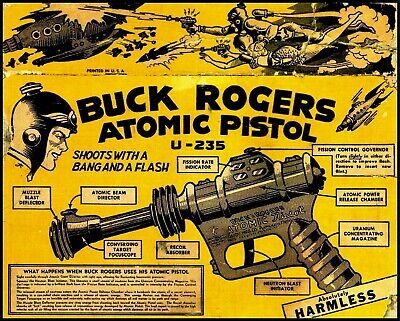
Ooooh! Those Russians… (Boney M)
Those nefarious Russians have been up to no good, as usual. According to a recently published joint report by US current affairs show 60 Minutes, German legacy newspaper Der Spiegel and NATO apologist website The Insider, nasty Russians have been zapping our poor freedom and democracy loving spies and diplomats – and even their pets – with an evil mind ray gun causing brain damage and a plethora of other anomalous health symptoms.[i]
But have they really, though?
Havana Syndrome
The story begins in Havana, Cuba in 2017 when American diplomats began experiencing strange health complaints. These included nausea, dizziness, brain fog, headaches, ringing in the ears, difficulty sleeping and several other ‘anomalous health issues’. Many of the diplomats said the symptoms were accompanied by a weird high-pitched noise that seemed to be directional and the theory that some kind of sonic weapon was being directed at them circulated. Some of the people affected had ‘brain damage’, or MBI (Mild Brain Injury) as if they were suffering from concussion.[ii]

Soon embassy workers were being medically evacuated from embassies in Uzbekistan and China as similar symptoms emerged.[iii] In all, over a hundred cases of ‘Havana Syndrome’ (as it was dubbed) were reported by American and Canadian diplomats, spies, military officers and other staff.[iv]
What was the cause of these strange symptoms and that strange penetrating noise heard by the sufferers? Well, when in doubt, blame it on Putin. The Russians, it was claimed, had developed a mind ray (using acoustic or microwave technology) that was melting the brains of our honourable spies because they hate our freedoms. Or something.
So, what’s the evidence? Besides, of course, that Putin and the Russians are responsible for everything bad that happens?
The evidence seems to be the following:
- Symptoms: tests revealed concussion-like brain damage in some of the victims – Mild Brain Injuries (MBIs). A number of other apparently inexplicable symptoms were experienced.
- Evil Russians: Russians may have been in the vicinity of the alleged attacks.
- Weird noises: the symptoms were often accompanied by a weird, penetrating and inexplicable noise.
So, let’s have a look at the evidence.
Brain Damage
The first point to note is that the array of symptoms associated with Havana Syndrome (headaches, nausea, insomnia, tinnitus, confusion, memory loss and so on) are all extremely common and yet we don’t assume we were being zapped by a commie mind ray every time we suffer from them. But the embassy staff in Havana and other locations were no doubt under stress as they had been warned to be vigilant against threats or attacks (including by a mysterious weapon) so will have been hypervigilant, and the idea of a sonic weapon seemed plausible to them at the time. The idea that such a weapon could be fired with such precision to people inside a building is, however, incredible.
The anxiety, stress and hypervigilance over common health symptoms would be exacerbated by the nocebo effect – the evil twin of the placebo effect. The nocebo effect means that if people are primed to expect negative effects, then they are more likely to have them.[v]
As for the apparent brain damage suffered by some of the staff that was evident in various tests, all this is consistent with the patient having suffered previous trauma (such as from accidents) or with changes to the brain caused by aging, depression, migraine or a number of other issues.[vi]
In fact, this relentless search for evidence is reminiscent of the way the witchfinder generals of old would look for marks of the Devil on poor unfortunates suspected of witchcraft. Any innocuous mark or blemish would be interpreted in the light of the prevailing obsession with outing those in league with the Devil.
Headache? Must be the Russians.
Ears ringing? Must be the Russians.
Forgetful? Must be the Russians…
You get the picture.
Ooooh, Those Russians
The evidence that various Russians were nearby when supposed mind ray attacks took place is pretty thin. One woman who was stricken by the familiar symptoms in Tbilisi, Georgia hesitatingly said she recognised an alleged Russian operative who was acting suspiciously outside her flat when shown a photo by the investigators. This was four years after the event, and given the unreliability of human perception and memory, it’s certainly plausible that she was led on in this by the investigators.[vii]
Much of the rest of the evidence implicating various shady Russian spooks is based on leaked mobile data that shows they could possibly have been in the vicinity at the time of the supposed attack. Not that they were there. Just that phone records were not inconsistent with them being there.
What’s That Sound?
However, there is an elephant in the room…or rather, a cricket. When some of the patients in Havana recorded the strange sounds that were associated with the sonic attacks, the sounds were identified as those made by bugs, and not the sort of bugs one normally associates with the shadowy world of espionage. In Havana, the sounds of crickets were interpreted in the light of the folk theory that staff were under attack by sonic rays. In other cases where no cricket sounds were present, the strange, penetrating sounds heard by patients were most likely caused by a very common complaint: tinnitus.[viii]
Phantom Attackers
The whole Havana Syndrome episode has all the signs of being a Phantom Attacker Panic. This is when a community often under stress becomes convinced that they are being assaulted by an imaginary assailant. Classic examples include the Halifax Slasher, the Mad Gasser of Mattoon, the Monkey Man of Delhi and the recent scare of needle spiking in nightclubs.
In all these cases, the attacker did not exist and the supposed victims had imagined, mistaken or fabricated the injuries they received. And this is what’s happening with Havana Syndrome. Common symptoms are being misinterpreted as assaults committed by an assailant that exists only in the febrile imaginations of the supposed victims, and the irresponsible journalists and scientists who are reinforcing these views.
The Insider, which claims to be a news website contesting Russian fake news, seems more like an unhinged purveyor of anti-Russian propaganda. See their specious ‘fakespert’ section where any prominent analyst, academic or politician of the left or right who dares to question the western interpretation of world events is relegated to the status of David Icke.
I would suggest the authors of this convoluted conspiracy theory about mind-melting Russian ray guns promptly put themselves into their own ‘fakesperts’ section of their website. That’s where they belong.
There IS a syndrome at work here, though, but it’s not Havana Syndrome. It’s Russia Derangement Syndrome. Western elites are infected with a dangerously hysterical Russophobia that is just as destructive and irrational as the witchfinder generals of past times.
The date that the Insider published their report is rather ironic. April Fools’ Day
See my analysis of the original CIA report on Havana Syndrome here: https://paulweatherhead.com/2022/02/10/in-which-i-destroy-the-cia-with-facts-and-logic/
My original article on Havana Syndrome and the Top Three Mass Hysterias Happening Now in 2022 is here: https://paulweatherhead.com/2022/01/30/top-three-mass-hysterias-happening-now-in-2022/
[i] Roman Dobrokhotov, Christo Grozev and Michael Weiss, ‘Unraveling Havana Syndrome: New evidence links the GRU’s assassination Unit 29155 to mysterious attacks on U.S. officials and their families’, The Insider (1 April 2024). Available at: https://theins.ru/en/politics/270425
[ii] Robert E Bartholomew and Robert W Baloh (2020) ‘Challenging the diagnosis of ‘Havana Syndrome’ as a novel clinical entity’, Journal of the Royal Society of Medicine 2020, Vol. 113(1 )pp.7–11 DOI:10.1177/0141076819877553
[iii] Ibid
[iv] Dobrokhotov, Grozev and Weiss (2024)
[v] K.J. Petrie K. and W. Rief W. (2019) ‘Psychobiological mechanisms of
placebo and nocebo effects: pathways to improve treatments and improve side effects’, Annual Review of Psychology 70 pp.599-662 doi:10.1146/annurev-psych-010418-102907
[vi] Bartholomew and Baloch p.8
[vii] Dobrokhotov, Grozev and Weiss (2024)
[viii] Robert Baloh and Robert Bartholomew, The Havana Syndrome (Springer, 2020)
 Paul Weatherhead