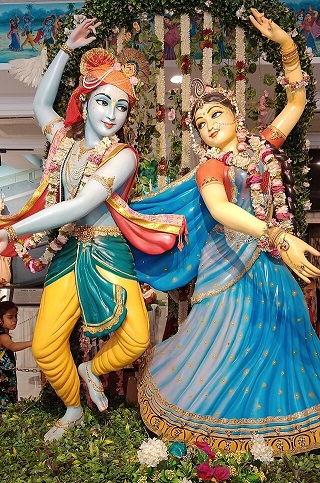
Weird Musical History # 13: Krishna Rock
The Hare Krishnas were a common sight in cities around the world. You might have seen them in your high street with their hair shaven but for a pigtail and their flowing robes, clinking finger cymbals and chanting their mantras. In the 70s and 80s, they might even have given you a vinyl record – a Krishna Koncept album – to try and entice you to join them…
Sex, drugs, murder, the Beatles and Bill Oddie… this is the story of how a weird musical sub-genre was born – Krishna Rock.
The International Society for Krishna Consciousness
In 1965, a seventy year old Indian guru travelled from his native Calcutta to the USA with nothing but a robe he stood up in and a begging bowl. His name was Prabhupada, which means ‘master at whose feet all other masters pay obeisance’ and he came with a mission – to bring the word of Krishna to the west.
He found acceptance in the nascent hippy scenes developing in New York and especially San Francisco. He formed the International Society for Krishna Consciousness (ISKCON) the following year, and attracted followers from the burgeoning hippy counterculture.[i]
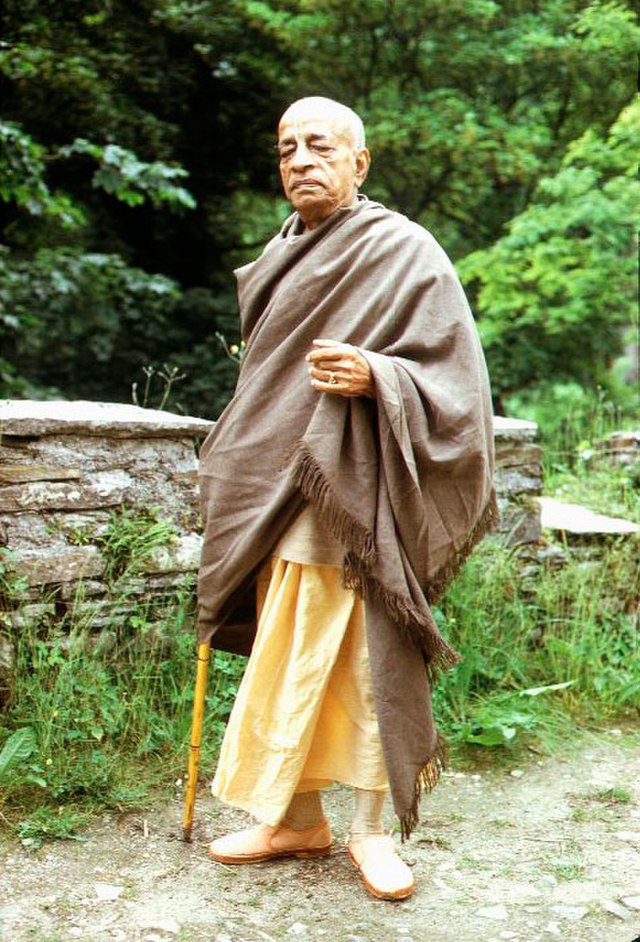
The Hare Krishnas, as they became popularly known, practised a centuries old, ascetic form of Hindu monotheism. Krishna was the all-knowing, omnipotent and eternal godhead, yet believers also have a personal relationship with him. The literal word of Krishna is found in the Bhagavad Gita, which describes a conversation between Krishna and Arjuna, a warrior.
Followers chant the Hare Krishna mantra 1,728 times a day while counting beads to purify consciousness, and this takes around two hours. They believe chanting these mantras leads to a state of bliss and the purification of consciousness – a sort of religious ecstasy.
However, rules are strict. There is no sex outside wedlock, and even when married it should be restricted to procreation rather than recreation. Drink is prohibited (including coffee or tea) as are drugs. No meat, fish or eggs are allowed. Also banned are sports, games and novels.
Music, however, was allowed. And the story of Krishna rock begins when the Hare Krishnas came to Britain at the end of the 1960s.
Meet the Beatles
In 1968 six American members of ISKCON travelled to Britain as Krishna missionaries with a cunning plan. They knew a sure fire way to get Krishna’s teachings to the hearts and minds of the young. They had to meet the Beatles.
In London, they met and befriended George Harrison at an Apple records party. This was at a time when the Beatles were experimenting with Indian spirituality, and George kept in touch with the missionaries and both he and John Lennon met Swami Praphupada when he visited Britain. According to ISKCON’s website, John and George chanted the Hare Krishna mantra for seventeen hours non-stop on a car journey from France to Portugal.[ii] The drugs must have been good in those days.
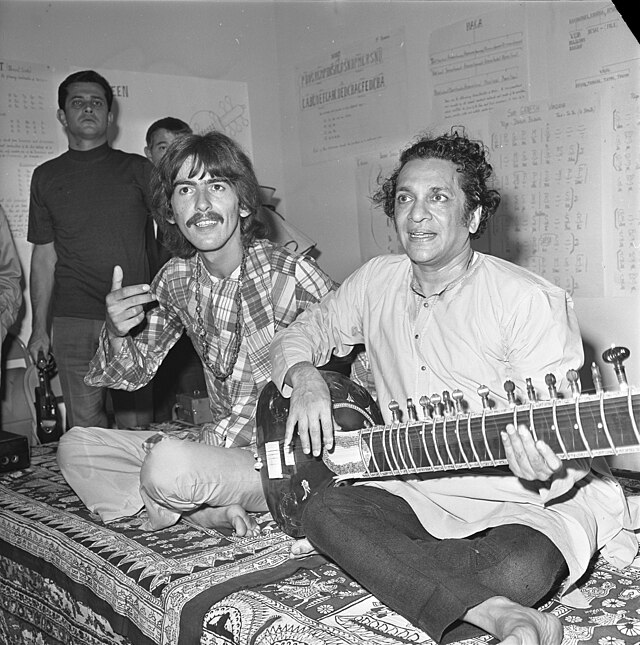
George brought these missionaries into the studio and recorded the Hare Krishna mantra, and this is where Krishna rock begins. The record was credited to the Radha Krishna Temple and was recorded between sessions for Abbey Road. The single, released in 1969 on the Beatles’ Apple label starts with George playing the melody line for the chant on guitar with a trippy tremolo effect, then the familiar mantra begins backed by harmonium, bass guitar (also played by George), finger cymbals and various exotic percussion. The chant gets faster and more delirious until it climaxes with a gong. https://www.youtube.com/watch?v=9PMGeQCr-aU
The Radha Krishna Temple appeared on Top of the Pops, and widespread radio play plus the Beatles connection led to a surprise hit – the song reached number 12 in the singles charts.[iii] ISKCON realised that music could not only raise their profile and bring them income, it could also attract new members. Many a counterculture drop out exchanged their long hair and marijuana joints for a shaved head, flowing robes and strict asceticism.
The reach of the hit single can be seen in the fact that Bill Oddie (with the help of DJ John Peel and the Brotherhood of Man) recorded a parody for the flip side of Bill’s version of ‘Ilkley Moor Baht ‘At’: https://www.youtube.com/watch?v=Z0d1OFdmaWc

The success of the Radha Krishna Temple single called for an album, again released on Apple and produced by Harrison. The LP was subsequently reissued in the 1970s as Goddess of Fortune on the Spiritual Sky label, and it’s this version of the album that you will find in charity shops and used vinyl stores everywhere.
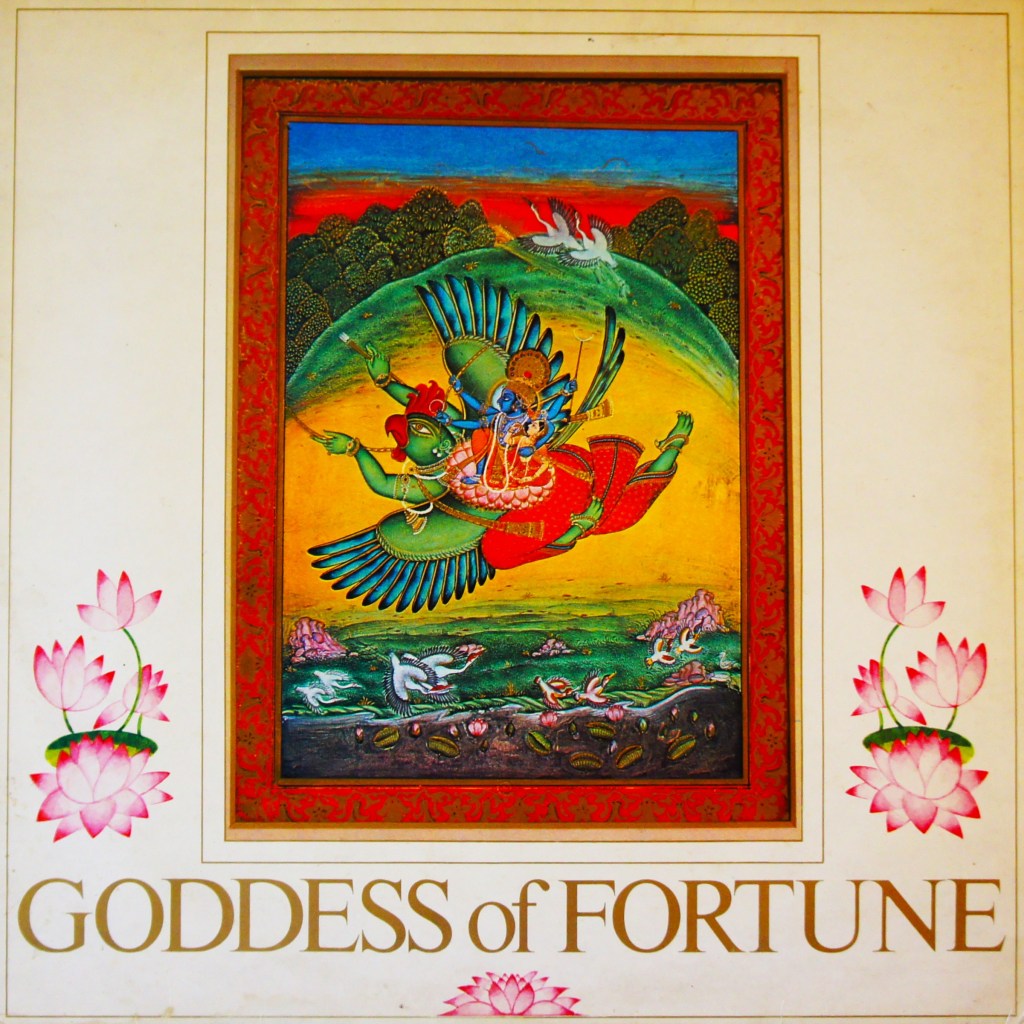
The album is mostly devotional chants with some basic percussion accompaniment, though there are a few guitar licks and strums (presumably played by George) and a wheezy harmonium. At times, the style of singing and the finger cymbals and exotic percussion reminds me of the early Incredible String Band.
Perhaps it’s churlish of me to complain that an album of devotional chants is somewhat repetitive…
In any case, by 1972 the Hare Krishna temple in London was too small for the rapidly expanding flock of devotees. This problem was solved when George Harrison stepped in and bought Bhaktivedanta Manor, a huge Hertfordshire mansion, and donated it to ISKCON. This is still the UK headquarters of the movement.[iv]
Krishna Rock
If the Hare Krishnas gave or sold you an album in the 70s or early 80s, it was probably by bands named the Golden Avatar, Progress or Ananta. These LPs are so ubiquitous that millions must have been produced.
Golden Avatar released A Change of Heart in 1976. The songs were written and sung by American Michael Cassidy and are mostly in a prog rock style with some lavish orchestration, Pepperish trumpets and squidgy seventies synths. It’s almost a concept album with the song lyrics going from open ended questions about searching for the meaning of existence through to enlightenment and the return to the godhead. Although the Hare Krishna chant makes a couple of appearances, it’s in the context of rock songs, unlike the Goddess of Fortune album which was aimed at devotees rather than recruiting new members. https://www.youtube.com/watch?v=SlnXHTBmoug


My introduction to Krishna rock came when I bought Busy Making Progress (1978) by Progress on Hebden Bridge market as a teen in the early 80s. This was actually the second album by Golden Avatar, though ISKCON in the UK changed the band and album name and released it without permission. In an interview, Michael Cassidy observed that ISKCON had taken the belief that everything belongs to Krishna a little too literally.[v]
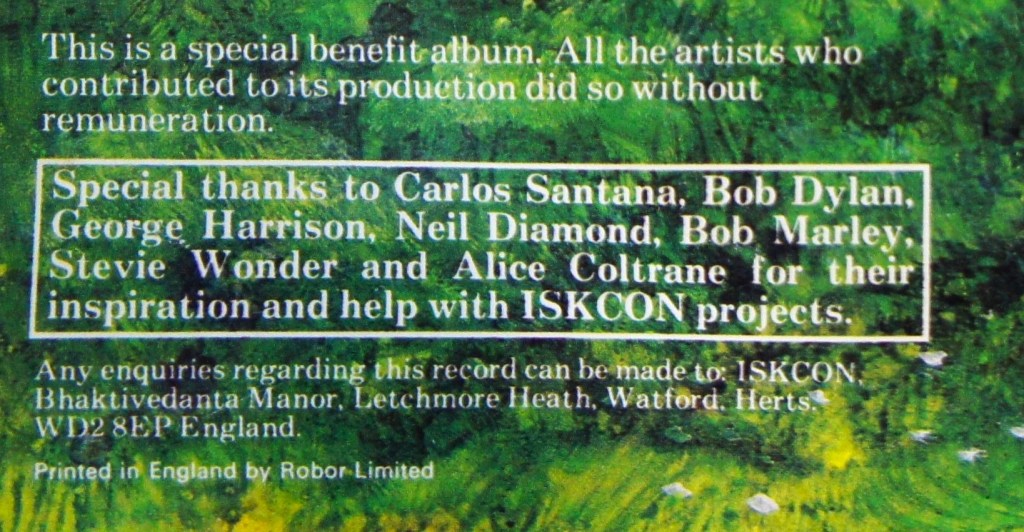
The album sleeve stated it was a benefit record, and the artists who contributed did so without payment. The sleeve specifically thanked Carlos Santana, Bob Dylan, George Harrison, Neil Diamond, Bob Marley and Stevie Wonder. I can’t have been the first punter who assumed that the music on the record was played by a supergroup consisting of all those musicians. It wasn’t. Combinations of these names appear on most Krishna rock record sleeves.
The album was right up my street as a teenager fascinated by esoteric mysticism, the occult, philosophy and music. As with the previous album, the songs moved from searching for meaning and philosophical questioning to critiques of scientific materialism to…. Krishna Consciousness and the familiar chant.
Although these albums tend to receive short shrift in prog rock reviews, they both came into my life at exactly the right time and I fell in love with both of them.
Ananta’s two albums, Night and Daydream (1978) and Songs from the Future (1980) are also to be found for a few quid wherever cheap vinyl is sold. These albums also try and entice the potential devotee by name-dropping the same rock royalty on the sleeve, but go a step further by making you think the LPs are collector’s items – they both have a fake ‘special promotional copy’ sticker on them. This is another common feature of Krishna rock records.
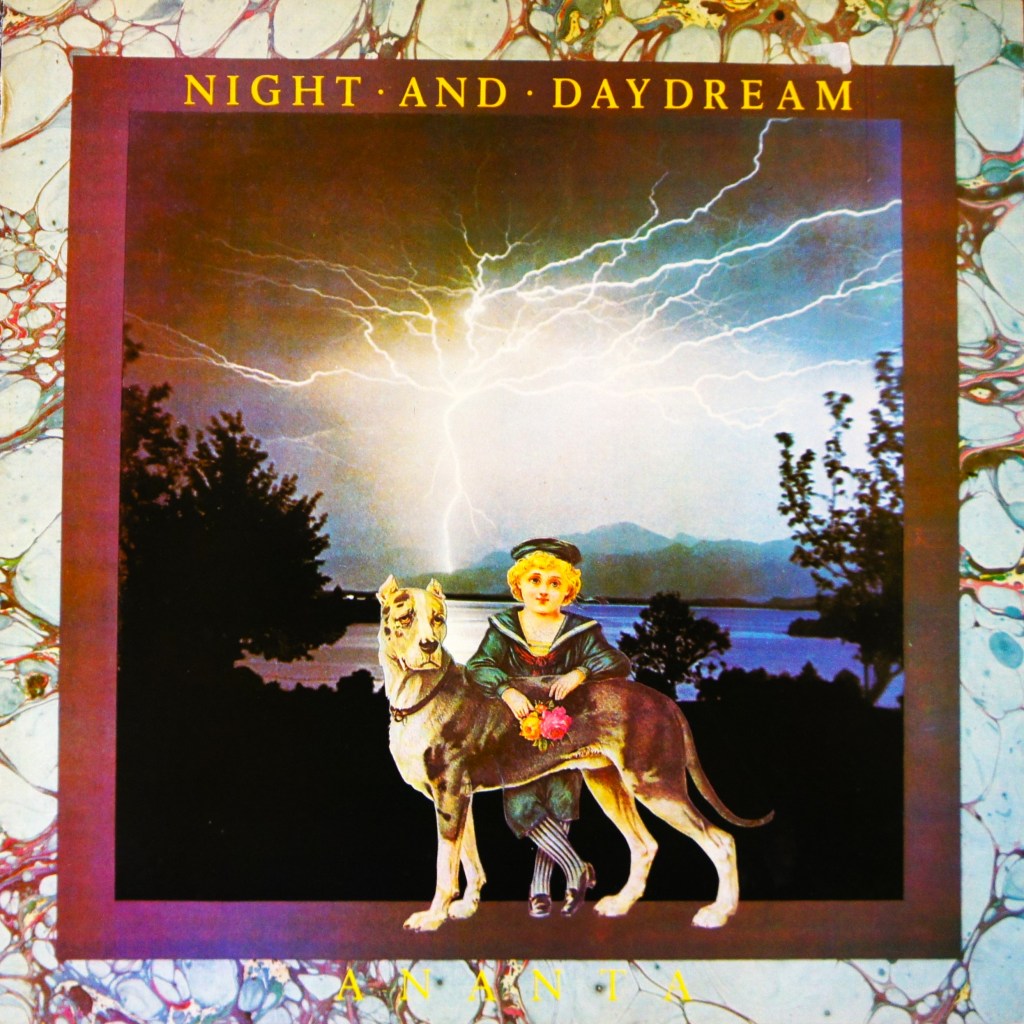
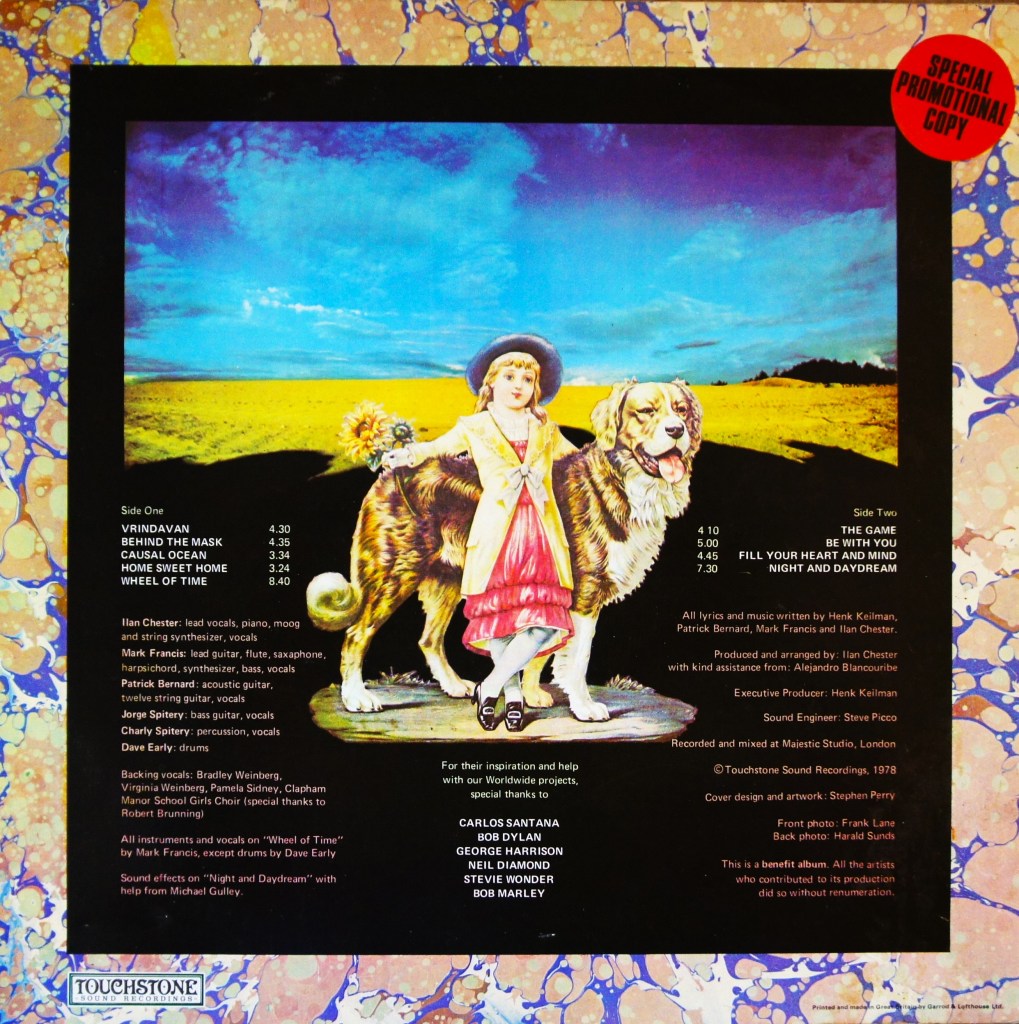
Venezuelan Ilan Chester wrote most of the songs and sang on these proggy LPs. There are some extended solos and jazz rock elements as well the bleeping, burping and gurgling of contemporary synths. Ilan Chester went on to become a huge star in the Spanish speaking world and is still involved with the Krishna movement. https://www.youtube.com/watch?v=L73E1VM_fmk&list=PLF980DE43BFB0E7AE&index=6
The Joy of Sects
Before his death, Swami Praphupada set up a system of eleven gurus, each in charge of a different region of the world to carry on his work. Six of these eleven were eventually expelled from the movement or left in disgrace. The power of being a guru with hundreds of worshipful acolytes went to their heads perhaps and many were convicted of various crimes including smuggling, gun crime, encouraging their followers to pick pockets and worse.
The British movement was taken over by guru Jayatirtha, who seemed to forget his vows of celibacy and abstinence, and began having sex with the female devotees and dropping acid. His dances were said to be particularly ecstatic. In 1987 he was stabbed to death and decapitated by a deranged disciple in a London shop.[vi]
This really marked the end of the Hare Krishnas selling or giving away records on the streets of British cities, though ISKCON still produces recordings of devotional chants.
The Krishna Rock records still remain, and I suspect there are millions of them around the world, sometimes under varying titles. They’re easy to find and cheap to buy. Although ISKCON may have cynically used the records to try and entice new devotees, there’s no question that the musicians and composers were entirely sincere in their attempts to translate their search for meaning and spiritual experience into a western rock idiom.
I’m not going to be joining the Hare Krishnas any time soon, but I still have a soft spot for these strange records. However, it’s fair to say the albums have yet to achieve the cult status they deserve.
[i] David V. Barrett, Sects, ‘Cults’ and Alternative Religions, (London: Blandford, 1996) pp.128-134
[ii] https://www.krishnatemple.com/george/
[iii] https://www.officialcharts.com/charts/singles-chart/19690928/7501/
[iv] https://www.krishnatemple.com/george/
[v] See here for an interview with Michael Cassidy: https://hogspeak.blogspot.com/2008/07/michael-cassidy-interivew-krsna-rock.html
[vi] Barrett (1996) pp.129-130
 Paul Weatherhead
One thought on “Sects, Cults and Rock ‘n’ Roll”