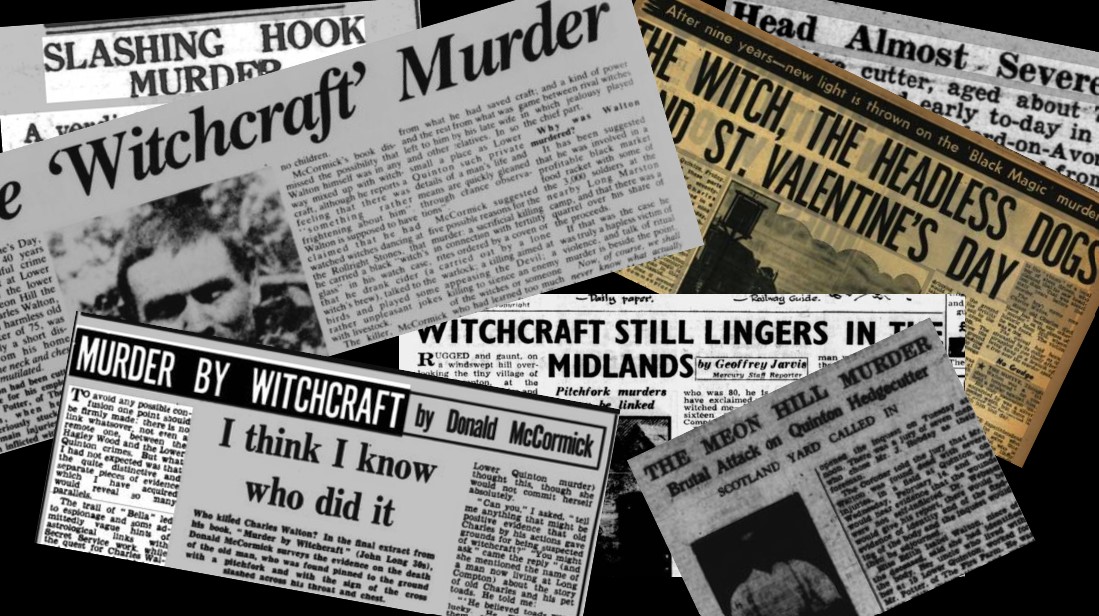
It was 80 years ago today that one of the country’s most sensational unsolved murders occurred. The violent slaying of Charles Walton in the tiny Warwickshire village of Lower Quinton spawned dark rumours of witchcraft and revealed a bizarre network of deadly apparent coincidences involving murder, black magic and ghostly black dogs…
On Valentine’s Day 1945 Charles Walton, a 74-year-old- farm labourer, set out with walking stick and hedging tools to do some work for local farmer Alfred Potter. When he didn’t return at the end of the day, his niece (who had been adopted by Walton) organised a small search party, and finally found him on Meon Hill near where he had been trimming hedges.

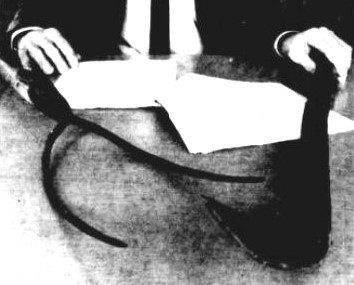
He was dead, pinned to ground with the prongs of his hayfork going through his neck almost severing his head. The slash hook was also buried in his upper torso. It was reported that crosses had been slashed on his neck and chest with his slash hook, a scythe like tool for trimming hedges. He had also been beaten over the head with his own walking stick and some of his ribs were broken.[i]
Witchcraft
The investigation into the murder was led by Scotland Yard’s Robert Fabian and Warwick detective Alec Spooner. The locals were not particularly helpful. The detectives witnessed the horror film cliché of entering the village pub to find the regulars suddenly falling silent and staring at the outsiders with surly hostility. The detectives soon found that rumours of witchcraft abounded in the village. Walton had been an eccentric loner who preferred the company of animals, with which he was said to be able to communicate. It was believed he had supernatural powers and that he had cast a spell to blight crops by attaching a toad to a toy plough and setting it off across neighbouring fields.[ii]
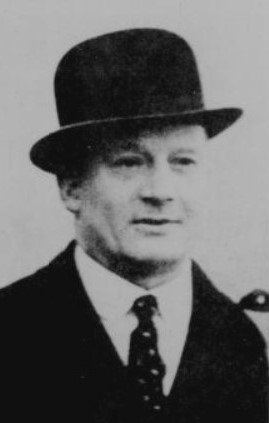
The detectives ruled out several theories. There was no evidence that he was killed by Italian POWs in a nearby prison camp, or that he had been murdered by soldiers with whom he had been engaged in black market activities.
Another potential explanation, and one that the police considered, was that Walton was the victim of a ritual murder. The evidence for this conclusion – such as it was – was the apparently ritualistic crosses carved on his chest and neck (though there seems to be no reference to these in the coroner report) and the way he’d been pinned to the ground through the throat as if to allow his blood to flow into the soil to replenish it – an explanation offered by witchcraft expert Margaret Murray.[iii]
Further adding fuel to this dark speculation were some bizarre and remarkable coincidences. In 1875, a local woman named Anne Tennant had been murdered in a similar manner with a hayfork by one James Hayward who said Tennant was one of several witches blighting the village and he was on a mission to kill all of them.[iv]
Headless Phantom Dogs
The site of Walton’s murder, Meon Hill, also had a reputation as being haunted by phantom black dogs, that staple of British ghostly folklore. In the late nineteenth century, a 15-year-old boy claimed to have seen terrifying headless black dogs on the hill on several nights in succession. The name of the boy who witnessed these phantoms was Charles Walton. However, it is highly unlikely this was the same person, but the coincidence of the name is striking.
Indeed, as Fabian of the Yard was walking over the hill contemplating his investigation in 1945, a huge black dog ran past him. When a boy approached him soon afterwards, he asked if he was searching for his black dog, at which the lad seemed horrified and fled in terror. Supposedly shortly after Walton’s murder, a dog was found hanged from a tree not far from the crime scene.[v]
The most likely scenario, however, was that Walton was murdered by his employer Alfred Potter, perhaps in a disagreement about money. He was the last person to see Walton alive, and his testimony to police was suspiciously fluid and inconsistent, though there seems to have not been enough evidence to convict him. It remains Warwickshire’s oldest unsolved murder and still makes regular appearances in the news, no doubt due to its spurious association with witchcraft, phantom black dogs and local folklore.
Epilogue
Both of the detectives who worked on the case seem to have become obsessed with it. In particular, Alec Spooner returned to Meon Hill every Valentines Day, still haunted by the gruesome murder and his failure to solve it. Spooner died in the 70s and villagers claimed that the detective’s spirit still walks the hills in search of the missing clue that would finally solve the mystery of the Valentine’s Day Slash Hook Murder.
[i] Daily Mirror 13 February 1954
[ii] Birmingham Daily Post 22 August 1968
[iii] Birmingham Weekly Mercury 17 September 1950
[iv] Black Country Bugle 16 December 1999
[v] Coventry Evening Telegraph 16 July 1994
 Paul Weatherhead