Demonic Possession in Lancashire ~ The Surey Demoniack

What should you do if your son is possessed by the devil? Why, turn him into a demonic freakshow and invite the drunken public to come and gawp at him as he gibbers, capers and blasphemes, of course! Well, that’s what happened in this weird case of demonic possession from 17th century Lancashire…

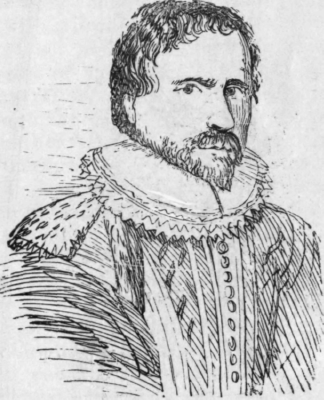
Richard Dugdale – The Surey Demoniack!

Richard Dugdale was a 19-year-old gardener living near Whalley, Lancashire. One night in the summer of 1688 he was drinking at the Whalley rushbearing festival when he saw a young woman he wanted to dance with, though he was not much of a dancer. He went as far as to say he would give himself to Satan if only he could be a great dancer.[i] And that’s when his troubles began.

Soon after, Dugdale experienced a sudden burning in his side as if he were being stung by nettles or pricked with needles. He began to hear voices and see visions, one of which was a disembodied head, and he felt an irresistible inclination to dance. He started to have frequent and violent fits, and people suspected he was possessed by the Devil.[ii]

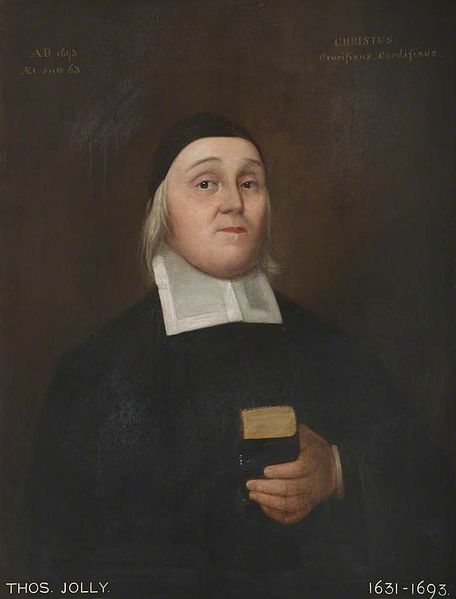
The Reverend Thomas Jolly collected many witness statements and published them in his 1697 pamphlet The Surey Demoniack. Witnesses claimed to have seen Dugdale float up out of his chair such that he had to be held down. He was said to have vomited stones and curtain rings, and to have spoken in a voice that was not his own, as well as in Greek and Latin, languages which he did not know.

Others said Dugdale produced horrible noises like those made by a pig or a bear, or that he would describe in awful and graphic detail the torments awaiting in Hell. Witnesses saw a lump as big as a cat or dog appear on his leg and then migrate along his body to his chest. A knife suddenly appeared in his mouth lengthways. Witnesses also said that during his fits Dugdale would be as light as a feather and then become as heavy as a horse.[iii]

Dugdale was taken to a barn known as the ‘Surey’. There his father exhibited him in what must have been a grotesque Satanic freakshow, and many came to see Richard Dugdale, ‘the Surey Demoniack’ as he danced, leapt and performed his possessed repertoire before a drunken crowd of onlookers. This is how the Reverend Jolly described his dancing:

[Dugdale’s dancing] … excelled all that the spectators had seen or heard of, or probably all that mere mortals could perform; for he often, for 6 or 7 times together, leapt up so, as that part of his legs might be seen shaking and quavering above the heads of the people; from which heights he often fell down on his knees, [on] which he long shivered and traversed on the ground, at least as nimbly as other men can twinkle or sparkle their fingers; then springing up into his high leaps again and then falling on his feet, which seemed to reach the Earth but with the gentlest, and scarce perceivable touches, when he made his highest leaps.[iv]

Sometimes a thousand spectators would come to see the spectacle and to witness Reverend Jolly converse with the Devil himself through the medium of the Demoniack.[v]

In the spring of 1689 Richard Dugdale and his father Thomas travelled to Todmorden to seek the help of Henry Krabtree. Krabtree was the curate of St Mary’s church in Todmorden, but also had a reputation as a healer, magician and some would say necromancer who did a bit of ghostbusting on the side.[vi]

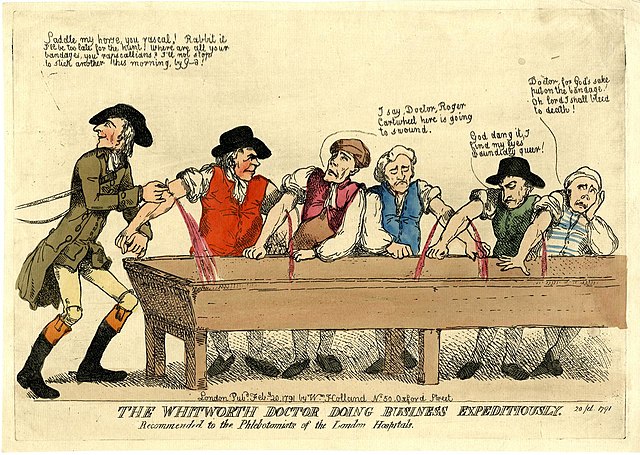
They stayed for two weeks while Krabtree bled young Dugdale, a common treatment for many ailments at the time. The first occasion this happened, Dugdale’s blood was supposedly as black as ink and only drawn with great difficulty. At a later time, Krabtree gave Richard ‘physick at once enough for six men’.[vii]

It’s not known which, if any, other treatments Krabtree employed, though perhaps he administered herbs or even performed magical rites. Although Dugdale’s fits abated while under Krabtree’s care, they returned more violently than ever when father and son returned home.

After Krabtree’s unsuccessful treatment of him, the Surey Demoniack’s fame continued to spread.

In July 1689, the Surey Demoniack visited Reverend Jolly and over the next year Jolly and several other prominent dissenting ministers attempted to exorcise him.[viii] One year later, Dugdale’s strange fits ceased. The Reverend Jolly claimed to have successfully exorcised him, though doubters said Dugdale had also been treated by two different doctors.[ix]

Rev Thomas Jolly ~ Exorcist

But what of Dugdale’s amazing supernatural feats and the signed statements by witnesses? Well, it turned out that the people who signed Jolly’s witness statements were illiterate and did not know what they were signing.[x]

This strange episode from Lancashire history is somewhat reminiscent of the fairy story The Red Shoes by Hans Christian Anderson. In the story, a vain girl, obsessed with her shiny new shoes, is punished for her vanity when the shoes take on a life of their own and force her to dance uncontrollably until, in despair, she gets an executioner to chop off her feet. Even then, the shoes, with her severed feet inside, continue to dance off into the sun set.[xi] Fairy tales were dark in those days…

However, dancing manias were a real phenomenon and there were several episodes throughout the Middle Ages.  In these hysterical outbreaks, the poor sufferers suddenly began to dance uncontrollably. They danced until their feet bled, and still didn’t stop. They cried out in anguish to passers-by for help. They danced till they dropped. Many danced until they died.

These cases often started with one person, like Richard Dugdale, suddenly having an uncontrollable urge to dance. This then spread to others, until more and more dancers joined in.[xii]

However, when we get to Richard Dugdale’s time these epidemics of contagious dancing hysteria had pretty much died out, which is perhaps a good thing. If Dugdale had been around a couple of centuries earlier, perhaps the whole of Lancashire would have started dancing uncontrollably as happened in Strasburg and several other cities and regions round medieval Europe!

In the end it’s not clear what exactly happened to poor old Richard. Was he suffering from a mental illness or hysteria that was interpreted through the superstitious culture of his time? Was it simply a show put on for paying customers? Was he exploited by his father and the Reverend Jolly, or was Dugdale himself a trickster controlling the would-be exploiters?

It’s certainly a fascinating slice of weird Lancashire history. Stay tuned for more true tales of demonic possession from the red rose county coming soon…


[i] Lieut-Col Fishwick ‘The Lancashire Demoniacs’, The Historical Society of Lancashire and Cheshire, volume 35, (1886) p.139

[ii] Thomas Jolly, The Surey Demoniack, London (1697)

[iii]  Fishwick (1886) pp.40-41

[iv] Jolly (1697) p.32 (I’ve modernised spelling and vocabulary)

[v]  Ibid p.40

[vi] Paul Weatherhead, Weird Calderdale (Tom Bell Publishing: Hebden Bridge, 2021) pp.193-204

[vii] John Birch, Henry Krabtree: Curate of Todmorden, (Paper Portal Publishing, 2019) p.112

[viii] Ibid p.114

[ix] Ibid p.114

[x] Zachery Taylor, The Surey Imposter, (Manchester, 1697)

[xi] http://hca.gilead.org.il/red_shoe.html

[xii] See John Waller, The Dancing Plague (Illinois: Sourcebook, 2009)

Weird Musical History 2 ~ Musaire! Calderdale’s Unsung Pioneer of Electronic Music

In the spring of 1950, an unsung pioneer of electronic music and variety star returned to his native Calderdale for a series of concerts at the Drill Hall, Halifax as part of the Halifax Home and Industrial Exhibition.[i] His name was Joseph Forest Whiteley, but he was best known by his stage name Musaire because he plucked music from out of thin air.

Musaire with his customised theremin

And the way he did this was by playing the theremin, the weird electronic instrument developed by its eponymous Russian inventor in the 1920s. The theremin works by creating electromagnetic fields around pitch and volume antennae and the player moves his or her hands within the fields to create musical notes. The closer your hand is to the vertical pitch antenna, the higher the note. The further away your other hand is from the horizontal volume antenna, the louder the note. It’s the only instrument that’s played without actually touching it.  You’ve probably heard its eerie tones in vintage sci fi and horror movies, such as The Day the World Stood Still or Thing from Another World. Musaire was billed as a ‘Musical Man of Mystery’ and was responsible for introducing the theremin to the UK in his long and illustrious showbiz career.[ii]

He was born in 1894 to a Ripponden family but moved to Canada as a young boy.[iii] He had a varied career which included being a lumberjack in Nova Scotia before becoming an entertainer whilst serving in World War One. He only managed to survive the war years because his train to Halifax (Canada) was a few minutes late. This is because at 8.45am on the sixth of December 1917, two ships collided in Halifax Harbour, and one of them was packed with high explosives. This caused the biggest man-made explosion ever up to that point in time and flattened large areas of the town. Nearly two thousand were killed and thousands more were injured.[iv]

Musaire’s late train meant he had survived the famous Halifax Explosion by minutes. The train he was on was loaded with casualties from the tragedy, and Musaire went back with them to Truro (again, the Canadian one) and was present at thirty operations.[v]

An experience like that would surely make you reassess your life, and perhaps that was what Joseph Forest Whiteley did. Perhaps it started him on his journey into the weird world of the theremin.

He bought and learned to play a customised theremin like no one had played it before. Yes, there had been a few musical theremin virtuosos like Clara Rockmore, and Musaire did not have her amazing technical ability.

In fact, since its invention classical theremin players have been trying hard to get the theremin to be taken seriously as a melodic instrument rather than a gimmicky novelty for making crazy noises and sound effects. Serious thereminists have always been slightly embarrassed by the theremin’s association with flying saucer noises and lurid B movies. However, as well as being able to play melodically, Musaire embraced the novelty aspect of the instrument and used it as the basis for his musical comedy act. Perhaps he was the Bill Bailey of his day.

In 1932 he was the first to introduce the theremin to the UK and it caused a sensation.

Throughout the 1930s and 1940s he amazed and baffled audiences on music hall bills by playing the tunes they requested simply by waving his arms skilfully in the air in front of his instrument, which looked like a writing desk with a vertical antenna sticking up from one side and a looped horizontal antenna on the other. Newspaper reports at the time inform us that Musaire could make his instrument sound like a human voice, a cello, bassoon or violin.[vi] Not only that, he used his theremin to create a range of amusing sound effects such as a dog being stung on its tail by a bee, a steamship approaching docks, seagulls squawking, horses neighing and pioneering aviators Amy Johnson and Jim Mollison taking off in their aeroplane.[vii]

His audiences were mystified, and it’s apparent many thought there was some trickery involved. To convince audience members that the instrument was real, he would call for volunteers to have a go themselves at playing a tune. The result was almost invariably ‘weird grunts and groans and ear-splitting squeals’, until he stood behind the volunteers and guided their hands, when once again recognisable tunes could be heard.[viii]

Sometimes in his performance he would open the cabinet of his instrument to satisfy the curiosity of sceptics and produce from within the innards of his contraption sweets and bananas.[ix] At other times, the inside of his theremin was revealed to contain a hidden cocktail cabinet.[x]

Musaire and his theremin entertained millions over the decades. He performed his shows in theatres, cinemas, schools, hotels and restaurants around the country. He played before royalty and appeared alongside stars of the era such as Arthur Askey and Stanley Holloway. It’s reported that he guided the hands of countless mayors of provincial towns throughout the UK as they attempted to pull a tune out of the temperamental beast that is the theremin.[xi] As recently as 1982 he performed with the London Symphony Orchestra.[xii]

In his later years he was involved in setting up and running Pendley Manor, the world’s first School of Music Hall. He served on the board of Equity, the actors’ union, and become Vice President of the British Music Hall Society for life.[xiii]

Musaire and showbiz chums (L-R: Musaire, Leslie Crowther, Arthur Askey, Cyril Fletcher, David Nixon (The Stage 8 February 1979)

He died on 23 February 1984, a few weeks short of his 90th birthday. However, his theremin can still be seen at the Musical Museum, Brentford and there are some clips of him in action. Here’s one from 1937:

https://www.britishpathe.com/video/musaire-musical

Epilogue

As a fan of both the theremin (I played theremin and other oddball instruments with Hebden Bridge’s much missed psychedelic garage band the Electric Brains for many years), I can’t resist debunking a couple of theremin myths as a little footnote.

Myth 1: The theremin is easy to play.

No, it isn’t. Yes, it was originally marketed as something that anyone could play. If you can whistle, you can play the theremin was one of the early marketing slogans for it. And, yes, it’s easy to make spooky noises on it. But the thing is, when it comes to actually playing a melody, with no keys, and no fret board, it’s just about the most difficult instrument ever invented.

The Electric Brains (author second from right)

If you’ve ever tried to play one, you’ll know what I mean. The theremin can smell fear. When novices have a go on a theremin, the first warbling scream it makes causes the player to instinctively step back in shock, resulting in the squeal getting louder as the player moves away from the volume antenna. Panic often ensues. Not many have tamed this weird musical beast, but a few who have that you might want to look up are Peter Pringle, Lydia Kavina and Charlie Draper.

Myth 2: The Beach Boys used a theremin on their hit ‘Good Vibrations’.

No, they didn’t. The Beach Boys never recorded with a theremin. I know Brian Wilson says they did, but he’s wrong. What they actually used was an electro-theremin (sometimes called a Tannerin after its inventor, Paul Tanner).[xiv] This is a very different beast that involved moving a slider along a keyboard strip. It sounded similar to a theremin, though was actually very easy to play. And playing the electro-theremin involved touching the instrument, which means an element of theremin magic is missing.

The Beach Boys used this fake theremin soundalike on ‘I Just Wasn’t Made for These Times’ from the Pet Sounds album, and again on ‘Wild Honey’ as well as their classic ‘Good Vibrations’. But they never used a theremin. In fact, Paul Tanner was asked to tour with the band but declined because of his studio commitments. And besides, Tanner quipped, his hair was too short![xv]


[i] Halifax Evening Courier, 18 April 1950

[ii] The Stage, 22 March 1984

[iii] Halifax Evening Courier, 18 April 1950. Some sources put his place of birth as Leeds

[iv] https://www.britannica.com/event/Halifax-explosion

[v] The Courier and Advertiser, 24 February 1940

[vi] The Gloucestershire Echo, 7 August 1946

[vii] The Northern Whig and Belfast Post, 10 November 1935; Leicester Evening Mail 7 September 1936

[viii] Eastbourne Gazette, 18 April 1934

[ix] Midland Daily Telegraph, 9 December 1935

[x] Gloucestershire Echo, 7 August 1946

[xi] The News, 16 October 1969

[xii] The Stage, 22 March 1984

[xiii] The Stage, 22 March 1984

[xiv] Albert Glinsky, Theremin: Ether Music and Espionage, (University of Illinois Press: Chicago, 2005) pp.294-295

[xv] Ibid

When Ghost Hoaxes Go Bad…

Playing the ghost – dressing in a white sheet, devil mask or animal skin and then jumping out on innocent victims to scare the wits out of them in dark and lonely locations – was a popular but much frowned upon pastime in the nineteenth and early twentieth centuries. It was assumed that delicate ladies who were on the receiving end of these pranks would be liable to lose their wits, or possibly even die from fright.

In an earlier article I wrote about how playing the ghost supposedly led to the death of the victims, and certainly led to the killing of an innocent man, in the case of the Hammersmith Ghost.[i]

However, the ghost hoaxes gone bad I’m going to recount in this post are both from the late eighteenth century, a decade or so before the golden age of playing the ghost. Both of these supposedly true stories have a nice twist with the tables turned on the fake spooks…

An angry mob chases a ghost hoaxer, Illustrated Police News

The Ghost of Teethill Wood

In the winter of 1794, a young sailor called William Johnston returned to Scotland for a few days’ leave to visit his mother in Saint Andrew’s.

While working as a mate at sea, William had discussed the subject of ghosts with a clergyman who happened to be a passenger on the ship. The priest had told him that because everybody knows that ghosts are insubstantial, if a ghost has footsteps or makes other noises, it is obviously physical in nature and so therefore cannot be a real ghost.

This was a hypothesis that William decided to put to the test on the Teethill Ghost. The Teethill Ghost was a towering apparition in white that had been seen many times in Teethill Wood, Elgin, and the locals were afraid to venture near the area after dark.

William assembled three young mates to be witnesses on a nocturnal expedition to investigate this mysterious haunting. The intrepid ghost busters went to the spot where the ghost was wont to haunt and waited…

It wasn’t long before a huge figure in flowing white robes appeared in front of the party. As the spectre drew near, William remembered the clergyman’s comments about the nature of ghosts. Footsteps were clearly audible. When the apparition was six yards away, William pulled out a pistol, aimed at the ghost and pulled the trigger.

As the shot rang out, the ghost fell to the ground crying, ‘Mercy! Mercy! I’m a dead man!’

Although William did not recognise the voice, his companions did. It belonged to a local eccentric named Bailie J—-n from Elgin.

Fortunately for Bailie, there was no shot in the gun but it still took the ghosthunters some time to convince the ‘spirit’ that he was in fact unharmed and the pistol had been empty.

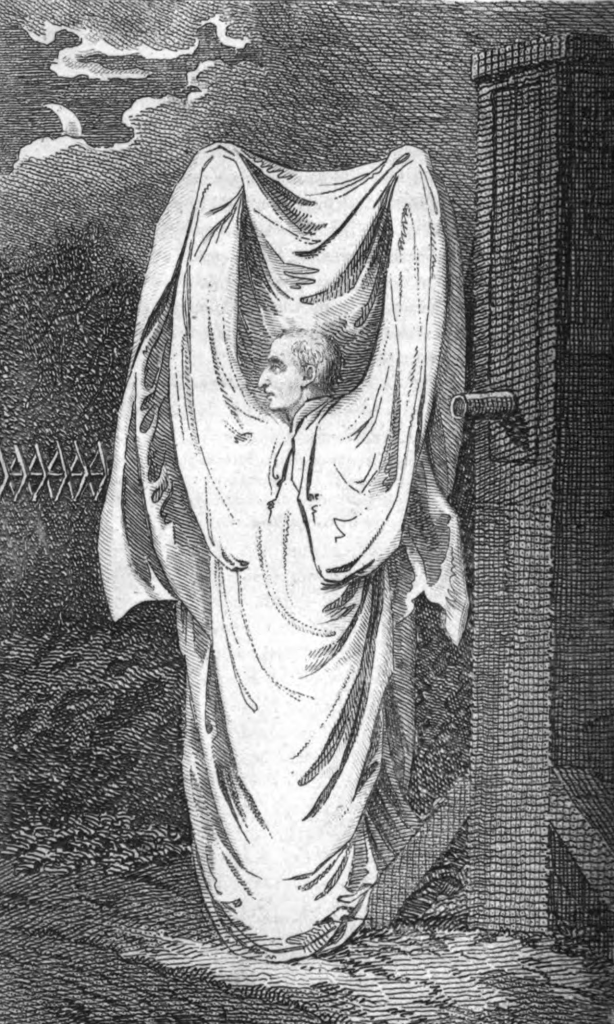
However, in a plot twist straight from the Scooby Do playbook, it turned out that the oddball Bailie was a smuggler of tobacco and gin and concealed his contraband in thickets in Teethill Wood. At night, his servant would collect the forbidden goods from the hiding place and deliver them to various places in the neighbourhood. Bailie, meanwhile, would put on his wife’s white gown and hold her petticoat above his head, knowing that this would scare away superstitious locals.

And, he would have gotten away with it if it hadn’t been for those pesky kids![ii]

Black Devil White Devil

This second story also took place (or was first recorded) in the 1790s and concerned a young woman called Molly, described as an ‘idiot’ who was resident at St James workhouse in Taunton. Molly, it seems, had an aversion to sleeping in a bed, so she would often run away at night and sleep in a nearby cow shed.

One night, two men decided they would try to scare her out of this habit. When they knew Molly was in the cow shed, one of the men donned a white sheet and walked back and forth where the unfortunate woman would see him, while his friend hid and watched.

Eventually, Molly saw the apparition and exclaimed ‘Aha! A white devil!’

However, the prankster was not expecting what happened next. Molly suddenly added, ‘A black devil, too! A black devil too!’

The confused ghost looked behind him and saw – or thought he saw – a figure all in black behind him, and ran home in a state of mad terror. As he ran, Molly clapped her hands in great glee and shouted, ‘Run black devil and catch white devil!’

The man, whether from shock or exertion, died within minutes of reaching his home.

I like to think poor young Molly was not such an idiot after all and, realising she was being hoaxed, gave as good as she got. In any case, she was left to sleep in her cow shed in peace.[iii]


[i] Scared… to Death! – Paul Weatherhead

[ii] This story first appeared in James Grant, ‘The Haunted Wood’, Elgin Annual (1833) and was reproduced in the Elgin Courant and Courier 4 April 1893.

[iii] This story first appeared in James Lackington, Memoirs of the forty-five first years of the life of James Lackington, (1793) pp.57-59. Reproduced in the Derby Mercury 23 May 1793

Weird Musical History 1 ~The Cat Orchestra

It’s the middle of the eighteenth century and an expectant audience is crammed into an exhibition room in London’s Haymarket to witness a bizarre performance that is the talk of London. The audience settles and the show begins.

Three cats sit ready to play their dulcimers, their sheet music on little music stands in front of them. The conductor signals for the performance to commence, and the cats pluck and strum the dulcimers while caterwauling different notes in turn to produce various tunes. As if the this was not surreal enough, rhythm is kept by a trained hare marching around on his hind legs and beating a drum while a monkey and a dog dance and caper together in time to the music. This is the strange but true story of Samuel Bisset and his amazing cat orchestra.[i]

Bisset was born in Perth, Scotland in 1721 to a watchmaking family and later settled in Ireland and worked as a shoemaker. At some point he moved to London and married into wealth, eventually becoming a broker and making even more money. In 1739, he read about a horse that had been trained to do tricks and decided that this was his calling.

Samuel Bisset

He started with a dog and then moved on to a horse, training them both with great success. Next came a couple of monkeys which he taught to do various acrobatic tricks as well as training them to play a barrel organ and to dance with his dog. But his biggest challenge was yet to come: cats.

He bought three young cats, and with infinite patience, trained them to strum dulcimers with their paws to accompany themselves while they meowed in turn and in key. He positioned little music stands in front of them with sheet music on, and he soon had a show that became a sensation.

The shows took place in his house, which became ever more crowded with spectators. Soon, the performances were so successful he rented an exhibition room in the Haymarket and called his show the Cat Opera. The musical kitties, dancing dog and monkeys and drumming hare attracted even more crowds and the money rolled in.

Bisset extended his menagerie to include dancing turkeys (which he rather cruelly got to dance by putting them on a heated floor) and other birds. Unfortunately, the time and expense of looking after and training such a large troupe meant that he eventually had to sell some of his animals and to take the show on the road round Britain and Ireland.

Eventually, enough was enough for Bisset and he gave up on his cat orchestra and the dancing critters and moved into a pub in Belfast.

But he just couldn’t resist his calling for long. He again trained a dog, and then a goldfish, to do tricks before settling on his next challenge, an animal even more obstinate than a cat: the pig.

After much work, he finally succeeded and took his ‘learned pig’ to shows in Belfast and Dublin where it astounded the audiences. The pig was able, we are told, to tell the time, spell out names and do arithmetic. It’s not clear how this was done, but probably Bisset recited numbers or letters and the pig grunted or signalled with a trotter when the required number or letter was spoken.

But tragedy was about to strike. For reasons that are obscure, one of the Dublin shows was violently raided by police who assaulted and injured Bisset. One of the officers even drew his sword and was ready to execute the poor pig on the spot, though in the end Bisset was told not to repeat the performance or face prison.

Bisset never recovered from the shock of the assault and died soon after in Chester while taking his learned pig to London.

We’ll never know what Bisset’s cat orchestra sounded like or just how proficient they were on their dulcimers. Perhaps, as with the learned pig (where the trainer can send subtle signals to the animal) there was some trickery involved with the cats’ performance. There were other cat orchestras in the following years, but these mostly involved them being trained to turn a handle on a barrel organ.[ii]

Anyway, none of them compared to Samuel Bisset and his amazing feline musicians wailing plaintively as they accompanied themselves on their dulcimers while the marching hare beat time on his drum and the twinkle-toed monkey and dog pirouetted and waltzed around them.


[i] GH Wilson, The Eccentric Mirror (1807)

[ii] For more on learned pigs and other odd animal stories see Jan Bondeson, The Cat Orchestra and the Elephant Butler: The Strange History of Amazing Animals (The History Press, 2006)

Scared… to Death!

A bizarre pastime emerged in the nineteenth and early twentieth century: ‘playing the ghost’. This usually involved a prankster donning a white sheet, perhaps with a scary mask and some devil horns and then cavorting in a spook like manner at a creepy location such as a dark lonely road or grave yard at midnight to frighten the wits out of any unfortunate passer-by. These ghost hoaxes terrified the victims and sometimes led to outraged vigilante mobs and violence, not to mention madness or murder and sometimes even spawned hysterical mass panics. The concern about these ghostly shenanigans was so great that it generated cautionary urban legends about the dangers of such supernatural hoaxes. A couple of my favourites are outlined below…

The Hammersmith Ghost Hoax of 1804

The Dead Hand

The first case is set, I would guess, in the middle of the nineteenth century and was widely reported in 1885. It concerns an old lady who had recently died and whose body was lying overnight in a curtained four poster bed. It fell to the old lady’s young niece (and heiress) and her cousin to sit and watch with the departed relative overnight.

This was an eerie duty for the young women, and as the wind howled and the snow fell outside, they decided to amuse themselves by recounting spooky stories. At first, they noticed creepy coincidences around the room. The ash by the fire had formed the shape of a coffin. They thought they could see the image of a winding sheet in the flickering candle flame.

The niece told her cousin a scary tale about being alone upstairs in a large empty house and hearing someone – or something – creep up the stairs. The sound of creaking came nearer until it reached the door, when it stopped. And then the door handle slowly began to turn…

It was at this point that the niece’s story trailed off. There seemed to be a creak coming from the bed where her aunt’s corpse was lying. The curtains round the bed rustled. The niece’s eyes nearly started from her head, she turned white and backed away towards the door, trembling violently and then fled the house into the night.

The cousin had her back to the bed, but on seeing the niece’s reaction, she turned to look behind her. A long, bony hand was slowly stretching out towards her from behind the curtains.

She leapt up, but as she tried to run, something clutched her skirt with an iron grip and prevented her from escaping. She struggled to free herself only to knock over a table and extinguish the room’s only candle. Alone, in the darkness, with the unremitting grip on her skirt preventing her from fleeing, she shrieked and fell silent…

Outside the house the cousin’s boyfriend and his mate were laughing their heads off at their prank. Knowing the girls would be alone in the room with the corpse, they had tied a length of cord around the old lady’s wrist, and from outside the room, pulled it so that the withered arm appeared from behind the bed curtains.

The boys found the niece outside in a swoon. Inside, on lighting a candle, they saw the cousin lying dead on the floor. She had caught her dress on an iron stove in trying to escape the horror, the horror which had scared her to DEATH![i]

This night thy soul shall be required of thee!

The second example was told by John Strange Winter (actually a pen name for novelist and journalist Henrietta Stannard) in 1911. This cautionary tale (which was ‘repeatedly vouchsafed as true’) involved a highly religious young girl at a boarding school.

One night, two pranksters crept into the girl’s dorm room as she slept and daubed on the wall opposite her bed in luminous phosphorus paint ‘This night thy soul shall be required of thee’.

Then, one of the tricksters got under the girl’s bed and kicked the mattress to wake her up. The girl did indeed wake and see the flaming letters (a quote from Luke 12:20). She let out a scream and then fell silent.

Her friends were disappointed that this was the only reaction and assumed that she had seen through the trick. They crept out of her room, thinking the girl had gone back to sleep.

In the morning, it was found that the poor girl was DEAD.

The two jokers did not receive capital punishment for their cruel trick, but they did carry the knowledge that they had caused their friend’s death just as if they had plunged a knife through her heart.[ii]

Cautionary Tales

Both of the above tales seem to me to be urban legends rather than real events. No names or clear dates are given. The stories are told with much relish in the newspaper sources than would be appropriate if they were relating a real tragedy. They are more of a warning as to what might happen if one should engage in such cruel hoaxes and they reflect the fears and moral concerns of their time.

However, ghost hoaxing did indeed lead to tragic consequences, the most well-known instance being the story of the Hammersmith Ghost. Towards the end of 1803 a prankster had been scaring the citizens of this part of West London by jumping out at them at night wearing a white sheet or an animal skin. The rumour emerged that it was the ghost of a man who had killed himself by cutting his own throat. Some of the ghost’s victims were so shocked that it seriously affected their health, and a pregnant woman is said to have died as a result of the fright.[iii]

After a night of drinking, excise man Francis Smith decided to confront the ghost on 3 January 1804. Walking the dark winter streets, Smith eventually came across a white clad figure and asked it to identify itself. When no reply came, Smith pulled out a fowling gun and fired. He had killed bricklayer Thomas Milward, who was wearing the white clothing that was typical of his profession. Milward’s mother-in-law had warned him about the danger of being mistaken for the Hammersmith Ghost and urged him to change his clothes.[iv]

Francis Smith was found guilty of murder and sentenced to death, though was soon after pardoned. The real culprit was later shown to be a shoemaker who was dressing as a ghost in order to exact revenge on his apprentices for scaring his children with spooky stories.[v]

Stay tuned for more tales of ghost hoaxes gone bad!


[i] South London Chronicle and Southwark and Lambeth Ensign 26 December, 1885

[ii] Forres, Elgin and Nairn Gazette 23 August, 1911

[iii] Owen Davies The Haunted (Palgrave MacMillan: Basingstoke, 2007) p.21

[iv] Ibid

[v] Caledonian Mercury 14 January 1804

Easter Ghost ~ Halifax 1843

At Easter 1843 crowds began to gather round a certain Halifax house, and more curious onlookers joined the throng each day. The house was said to have been unoccupied for 20-30 years and yet strange sights had been seen through its upstairs window: a bed was seen to fly around the room and a ghostly female figure had appeared there over the Easter weekend. It had been seen the previous two days and was expected to be seen again as Easter Monday came. The spectral figure was, according to onlookers, the spirit of a housemaid who had cut her own throat on Easter Monday around 40 years ago.

A random Victorian lady

As Easter Monday came, the crowds clearly saw the figure of a young woman appear at the window. People in the throng (according to the Halifax Guardian) shouted: ‘Here it is!’ and ‘Nah, will ta believe it, does to see it nah?’ The ‘ghost’ in question turned out to be a servant in the house, which was not empty at all, and behind the upstairs window was her bedroom, shared with another female servant. She had heard the clamour of the gathering crowds and looked out to find a large audience gawping at her. It seems a few days ago, she had taken down the blinds from the window for washing and temporarily replaced it with a makeshift substitute that looked a little like a female figure.

The Halifax Guardian lamented: ‘Who could have imagined that in the 19th century… crowds should have assembled in the centre of a populous town, and in mid-day to witness the feats of a Hobgoblin.’ The paper concluded thus:

It is a pity that a fire engine was not used to disperse the credulous men and children who could spend several hours in looking at nothing but a bare wall and windows. As for the women, they are more excusable; their curiosity is uncontrollable.[i]


[i] Halifax Guardian 24 April 1843

The War Between Monkeys and Dogs

At the end of 2021, bizarre reports of a strange war emerged from India: monkeys versus dogs. Villagers in Maharastra state, 300 miles east of Mumbai, claimed that revenge mad langur monkeys were slaughtering puppies by the hundreds. The attacks were so thorough that in Lawul village, every single puppy had been wiped out.[i]

According to the locals, the conflict started when a pack of stray dogs attacked two monkeys and their infant. The baby monkey was mauled to death in the attack. In revenge, monkeys began to systematically hunt down puppies and then carry them onto roofs or up trees before hurling them to their deaths. The number of dogs killed is estimated by villagers to be more than 250.

The strange story of the monkeys’ vendetta against the canine population was widely reported and the monkey-dog gang war led to the predictable proliferation of internet memes.

After virtually all the area’s dogs had been dealt with, the revenge mad monkeys apparently turned their attention to local children and started harassing them. Something had to be done and the main culprits responsible for the doggy massacre were finally captured.[ii]

The Forest Department investigated the ‘war’ and it seems that the truth of the matter may be more complex than the villagers and the press have reported.

For one thing, the figure of 250 dogs killed seems to be unfounded. According to Sachin Kand, a local Forest Officer, the actual number is closer to 50, though some sources provide a much lower number.[iii]

Furthermore, it’s also possible that the motives for the monkeys’ behaviour may have been grief rather than revenge. Kand suggests that the distraught monkeys who had lost their infant to the pack of dogs were actually trying to replace their baby with a puppy, which they would carry around the villages with them, including onto roofs and treetops. The unfortunate dogs would then either starve on the roof or, not being built to navigate trees, fall to their death.

The Forest Department report concluded that the ‘clashes between dogs and monkeys in Lawul village cannot be termed as an act of revenge.’[iv] Indeed, revenge is a very human emotion.

It seems we looked at these horrible events and completely misunderstood them. We projected our own feelings onto what was happening and created a distorted narrative that reflected our own thoughts and prejudices based on sensationalist and inaccurate reporting.

It’s never a good idea to rush to judgement without being aware of our own biases, prejudices, lack of reliable information and the tendency of media sources to amplify and distort sensational events.

At times of war, information is a weapon and a healthy scepticism is the only defence.


[i] https://www.opindia.com/2021/12/angry-monkeys-take-revenge-by-killing-250-dogs-after-puppy-kills-baby-monkey/

[ii] https://www.theguardian.com/world/2021/dec/21/monkeys-blamed-for-hundreds-of-puppy-deaths-captured-in-india

[iii] https://www.boomlive.in/news/beed-monkeys-revenge-dogs-puppies-nagpur-maharashtra-16114

[iv] Ibid

Banned! The First Alien Abduction was so shocking it was censored!


The first alien abduction case in the UK is usually considered to be that of PC Alan Godfrey in 1980. He was driving his panda car on Burnley Road, Todmorden in the early hours of a November morning when he was confronted with a large diamond shaped craft hovering above the street, or so he claims. Later under hypnosis, he ‘remembered’ being aboard the craft and undergoing some kind of medical examination carried out by robots, an alien named Joseph and a dog.[i] Godfrey now distances himself from the abduction element of his story, and some accounts omit it altogether, perhaps because, compared to later abduction claims by Americans that involved the greys, implanted chips, anal probes, human-alien hybrid baby farms and other exciting features, Alan’s abduction just seems rather quaint. And of course, there have been many older abduction claims around the world.

So, as for the world’s first alien abduction case, this honour usually goes to Americans Betty and Barney Hill. They were driving at night in September 1961 when they saw a strange light in the sky. Later, under hypnosis they described being kidnapped and examined by aliens.[ii] One of the best parts of this abduction claim is that, as the aliens who abducted the Hills had no mouths, they were confused by Barney’s false choppers and couldn’t understand why his teeth were removable but Betty’s weren’t. Betty tried to explain to the alien that as people age, they might require false teeth, but these aliens, who had mastered interstellar travel, could not comprehend the passing of time.[iii] This is probably a good thing if you have to make a voyage of millions of light years.

The abduction of Betty and Barney Hill may have been the first publicised account, but that of Antonio Villas Boas from Brazil predates the Hills’ account by several years. Villas Boas claimed that in 1957 he saw a UFO land in his field one evening. He was taken aboard, examined and then seduced by a saucy naked alien lady.[iv]

But are there any earlier descriptions of alien abductions? French computer engineer and ufologist Jacques Vallee noted the similarity between alien abduction stories and fairy folklore.[v] There is some superficial similarity, to be sure. Both fairies and aliens are often portrayed as diminutive in stature. There is often an element of ‘missing time’ in alien abduction claims, and in fairy lore, when an unfortunate human returns to the human world after spending a short time in fairy land, he may find that many years have passed. But fairy folklore misses some central aspects of the typical abduction narrative – the technology, the medical examination and the aliens. I’m looking for the first description on a human being taken by ETs from another planet, not magical creatures like fairies, elves or boggarts.

No, for the first alien abduction we need to go back to 1897. This was when War of the Worlds by H.G. Wells was first serialised in Pearson’s Magazine. Perhaps you don’t remember the abduction in Wells’ classic, and that’s because it was viewed as so disturbing it was cut from the story when it was reissued in book form. Wells describes how the Martians had abducted and experimented on a human scientist as a vivisectionist would do to a lower animal. The unfortunate scientist was left horribly mutilated yet still alive. Here’s the offending passage from the magazine version of the novel:

I know it is the fashion to write of these Martians as being incredibly cruel, but for my own part I cannot see that we are justified in calling ourselves, as certain recent flatterers of humanity have called men, their Moral Superiors. The fact that in the pit at Wimbledon (the pit made by the tenth Cylinder) the still living body of an eminent physician was found fixed so that he could not move, and horribly mutilated, does not seem to me to carry the point.

Let us clear our minds of cant. We are not justified in supposing that the Martians had been amusing themselves by torturing him. All the circumstances point to the view that they were satisfying their curiosity upon some structural point, and that afterwards, through interruption or inadvertency, they omitted to put him out of his misery. Man who vivisects the lower animals certainly has no claim to exemption when in his turn he becomes a lower animal.[vi]

The cruel vivisectionist was often a character in sensation novels in the later 19th century, and it’s interesting to see here the tables turned  and the vivisectionist vivisected. The aliens are not cruel, just dispassionate – the ultimate technocrats.[vii]

So there we have it. The first reference to an alien abduction and medical examination, considered so shocking it was censored.  It’s also interesting that the fictious aliens that Well’s described are more plausible as extra-terrestrial life forms described in supposedly real abduction claims. Wells describes his aliens as tentacled slavering blobs, whereas most aliens in the abductions described above are merely short-arsed humans with big eyes. Surely an alien that evolved on another planet would not be so remarkably similar to us? Some cynics may accuse abductees of having too much imagination, though it seems to me the opposite is true. If you must be abducted by aliens, at least show some imagination and make them a bit more exotic.[viii]

Anyway, perhaps somewhere there’s an earlier account that I’ve missed, and if so, I’d love to hear about it. But for now, I’m going to maintain that the father of alien abduction is H.G. Wells.

Uuuullllllaaaaaaa!


[i] See my Weird Calderdale chapters 3 and 4 for the full story.

[ii] See The Interrupted Journey by John G. Fuller for the first telling of this story. See UFO Abductions: A Dangerous Game by Philip J. Klass (Prometheus Books, 1989) for a sceptical take on the events.

[iii] Klass, p.12

[iv] Robert Shaeffer Bad UFOs (2016) p.116

[v] Jaques Vallee, Passport to Magonia: from folklore to flying saucers (Brisbane: Daily Grail Publishing, 2014)

[vi] The original Pearsons Magazine version of the novel can be found here: https://decollected.net/compare/

[vii] See Michel Meurger, ‘Surgeons from outside’ in Fortean Studies Volume 3 ed. by Steve Moore (London: John Brown Publishing, 1996), pp. 310-311 for more on the relation between villainous mad scientists and the emergence of alien abduction tropes.

[viii] See the image at the top of the post: Frank R. Paul’s drawing for the cover of a 1927 edition of War of the Worlds

Vampire Hunters and Me

I’ve only ever had any dealings with two vampire hunters. I found myself in the middle of a decades long feud that involved occult duels, black magic, a bishop, vampires, a giant spider, Long John Baldry’s cat and Robin Hood…

Robin Hood’s Grave, Bradford Telegraph 1899

It all began in 2003 when I was working on the first edition of Weird Calderdale and researching Robin Hood’s grave in the grounds of Kirklees Hall, near Brighouse. It was here, the ballads tell us, that an ailing Robin was bled to death by an evil Prioress and her lover Red Roger of Doncaster. In later centuries a wall and railings were constructed around an unimpressive lump of rock said to be Robin’s gravestone. In modern times, though, the grave became the haunt of Britain’s second most famous bloodsucker – the Kirklees Vampire. We’ll come to Britain’s most famous bloodsucker shortly.

The story of Robin Hood’s grave and the Kirklees Vampire is enough to make your head spin. It seems to begin with Barbara Green, founder of the Yorkshire Robin Hood Society, collecting reports of some spooky encounters with a scary nun-like ghost near the grave. After meeting Lord (later Bishop) Manchester and asking him to become patron of the Society, she wondered if there might be something of a vampiric nature happening around Robin’s grave and corresponded with Manchester about it. After all, Manchester had written numerous books about vampires and claimed that he had destroyed more than one.

Manchester decided this was worth investigating and wrote to the owner of Kirklees Hall, Lady Armitage, asking if he could have permission to dig up the grave and to perform blessings at the site. On receiving this request from Manchester’s organisation ‘The International Society for the Advancement of Irrefutable Vampirological and Lycanthropic Research’, she issued a curt refusal. So Manchester and Green then sent a copy of their request to exhume Robin Hood to see if his grave was occupied by a vampire to the media, and they loved it. DID A VAMPIRE KILL ROBIN HOOD? BAT MEN WANT TO DIG UP ROBIN HOOD was a typical headline from the Liverpool Echo in 1989.

Two Encounters with the Kirklees Vampire

In Manchester’s book A Vampire Hunter’s Handbook, he describes how he made a clandestine nocturnal visit to the grave with two assistants. They fought their way through the thick, thorny undergrowth and located the grave hidden in its wooded corner of the estate, and one of his companions claimed to have witnessed a terrifying woman in black who was at first serene and then transmogrified into a horrible red-eyed wraith. They blessed the grave and left.

How much of that story you believe is up to you, but it’s not the only scary experience to happen on an illicit night-time trespass on the estate. Barbara Green herself had a similar encounter in 1992 where she had a frightening vision of Red Roger of Doncaster. Or was it the evil Prioress? Or was it both? Her accounts are rather fluid, and by her own admission she was coming off medication prescribed by a psychiatrist at the time, which may have had something to do with it.

However, one person who scorned the idea of vampire activity at Kirklees was David Farrant, who is variously described as an occultist, psychic investigator and vampire hunter. And Farrant and Manchester had history. A long history, going back to the late 1960s and involving Britain’s most famous bloodsucker, the Highgate Vampire.

The Highgate Vampire

At the end of the 60s, London’s Highgate Cemetery, resting place of Karl Marx, was in a bad state of repair. There were newspaper reports of graves being desecrated and corpses being exhumed or even staked. David Farrant made it his business to get to the bottom of the mystery and passed more than one night in the graveyard with a crucifix, hammer and stake (not to mention a camera to take naked photos of his girlfriend with). Farrant was eventually arrested for these activities and served four years in prison.

Meanwhile, Manchester conducted his own investigation and eventually, so he says, managed to destroy the vampire with a stake through the heart, though not before the vampire had bitten his girlfriend and turned her into a giant spider. Hmmm.

But the rivalry between Manchester and Farrant’s accounts of the Highgate Vampire developed into a bitter feud that lasted decades. They had occult duels to the death which were advertised round London, though no one actually died. Except 60s singer Long John Baldry’s cat. Baldry believed Farrant had sacrificed his kitty in a Highgate ritual, so asked another 60s rock star, Graham Bond, to work some magic for him, though he in turn died soon after, falling under a tube train. I told you this was weird.

Farrant and Manchester in the Sunday Mirror 1973

Farrant produced a comic strip called Bishop Bonkers, satirising Manchester. Manchester in turn filled web sites and chat forums with accounts of Farrant’s ghoulish misdeeds.

Back to Kirklees

Anyway, when Manchester found out that Green and Farrant had been corresponding and discussing other supernatural explanations for the goings-on at Kirklees, he resigned his post as patron of the Yorkshire Robin Hood Society. Green then offered the role to Farrant. The long-running feud continued, but its focus was suddenly Robin Hood’s grave, this rather non-descript folly near Brighouse.

And that’s where I came in. As I started investigating the tall tales associated with the grave, I penned a short article for a local website and within a day I was getting thundering, intimidating emails from Bishop Manchester about the evils of Farrant and the delusions of Green, and threatening action for referring to him as a vampire slayer. He objected to this because, he says, vampires are demonic and cannot be slain but only exorcised.

I wrote an email trying to mollify him, but this appeared, along with a photo I had taken of the grave, on one of his websites. That’s when Farrant and others in the Yorkshire Robin Hood Society contacted me. I interviewed Farrant about his thoughts on Kirklees, though he spent much of the time trying to get me to report Manchester to the police for publishing my message and stealing my photo.

Manchester in turn proceeded to send me email after long multi-coloured font email going into Farrant’s dubious activity in Highgate and other criminal escapades as well as casting doubt on Barbara Green’s sanity.

More emails followed from members of the Society encouraging me to make an official complaint about Manchester for stalking me. I was being stalked by a vampire hunter!

It was all getting unpleasant. I felt I’d been unwittingly dragged into a weird occult feud that stretched back decades, and it was with some trepidation that I approached the revision of the chapter on Robin Hood’s Grave and the Kirklees Vampire for the 2021 edition of Weird Calderdale.

But it’s such an odd story, that I just had to. I’ve only scratched the surface of this bizarre supernatural soap opera in this article. There’s so much more to it that I don’t have space for here, but you can read more in Weird Calderdale, though I’d also recommend Grave Concerns by Kai Roberts as the definitive work on all things related to Robin Hood’s Grave.

Barbara Green is no longer active in grave related matters. David Farrant died in 2019. The Bishop is still going, though. I thought I’d leave you with some of his advice to me about vampire hunting, sent in an email in May 2005, just in case you fancy your hand as an amateur Van Helsing:

Vampires exist now as they ever did, and their number is legion. The vampire, of course, quaffs human blood. This is what distinguishes it from other demonic entities. And they can and do metamorphose into other shapes and forms. Vampires, like all supernatural evil, are repelled by Christian images and holy objects, eg a blessed crucifix, but they cannot be destroyed, ie “killed.” Exorcism casts them out. The corporeal host will return to its natural state when the demonic entity has fled. Cremation is the most effective method of dealing with contagions, but impalation has proven to be as efficacious in recent times as it was in the past. I would remind anyone considering this remedy that the Anglo Saxon law that permitted such impalations was repealed in 1832.

In which I steal secret microfilm from the KGB!

As I discussed the shortcomings of the CIA’s recent report on Havana Syndrome in my previous post, I thought I’d stay in the murky world of espionage and tell you how I came into the possession of KGB microfilm of American secrets.

I spent three years teaching English in Russia in the 90s, mostly based in the small town of Dubna, best known for its physics institute and the fact that the town has an element, dubnium, named after it.

Every so often, I’d have to make the three-hour train journey to the Moscow office for training sessions. On one occasion, the company had acquired a new office complex in the basement of a huge tower block in central Moscow. The basement offices had previously belonged to the KGB (or the FSB as they became), who were still in the process of emptying the building as we were moving in. As you went in through a massive thick metal door, you stepped through a shower cubicle. We speculated that this was to wash irradiated survivors of a nuclear attack before allowing them into the bunker… or was it to gas unwelcome visitors?

Inside, there was a large walk-in cupboard housing a chunky filing cabinet with drawers open and overflowing with little envelopes. These little envelopes, most stamped with США (‘USA’ in Russian, were piled up to knee height on the floor and wrapped in bundles of 20-30 with elastic bands. There were thousands of them….

Reverse engineering a crashed saucer? Or a time machine? One of the files I stole from the KGB.

Several of the English teachers, myself included, couldn’t resist helping themselves to some Cold War memorabilia as souvenirs. I came away with several bundles of these envelopes, perhaps close to a hundred. All contained microfilm with text in English and mysterious diagrams, though it was too small to make much out.

The next time I returned to the UK, I took my KGB files to the library to examine my stolen secrets using the microfiche reader. I was hoping for a crashed flying saucer, or the truth about JFK, or sonic ray guns or at least a nuclear submarine or something.

What I got were US patents for automatic car parking mechanisms. Every single one. Some films were from 1947, some were from 1953 and 1957. Around a hundred of them, all different, but all showing various types of conveyor belts, lifts and pulleys for automatic car parking. I checked them all. No UFOs, no hit lists, no nukes and not even mind zapping commie ray guns.… Just loads and loads of automated car parking systems! I didn’t realise the world of international espionage was so, well…. dull.

Another KGB file

I’ve lost or given away most of the files over the intervening decades, though I’ve still got a few left. If the FSB or the CIA want them back, well make me an offer. I may be in possession of lost classified information that could change the world of, er….  automated car parking mechanisms, for ever.

More mystery US tech stolen by the KGB then stolen by me…
Statue of Lenin, Dubna, Russia. My home for three years (By Harveyqs – Own work, CC BY-SA 3.0)