
“It made the very hairs on our heads stand on end for fear…”
A monstrous creature with green eyes, long green whiskers and a cavernous mouth haunted the waters round the Shetland Isles in the late nineteenth century. In May of 1882 a boat of fishermen had a terrifying encounter with this monster of the deep and it caused a media sensation. The monster has no name, so I’ve taken the liberty of calling him Green Whiskers.
What was this strange creature? Could it have been the mysterious creature from Shetland folklore, the bregdi? Or is there another mega mouth monster lurking in our shores?
Green Whiskers
The fishing boat the Bertie Goudie was about 28 miles east-southeast of the northern Shetland Isle Fetlar on a cloudy but fine morning on 18 May 1882. The crew had every reason to be confident of a good catch – they frequently returned to shore with more impressive hauls than did their rival fishing boats. The fifty foot sailing boat was manned by half a dozen men, and their regular success meant they had a good reputation among the local community.
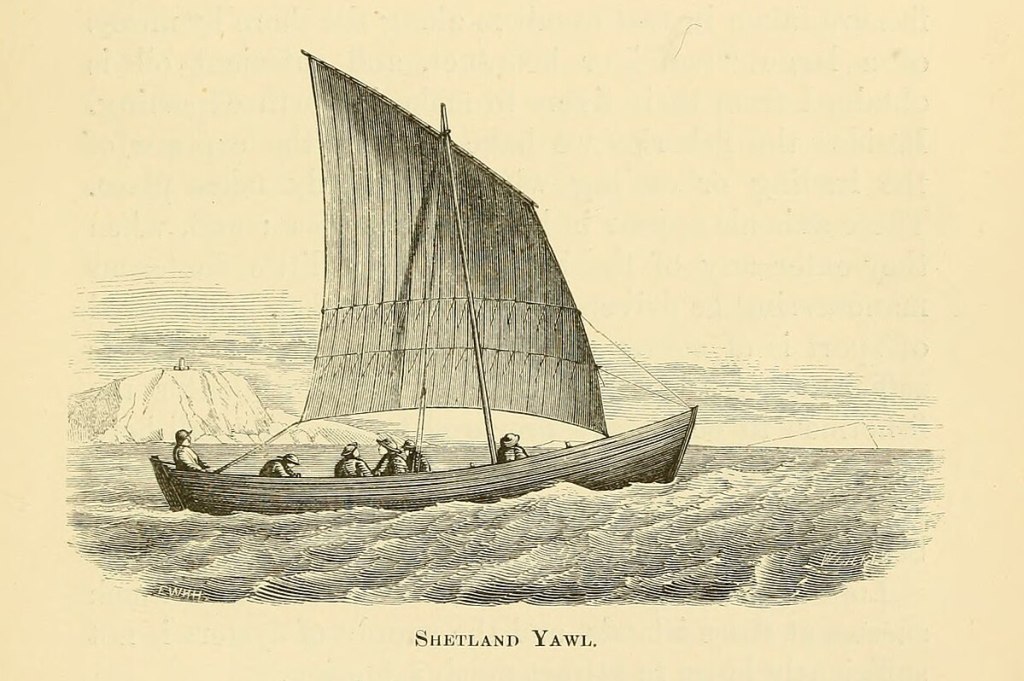
As the men were hauling in their fishing lines, they saw in the distance what appeared to be three hills, each the size of an upside down six-oared boat. Something blew out of the water and the fishermen thought there must be three whales following each other. When the three hills sank under the waves, the crew saw to their horror that it was not three whales but one huge creature, and it was heading straight for them, possibly attracted by their haul of fish.
Some of the men rushed to the side of the boat and saw the monstrous beast pass under their fragile little boat. ‘I can tell you,’ one claimed, ‘it made the very hairs on our heads stand on end for fear.’
One of the men wanted to cut the lines and sail for the nearest shore, but the skipper had not seen the creature and wouldn’t allow it.
The creature surfaced again, allowing the astonished crew to get a good look at it. It had a monstrous gaping square jaw with an underlip that was four or five feet deep. Bizarrely, it had what appeared to be whiskers of a ‘pretty’ green colour that were seven or eight feet long hanging from its mouth. Its head was covered in gigantic barnacles the size of herring barrels, and its skin was crusted in marine slime and filth.
The skipper ordered the men to scream as loudly as they could and throw stones and lumps of old metal used for ballast at the monster, hoping to scare it away, but in vain – the objects bounced off its head like marbles and the creature was still heading straight for them. Its mouth was big enough to swallow the whole boat and crew with ease. Its two huge fins were as large as the boat’s mainsail and flapped horribly above the water. They estimated the creature was 150 feet long, three times the length of their boat. For context, the longest blue whale ever measured was 98 feet long.

When the creature was only a few yards from the boat, one of the crew grabbed his shotgun and fired both barrels into the monster’s gaping maw and this seemed to stop it. The skipper ordered their fishing lines cut and the sail was hastily raised. The boat caught a gust of wind just in time to avoid the monster which burst out of the water in their wake. A few seconds’ delay, and the Bertie Goudie would have been destroyed.
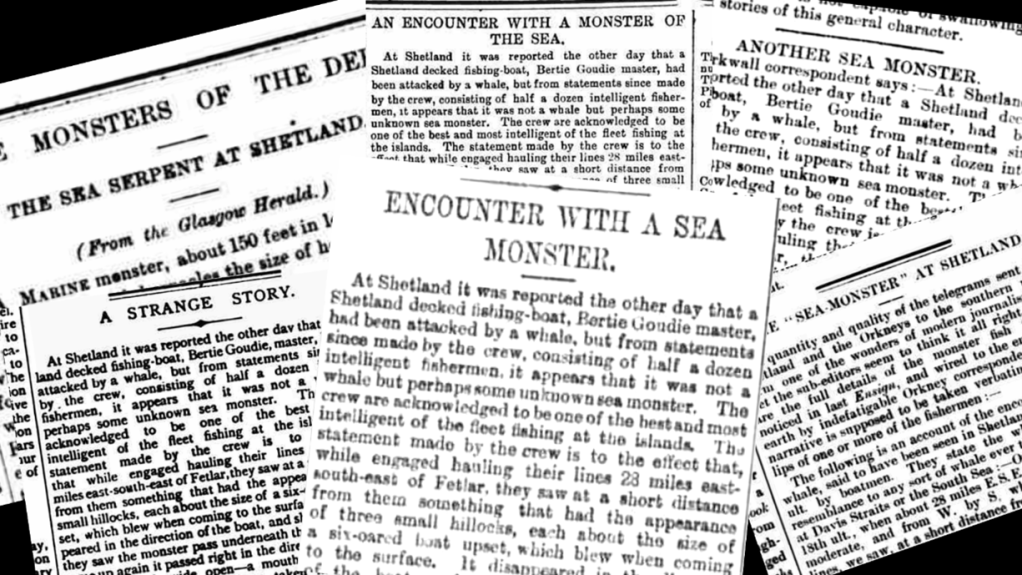
They sailed as fast as their boat would carry them, with the creature pursuing them at 100 yards distance. The skipper tried to sail the boat in a zig-zag manner to confuse the monster, as for three hours and eleven miles it hunted the terrified fishermen. Eventually, they lost it and returned to shore without their expected brimming nets and had to explain how they had lost a mile of fishing lines.[i]
The episode was written down and signed by the (unnamed) skipper on behalf of his crew and was printed in national and local press around the country – sea monster tales were fairly common in the press in the nineteenth century, and were usually treated with scepticism and mockery, or as a kind of fun silly season story.
The Bregdi
So what did the crew of the Bertie Goudi encounter? From their description it sounds very much like the dreaded Bregdi, an uncanny, semi-mythical creature said to haunt the waters around the Shetland Isles. Like Green Whiskers, the Bregdi has huge fins, the size of a boat’s sail, and if it saw a boat would often attack it, dashing it to pieces with its sharp fin, or even worse, wrapping its fins around it in a deadly embrace before pulling the hapless ship and all who sail in it to a watery grave at the bottom of the sea.
This weird whale-like monster was much feared by Shetland fishermen who thought it the most dangerous of sea creatures. They would try and appease the monster by throwing coins or pieces of iron overboard as an offering to him. Tradition also says that the Bregdi is terrified of amber beads, and a single bead thrown at it would be enough to keep it at bay.[ii]
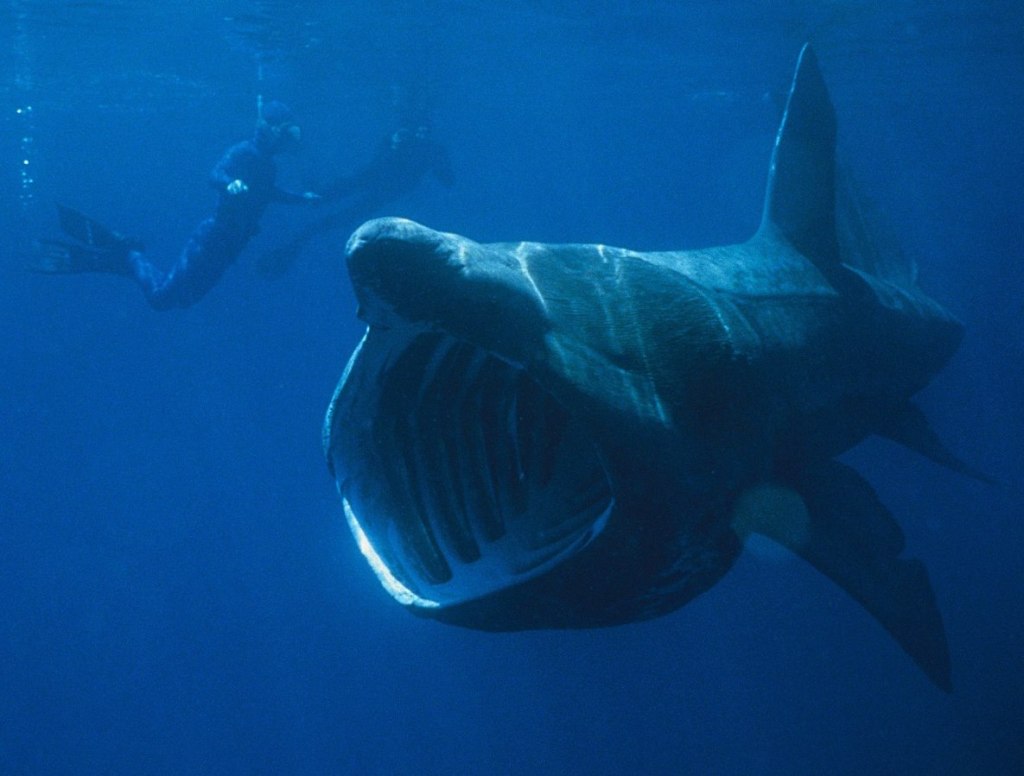
The Bregdi is now thought to be the basking shark, something Shetland fishermen would have encountered. This species of whale shark is the biggest fish of the British Isles, and the second largest shark in the world – it can grow to over 30 feet. They are known to bask on the ocean surface as they feed, and although they’re pretty slow they can and do leap out of the water. The basking shark’s most distinctive feature is its huge mouth with long gill rakers, used to filter the plankton it feeds on.
Could the men on the Bertie Goudi in 1882 have encountered a basking shark? It certainly had a huge mouth, and perhaps the green ‘whiskers’ the men observed were in fact shark’s gill rakers. In the image below, you can see how the gill rakers could be taken for long whiskers, especially when in a state of panic and confusion as the men were.
The Shetland monster was said to be 150 feet long, which is much longer than even the biggest known basking shark. Anglers have a reputation for exaggeration, though in the case of the Bertie Goudi, it was the fishermen who were the ones that got away.
Jumping the Shark
However, basking sharks are tiny brained mellow creatures, so the apparently aggressive behaviour of Green Whiskers is puzzling. Basking sharks are often characterised as sluggish gentle giants floating around and filtering plankton. They have, though, been known to kill – in 1937 a huge basking shark breached the surface at Carradale Bay, Kintyre destroying a boat and drowning three people. Many other sharks had been seen breaching in the vicinity.
It’s unclear why basking sharks breach – leap out of the water. One suggestion is it rids them of parasites. Another idea is that it’s courtship behaviour or a display of aggression or some other kind of communication. In any case, recent research has found they can swim at over 5 metres per second and jump over a metre out of the water, comparable to great white sharks. This makes the Shetland fishermen’s fear of the bregdi understandable and what gave the creature its fearsome reputation.
This leads me to wonder if the fishermen on the Bertie Goudie had actually been surrounded by basking sharks breaching, and that they had seen not one shark but several different ones leaping out of the water at different times which they mistook for the same creature pursuing them. Perhaps the sharks weren’t being aggressive, they were just doing their mysterious shark business of leaping out of the waves.
There’s also the possibility that it was all a joke or prank played by the fishermen, and perhaps an excuse to explain away the loss of their fishing lines. Although the fishing boat Bertie Goudie definitely existed and its crew were well known in Shetland, the many newspaper reports give no names. Nineteenth century newspapers – like present day ones – were happy to print exciting but spurious stories.
Epilogue
Basking sharks have been at the centre of a number of strange stories. One of the strangest occurred in Eastport Maine in October 1868 when a 30 foot ‘wonderful fish’ washed ashore. Its mouth was five or six feet wide and had hundreds of teeth, as do basking sharks. Strangely, this beast was said to have two legs with webbed feet near the back of its body, as illustrated in Harper’s Weekly below.[iii] Crowds came from far and wide to witness the strange hybrid sea monster.

The ’legs’ were quite probably the shark’s reproductive organs or ‘claspers’ – yes, you could say it has two penises – which look a little like webbed feet.
Anyway, my guess is the fishermen of the Bertie Goudi accidentally found themselves surrounded by basking sharks who were breaching and then gave their adventure a bit of additional colour – and size – in the retelling.
For more fishy tales about sea monsters, see here:
[i] ‘The monster of the deep’, Glasgow Herald, 2 June 1882, p.9; ‘The sea monster at Shetland’, Northern Ensign and Weekly Gazette, 8 June 1882, p.8; ‘Encounter with a sea-monster’, Illustrated Police News, 10 June 1882, pp.1-2
[ii] J.A. Teit (1918) ‘Water beings in Shetland folklore’, Journal of American Folklore, 31(120) pp.180-201 https://www.jstor.org/stable/534874?seq=1; see also https://abookofcreatures.com/2019/08/23/bregdi/#:~:text=A%20malicious%20sea%20monster%20from,boat%20in%20its%20deadly%20embrace.
[iii] ‘A wonderful fish’, Harper’s Weekly 24 October 1868, p.684
 Paul Weatherhead