Hooded Giant Terrorises Yorkshire City! The Bradford Ghost

In September 1926, fear, panic and hysteria haunted the West Yorkshire city of Bradford. A giant ghostly figure in a hooded white cloak stalked the night streets terrorising the locals and then vanishing into the labyrinthine ginnels or over the rooftops. Armed mobs of vigilantes roamed the streets hunting for the Bradford Ghost, who was said to resemble a member of the Ku Klux Klan. They never caught him…

The First Sightings

The mysterious hooded figure in white first appeared in front of some young men at midnight on Grafton Street on Sunday 5 September 1926. At least this is what a young man named Walter Wheatley told the Yorkshire Observer.[i]

However, it was on Tuesday 7 May that the drama really began. The Ghost was seen by James O’Brien on Grafton Street and then by a woman walking to work at about 4.30am. The figure in white approached her along the dark street causing her to scream in terror before fleeing and eventually collapsing in a faint. Nearby residents heard the scream and looking out of their bedroom windows, according to press reports, they saw the ghostly figure standing over the prostrate woman. Some men ran to her aid, but by the time they arrived, the ghost had vanished.[ii]

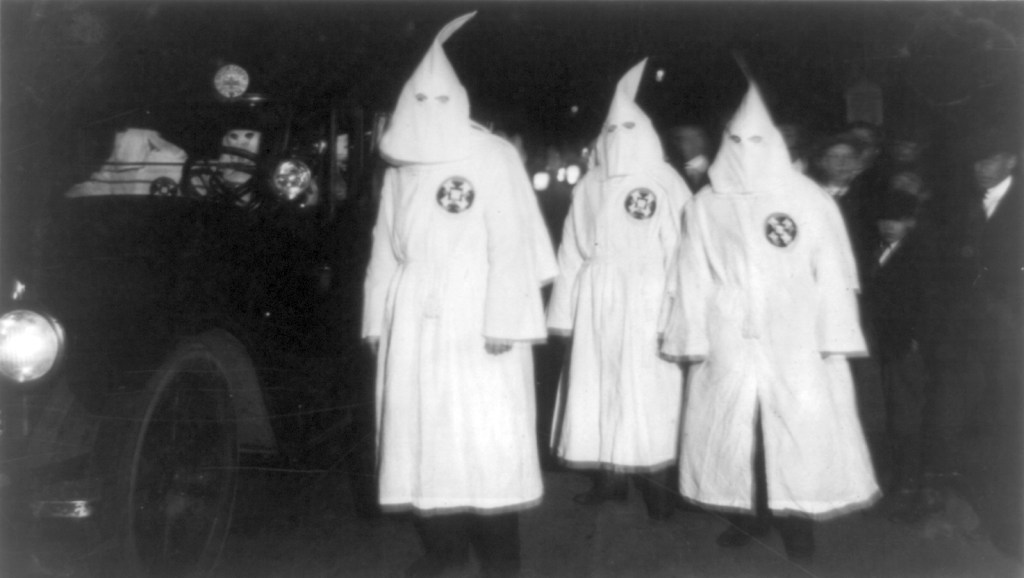
The Ghost was described in the papers as a ‘giant’ of over six feet tall. He wore a white hooded gown with a conical hat that came down over his face with two slits for eyes. Many reports said that he resembled a member of the Ku Klux Klan. He would walk down the centre of the street waving his arms in the air, and it was thought that he wore running shoes or pumps so he could escape swiftly and silently if anyone gave chase to him.[iii]

Ku Klux Klan parade, Virginia 1922 – The Bradford Ghost was said to resemble a klansman

Local residents were both outraged and terrified. People were afraid to answer their door or to go out into their yards after dark. As stories of the Bradford Ghost spread, so did panic and alarm…

Wild Ghost Chases

Peak ghost hysteria was the weekend of the 10 and 11 September. On both nights crowds gathered in the Manchester Road area of the city and stayed on the streets until the early hours hunting for the ghost. Occasionally, someone would shout ‘There it is!’ and there would be a mad dash in that direction, though without success.

The ghost hunters were armed with a considerable array of weapons including pokers, axes, lead pipes, fender ends and various sticks.[iv] As well as these armed vigilantes there was an ‘army’ of small boys and a ‘mob’ of dogs patrolling the gloomy streets and narrow back alleys.[v] It was rumoured that plain clothes policemen, in particular, those that were running champions, were on the streets wearing shorts ready to give chase to the phantom.[vi]

Some of the ghost hunters set up booby traps made of pyramids of tin cans or glass jars in the dark passages hoping that the Ghost would accidentally kick them over and reveal himself. All that happened were false alarms as the vigilantes walked into the traps themselves leading to more wild ‘ghost’ chases.[vii]

At one point, someone in the mob yelled ‘It’s here’ after glimpsing a flash of white, and hordes of angry ghost hunters tore down the road in the direction of the white figure, only to find that the ghost was in fact a woman shaking the crumbs off her tablecloth. The angry vigilantes collapsed in hysterical laughter.[viii]

A man who took part in the night patrols told the press what it was like:

Shortly after midnight I took up my stand in the district where the ‘ghost’ had been seen. Soon afterwards I heard a sudden shout and saw a crowd of about a hundred rush down Caledonia Street in the wake of a man who had said he had seen the ‘hooded thing’. Police joined in the chase, and I groped my way down a dark passage into a dimly lighted yard overlooking a brewer’s dump. Here everything was in a state of excitement.

I saw him climb on to the roof and get behind a chimney.

Immediately there was a clamber for the roof, and for some minutes the police illuminated every nook and cranny, but it was all to no purpose.[ix]

There seem to have been a number of journalists among the ghost hunters, and their reports play up the spooky and horror elements in their description of Bradford’s back streets. One reporter from London wrote of Bradford’s dark passages, ‘gloomy’ and ‘sepulchral’ yards and its ‘labyrinth of alleys’.[x]

Over this hectic weekend, hundreds of armed would-be ghost busters swarmed over the ‘infected area’ (as some press reports called it), and although a few people claimed to have seen or chased the hooded giant, he was not caught.[xi]

The most common theory among the ghost hunters was that the Ghost was one of their own who was sneaking into a dark corner, putting on his white cloak and hat and terrifying a few people before disposing of the costume or stuffing it in a pocket and then joining the crowds searching the back streets.[xii]

One editorial in the Yorkshire Evening Post opined that the hoax was the ‘morbid outcome of a warped mind,’ and hoped that if he were caught, he would be beaten so mercilessly that he wouldn’t be able to lie on a white sheet, never mind wear one. This came close to happening when a man with bulging pockets attracted the attention of the vigilantes who suspected he was concealing a sheet, though he turned out to be innocent. Nevertheless, some of the women on the ghost hunt declared that if they caught the culprit, they would lynch him.[xiii]

After such a mad weekend, it seems the ghost took a short break, but not for long…

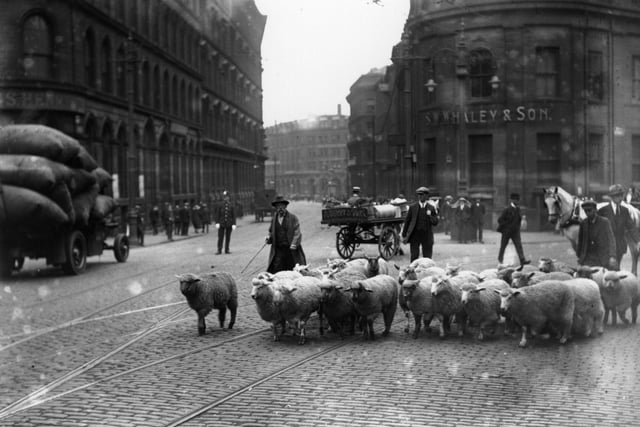
Bradford 1921 (Photo by Topical Press Agency/Getty Images)

Bradford Ghost Reappears

In the Bierley district of the city on the evening of Friday 17 September, tram driver Harold Fishwick heard a tapping at the glass panel of his back door. He opened it to see a white hooded figure with slits for eyes standing before him. The figure then turned and ran. Strangely, the family’s dog had not barked when the stranger knocked on the door, which was unusual.

Half an hour later, Fishwick’s neighbour, Mrs Robinson was having a bath when she heard knocking. She dressed and went downstairs to find her visiting friend Mrs Walker and Mr and Mrs Mills, the young couple she shared the house with, upset and anxious. Mrs Walker had heard the knocking too and through the glass panels of her door had seen a figure in white slowly waving his arms above his head. Mr Mills opened the door and caught a glimpse of the figure before it vanished into the night. Mrs Mills was said to have been taken ill due to the shock.

Mr Mills told another neighbour, Alfred Winch, what had happened and he elected to stay up and wait on the back steps of his house to see if the Ghost would return. At 1.30am, he was about to give up and go to bed when he saw a white figure waiting near the bottom of his garden. Mr Winch ran after the Ghost, but it broke into a swift and silent sprint and escaped into a building site.

The whole neighbourhood was said to be greatly alarmed.[xiv]

And then the Ghost was gone…

Playing The Ghost

What the people of Bradford had experienced was a rather late example of a phenomenon that was extremely common in the nineteenth and early twentieth centuries – the Ghost Panic.

These often started with a joker donning a white sheet or perhaps more elaborate scary costume and then prancing around graveyards or other spooky locations after dark or perhaps leaping out and terrifying hapless pedestrians out after dark. This odd but widespread behaviour was dubbed ‘playing the ghost’ by the press. As stories of the ‘ghost’ spread, copycat hoaxers might join in the fun, and to complicate matters further, attention-seekers would invent stories of having encountered the ghost. Each retelling would be exaggerated, and the locals would become outraged and form vigilante patrols to catch the culprit.

Many of these nocturnal ghost hunts were chaotic, rowdy or even an excuse for drunken larks and practical jokes involving flashmobs of hundreds or perhaps thousands. Sometimes innocent bystanders who were in the wrong place at the wrong time would find themselves surrounded by an angry mob suspecting they were the ghost and would be badly beaten, dumped in the nearest body of water or worse.

Epilogue

Frequently, these panics dwindled to nothing, before springing up again in a nearby area. This is exactly what happened in Bradford in 1926. In early November at Heckmondwike, about eight miles south of Bradford, a group of women were ‘scratting coal’ from a waste tip in the early hours when they saw ‘a white formless thing that made no sound as it advanced slowly towards them.’

They threw down their buckets of coal and fled in terror. When they returned later, the ghost was gone – as was their coal.[xv]

I’ve been researching and writing a book about these strange ghost hoaxes, ghost hunts and ghost panics, and in the process exhumed a number of forgotten Bradford episodes – more soon.

Interestingly, in a short article about the 1926 scare for Halloween 2020, the Bradford Telegraph and Argus told us (with no source) that the Ghost was due to reappear in 2026…[xvi]

For more ghost hoaxes, see below:


[i] ‘Ghost Hunt in Bradford’, Yorkshire Observer, 11 September 1926. Reproduced in Mike Dash (1996) ‘Spring Heeled Jack’, Fortean Studies, vol.3, pp.99-100

[ii] Ibid; ‘Bradford Ghost’, Hull Daily Mail, 11 September 1926, p.1

[iii] Ibid

[iv] ‘Bradford Ghost’, Hull Daily Mail, 11 September 1926, p.1; ‘Vain Vigil for the Ghost’, Nottingham Evening Post, 13 September 1926, p.4

[v] ‘Ghost Hunting’, Leeds Mercury, 24 September 1926, p.4

[vi] ‘Bradford Ghost Hunt Thrills Well-armed Searchers’, Bradford Daily Telegraph, 11 September 1926. 11 September 1926. Reproduced in Mike Dash (1996) ‘Spring Heeled Jack’, Fortean Studies, vol.3, pp.99-100

[vii] Ibid

[viii]  ‘Vain Vigil for the Ghost’, Nottingham Evening Post, 13 September 1926, p.4

[ix] ‘Ghostly Hooded Giant’, Birmingham Weekly Mercury, 19 September 1926, p.5

[x] ‘Hue and Cry for a Giant Ghost’, The People, 19 September 1926, p.3

[xi] ‘Bradford Ghost Hunt Thrills Well-armed Searchers’, Bradford Daily Telegraph, 11 September 1926. 11 September 1926. Reproduced in Mike Dash (1996) ‘Spring Heeled Jack’, Fortean Studies, vol.3, pp.99-100

[xii] Ibid; ‘Bradford Ghost’, Hull Daily Mail, 11 September 1926, p.1

[xiii] ‘Ghostly Hooded Giant’, Birmingham Weekly Mercury, 19 September 1926, p.5

[xiv] ‘Bradford Ghost Reappears’, Bradford Daily Telegraph, 17 September 1926, Reproduced in Mike Dash (1996) ‘Spring Heeled Jack’, Fortean Studies, vol.3, pp.100-101

[xv] ‘Ghost with an Eye for the Main Chance’, Yorkshire Evening Post, 4 November 1926, p.9

[xvi] https://www.thetelegraphandargus.co.uk/news/18837326.manchester-road-ghost-prowl/

The Deadly Embrace of the Devil Fish!

Devils of the Sea

Pity the poor octopus. They only live for a year, but they have a weird alien like intelligence that’s diffused through their arms – a different way of being clever.

Their weird appearance, though, engendered fear and loathing and monster octopus like creatures – Sea Devils – featured in a number of sensational historical newspaper accounts.

The two splendidly lurid illustrations below come from the Illustrated Police News, sometimes referred to as Britain’s worst newspaper for its graphic images of murders, catastrophes and accidents…

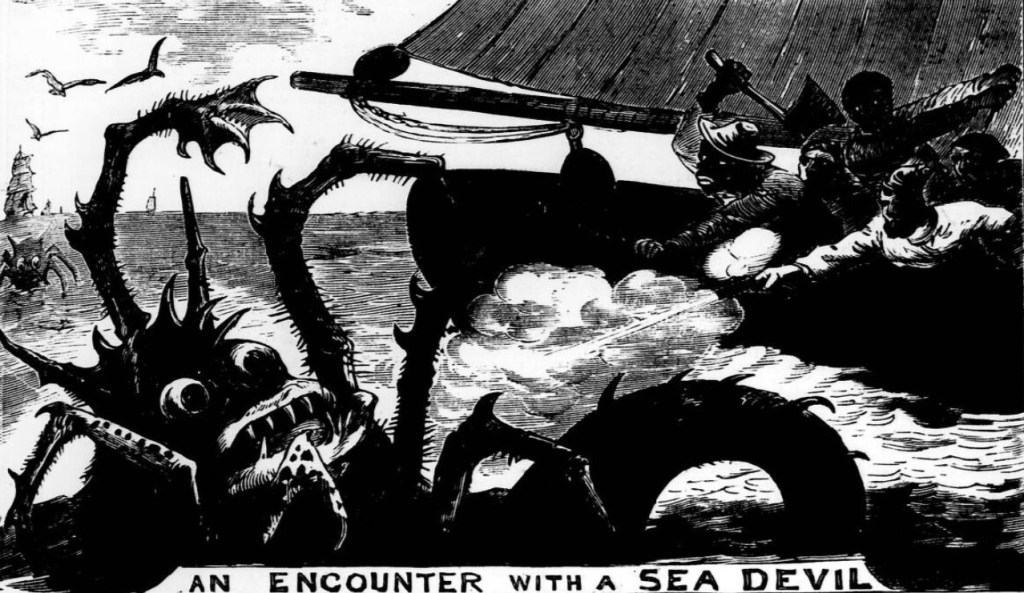
Encounter with a Sea Devil

The engraving below was published in the Illustrated Police News in 1873 and was supposedly based on a sketch made by a sailor on an English trading vessel. The creature was said to be 16 feet in length and grabbed a fishing boat off the coast of Japan, near Kisarazu.

The creature wrapped its tentacles round the boat, while the terrified fishermen fought it off with axes and guns, eventually killing it and displaying it in a nearby temple.[i]

The Deadly Embrace of the Devil Fish

In August 1877 some Mokaw Indians were bathing in the Sea off Vancouver Island. A young woman of eighteen swam to a more isolated beach for some privacy, but didn’t return. When her friends realised she was missing, they paddled their canoes round the bay in search of her and eventually found her the next day. They could see her through the clear water. She appeared to be sitting on the sea bed with what looked like a bag of flour behind her. In fact, her corpse was clutched in the writhing tentacles of a devil fish.

Two of the bravest men dived into the water armed with daggers and managed to cut the unfortunate woman free and kill the creature. The devil fish was described by ‘an intelligent and respectable half breed woman’ as having a head the size of a fifty pound bag of flour and twelve tentacles. This same woman saw the body of the young woman, which still had some of the creature’s suckers attached.[ii]

Epilogue

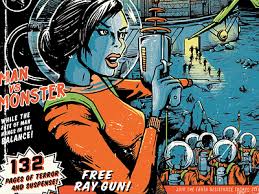
It’s pretty clear the artists illustrating these two nineteenth century accounts had never seen an octopus, but it makes me wonder whether illustrations like these inspired the Martians in H.G. Wells’ War of the Worlds. If you wanted to use a creature from earth as inspiration for an alien creature, a cephalopod seems as good a place as any to start…

The War of the Worlds, Belgium edition, 1906
Amazing Stories reprint of War of the Worlds, 1927

[i] ‘Encounter with a Sea-Devil’, Illustrated Police News, 21 July 1873, p.2

[ii] ‘The Deadly Embrace of the Devil Fish’, Illustrated Police News, 11 May 1878, p.2

Russkies Zap Yank Spooks with Mind Melting Ray Gun!

Ooooh! Those Russians… (Boney M)

Those nefarious Russians have been up to no good, as usual. According to a recently published joint report by US current affairs show 60 Minutes, German legacy newspaper Der Spiegel and NATO apologist website The Insider, nasty Russians have been zapping our poor freedom and democracy loving spies and diplomats – and even their pets – with an evil mind ray gun causing brain damage and a plethora of other anomalous health symptoms.[i]

But have they really, though?

Havana Syndrome

The story begins in Havana, Cuba in 2017 when American diplomats began experiencing strange health complaints. These included nausea, dizziness, brain fog, headaches, ringing in the ears, difficulty sleeping and several other ‘anomalous health issues’. Many of the diplomats said the symptoms were accompanied by a weird high-pitched noise that seemed to be directional and the theory that some kind of sonic weapon was being directed at them circulated. Some of the people affected had ‘brain damage’, or MBI (Mild Brain Injury) as if they were suffering from concussion.[ii]

Soon embassy workers were being medically evacuated from embassies in Uzbekistan and China as similar symptoms emerged.[iii] In all, over a hundred cases of ‘Havana Syndrome’ (as it was dubbed) were reported by American and Canadian diplomats, spies, military officers and other staff.[iv]

What was the cause of these strange symptoms and that strange penetrating noise heard by the sufferers? Well, when in doubt, blame it on Putin. The Russians, it was claimed, had developed a mind ray (using acoustic or microwave technology) that was melting the brains of our honourable spies because they hate our freedoms. Or something.

So, what’s the evidence? Besides, of course, that Putin and the Russians are responsible for everything bad that happens?

The evidence seems to be the following:

  1. Symptoms: tests revealed concussion-like brain damage in some of the victims – Mild Brain Injuries (MBIs). A number of other apparently inexplicable symptoms were experienced.
  2. Evil Russians: Russians may have been in the vicinity of the alleged attacks.
  3. Weird noises: the symptoms were often accompanied by a weird, penetrating and inexplicable noise.

So, let’s have a look at the evidence.

Brain Damage

The first point to note is that the array of symptoms associated with Havana Syndrome (headaches, nausea, insomnia, tinnitus, confusion, memory loss and so on) are all extremely common and yet we don’t assume we were being zapped by a commie mind ray every time we suffer from them. But the embassy staff in Havana and other locations were no doubt under stress as they had been warned to be vigilant against threats or attacks (including by a mysterious weapon) so will have been hypervigilant, and the idea of a sonic weapon seemed plausible to them at the time. The idea that such a weapon could be fired with such precision to people inside a building is, however, incredible.

The anxiety, stress and hypervigilance over common health symptoms would be exacerbated by the nocebo effect – the evil twin of the placebo effect. The nocebo effect means that if people are primed to expect negative effects, then they are more likely to have them.[v]

As for the apparent brain damage suffered by some of the staff that was evident in various tests, all this is consistent with the patient having suffered previous trauma (such as from accidents) or with changes to the brain caused by aging, depression, migraine or a number of other issues.[vi]

In fact, this relentless search for evidence is reminiscent of the way the witchfinder generals of old would look for marks of the Devil on poor unfortunates suspected of witchcraft. Any innocuous mark or blemish would be interpreted in the light of the prevailing obsession with outing those in league with the Devil.

Headache? Must be the Russians.

Ears ringing? Must be the Russians.

Forgetful? Must be the Russians…

You get the picture.

Ooooh, Those Russians

The evidence that various Russians were nearby when supposed mind ray attacks took place is pretty thin. One woman who was stricken by the familiar symptoms in Tbilisi, Georgia hesitatingly said she recognised an alleged Russian operative who was acting suspiciously outside her flat when shown a photo by the investigators. This was four years after the event, and given the unreliability of human perception and memory, it’s certainly plausible that she was led on in this by the investigators.[vii]

Much of the rest of the evidence implicating various shady Russian spooks is based on leaked mobile data that shows they could possibly have been in the vicinity at the time of the supposed attack. Not that they were there. Just that phone records were not inconsistent with them being there.

What’s That Sound?

However, there is an elephant in the room…or rather, a cricket. When some of the patients in Havana recorded the strange sounds that were associated with the sonic attacks, the sounds were identified as those made by bugs, and not the sort of bugs one normally associates with the shadowy world of espionage. In Havana, the sounds of crickets were interpreted in the light of the folk theory that staff were under attack by sonic rays. In other cases where no cricket sounds were present, the strange, penetrating sounds heard by patients were most likely caused by a very common complaint: tinnitus.[viii]

Phantom Attackers

The whole Havana Syndrome episode has all the signs of being a Phantom Attacker Panic. This is when a community often under stress becomes convinced that they are being assaulted by an imaginary assailant. Classic examples include the Halifax Slasher, the Mad Gasser of Mattoon, the Monkey Man of Delhi and the recent scare of needle spiking in nightclubs.

In all these cases, the attacker did not exist and the supposed victims had imagined, mistaken or fabricated the injuries they received. And this is what’s happening with Havana Syndrome. Common symptoms are being misinterpreted as assaults committed by an assailant that exists only in the febrile imaginations of the supposed victims, and the irresponsible journalists and scientists who are reinforcing these views.

The Insider, which claims to be a news website contesting Russian fake news, seems more like an unhinged purveyor of anti-Russian propaganda. See their specious ‘fakespert’ section where any prominent analyst, academic or politician of the left or right who dares to question the western interpretation of world events is relegated to the status of David Icke.

I would suggest the authors of this convoluted conspiracy theory about mind-melting Russian ray guns promptly put themselves into their own ‘fakesperts’ section of their website. That’s where they belong.

There IS a syndrome at work here, though, but it’s not Havana Syndrome. It’s Russia Derangement Syndrome. Western elites are infected with a dangerously hysterical Russophobia that is just as destructive and irrational as the witchfinder generals of past times.

The date that the Insider published their report is rather ironic. April Fools’ Day

See my analysis of the original CIA report on Havana Syndrome here: https://paulweatherhead.com/2022/02/10/in-which-i-destroy-the-cia-with-facts-and-logic/

My original article on Havana Syndrome and the Top Three Mass Hysterias Happening Now in 2022 is here: https://paulweatherhead.com/2022/01/30/top-three-mass-hysterias-happening-now-in-2022/


[i] Roman Dobrokhotov, Christo Grozev and Michael Weiss, ‘Unraveling Havana Syndrome: New evidence links the GRU’s assassination Unit 29155 to mysterious attacks on U.S. officials and their families’, The Insider (1 April 2024). Available at: https://theins.ru/en/politics/270425

[ii] Robert E Bartholomew and Robert W Baloh (2020) ‘Challenging the diagnosis of ‘Havana Syndrome’ as a novel clinical entity’, Journal of the Royal Society of Medicine 2020, Vol. 113(1 )pp.7–11  DOI:10.1177/0141076819877553

[iii] Ibid

[iv] Dobrokhotov, Grozev and Weiss (2024)

[v] K.J. Petrie K. and W. Rief W. (2019) ‘Psychobiological mechanisms of

placebo and nocebo effects: pathways to improve treatments and improve side effects’, Annual Review of Psychology 70 pp.599-662 doi:10.1146/annurev-psych-010418-102907

[vi] Bartholomew and Baloch p.8

[vii] Dobrokhotov, Grozev and Weiss (2024)

[viii] Robert Baloh and Robert Bartholomew, The Havana Syndrome (Springer, 2020)

Yorkshire Serial Killer Witch’s Chicken Lays Doomsday Egg

In 1806, the good people of Leeds were preparing for the end of the world. Millenarian sects warned of the coming apocalypse and many were convinced they were living through the Last Days before the second coming of Jesus Christ.

There were strange signs and wonders that portended End Times, and one of these came from the chicken of notorious Yorkshire witch and serial killer, Mary Bateman.

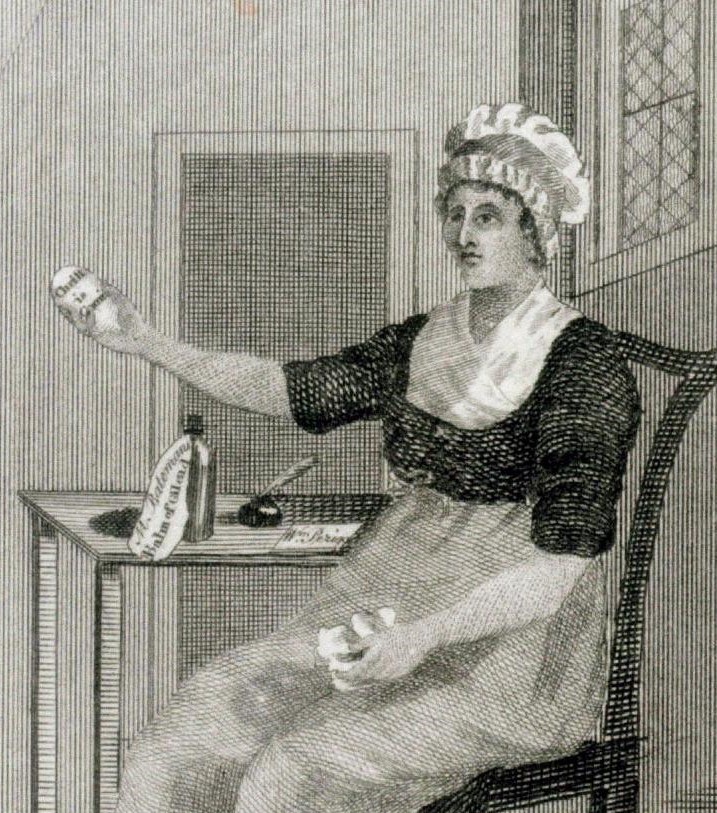
Mrs Bateman had had a vision in which she was told that her hen would lay fourteen special eggs and the final one would mark the apocalypse.

When the first of the eggs came, the words ‘Crist is coming’ were clearly visible on the shell. More eggs with the same oddly spelled message followed, sometimes coming out of the hen before the astonished eyes of witnesses.

These doomsday eggs caused widespread panic and anxiety in Leeds in 1806, and Mary Bateman made the most of it. She charged people a shilling to see the miraculous chicken that laid the prophetic egg. She sold bits of paper with the initials JC on them which she said would be a guarantee of entry to heaven when the end came. She sold thousands of these.

Unfortunately, Mary was caught in the act of using corrosive vinegar to write apocalyptic messages on the eggs then stuffing them back into the poor chicken to be ‘laid’ later.[i]

The Yorkshire Witch

Mary Harker was born near Thirsk in North Yorkshire in 1768. Even then she was known, according to her biography, as of a ‘knavish and vicious disposition’. She found employment as a servant, though was sacked for theft on more than one occasion.

In 1788 she moved to Leeds and worked in a clothes shop, but took up fortune telling and removing witches’ curses as a side-hustle. Typically, Mary would tell her clients that they were under an evil spell, and that the person who wanted to harm them needed to be ‘screwed down’. The evil spell, in other words, had to be counteracted. Roaming husbands could also be magically screwed down, as could creditors.

Mary would tell her clients that she could not do this, but she knew a woman who could: Mrs Moore, the seventh child of a seventh child and therefore, as the belief went, psychically gifted. Mrs Moore had the power to ‘screw down’ those roaming husbands and irksome creditors – if the clients had the money, which they would give to Mary to pass onto the enigmatic Mrs Moore.

Mrs Moore, of course, did not exist. It was part of Mary’s elaborate con.

Mary Bateman was what we might call a cunning woman. Cunning folk would use a mixture of folk magic and Christian rituals to lift the evil eye, cast love spells, tell fortunes with a bit of quackery thrown in for good measure. Many, like Mrs Bateman, were also back-street abortionists. Cunning folk were often seen as disreputable, but it didn’t stop people paying for their services.[ii]

In 1783, after a whirlwind romance, Mary married wheelwright John Bateman.

She was not exactly a loving wife. She forged a letter to her husband claiming that his father was on his death bed in Thirsk and not expected to live long. Mr Bateman dashed off to see his father, expecting the worse. When he arrived in Thirsk, he was surprised to see his father was alive and well and had not been ill at all. When Bateman returned to Leeds, his wife had sold all the contents of their house in order to pay off the many people she had been caught stealing from.

He evidently forgave her and they had several children together.

Don’t Eat the Pudding

In 1803, Mary was nursing a shopkeeper called Mrs Kitchen and treating her with her own medicine. Despite the treatment – or more likely because of the treatment – Mrs Kitchen died. When the woman’s mother and daughter came to the house, they did not survive long.

Their deaths were put down to cholera, though it’s suspected that Mary had poisoned them with arsenic. Mary made sure to strip Mrs Kitchen’s shop and house of any content that was of value.

Another of Mary’s unfortunate clients was Rachel Perigo of Bramley, Leeds. She suffered from palpitations and believed herself to be haunted by a huge black dog. Her doctor told her she was under a spell, and that’s when Mary stepped into the picture.

In order to lift the curse, Mary visited the woman and her husband Richard and got them to place money into a silk bag which Mary tied. These bags were to be fastened around the bed and not opened for eighteen months and that would lift the curse. This was a trick Mary had used many times. If the Perigos had opened those magic bags, they would have found that the notes had turned into paper and the gold coins become pennies…

Mary continued swindling money and household goods from the poor couple until informing them that they would die unless they were to eat a pudding prepared with special ingredients that she provided.

Mary Bateman prepares a pudding

Desperate to make herself well, Rachel ate the pudding and honey she had been told to eat. The worse she felt, the more she ate and the worse she got. After an agonising week, Rachel passed away.

When her husband opened the bags around the bed and found he had been swindled, he decided to confront Mary. She agreed to meet him on the banks of the Leeds Liverpool canal. For Mary, Richard Perigo was unfinished business. In her bag she carried a bottle of ‘medicine’ especially for him.

However, Perigo had brought William Duffield, the police constable of Leeds with him. When Mary saw Perigo was not alone, she pretended to vomit as if he had tried to poison her, but it was to no effect.

Mary was arrested and charged with the murder of Rachel Perigo. At the trial some of Mary’s incriminating letters were produced and the Perigos’ neighbour told how after she had tried some of the pudding she threw up green and yellow vomit. When a cat was given some, the unfortunate creature died.

After a trial lasting 11 hours, it didn’t take long for the jury to return a guilty verdict. Mary Bateman was sentenced to death by hanging, followed by dissection of her remains.

But Mary had one final trick up her sleeve… she claimed to be pregnant. ‘Pleading the belly’, as it was known, was a possible means by which a condemned woman might escape execution. The judge immediately requested a panel of twelve married women be formed from the public gallery to conduct an intimate examination of Bateman. This caused a mass exodus as all the women eligible for this duty desperately tried to flee. The judge had to lock the doors to prevent all the ‘volunteers’ from running from the court.

A reluctant panel of married women was formed and after examining Mary, declared she was not with child. Mary was doomed.

In her condemned cell, Mary wrote to her husband enclosing her wedding ring, which she requested be given to her oldest daughter. Her youngest daughter was a babe in arms and was with Mary in her cell. In the letter Mary expressed regret for the shame she had brought on the family, and admitted to the various frauds she had committed, but maintained her innocence of any murder.

As execution day approached, Mary showed no signs of remorse and would not confess to the murder she’d been convicted of, despite the efforts of the Rev George Brown.

In fact, Mary continued her trickery in prison. A young female prisoner wanted to be visited by her sweetheart, so Mary told her to bring some money which she then sewed into the woman’s underwear. This magic, she said, would compel the girl’s lover to visit her. When no lover came, the lovelorn prisoner grew suspicious and opened the charms to discover that her money had miraculously vanished…

At 5am on the morning of 20 March 1809 Mary kissed her sleeping infant goodbye and was taken from her cell to the place of execution behind York Castle. Many thousands had turned up from Leeds and beyond to witness the event. The crowds were unusually quiet and respectful. It was reported that many believed Mary would use her magical powers to escape her fate at the last minute and fly off into the sunrise on a broomstick.[iii]

With the noose fastened around Mary’s neck, Rev Brown whispered into her ear, offering her a final opportunity to confess her crimes. She did not.

She, along with two other poor souls, were tumbled into the next world with the pull of the hangman’s lever.[iv]

Yorkshire Psycho

Mary’s body was taken to Leeds Infirmary where a fair sum was raised for the hospital by charging people to view her remains. It seems rather befitting that after being dissected, Mary’s skin was removed and tanned and sold as lucky charms. It was even rumoured that the Prince of Wales (later to become King George IV) had a volume bound in the woman’s skin. Her tongue was on view in a shop in Ilkley at the end of the nineteenth century. Part of her skeleton was still on display in Thackray Medical Museum in Leeds until fairly recently.[v]

Mary Bateman’s Bones

Mary Bateman was certainly dishonest, a thief and a murderer. However, she was also someone with a reputation as a healer with a sympathetic and plausible manner. This along with her brazen callousness and impulsive recklessness is certainly enough to make us wonder if the Yorkshire Witch was actually a Yorkshire Psychopath.

Epilogue

As for the hen that laid the doomsday egg, Mary had sold it to a neighbour for a handsome sum. The neighbour waited in vain for the bird to produce more prophetic eggs, but none came. After her fifteen minutes of fame, the hen had her neck wrung and ended up in the cooking pot.


[i] Arthur Vincent, Lives of twelve bad women; illustrations and reviews of feminine turpitude set forth by impartial hands, (London: T.F. Unwin,1897); E. Baines, Extraordinary Life and Character of Mary Bateman, the Yorkshire Witch: Traced from the Earliest Thefts of Her Infancy, Etc Till Her Execution on the 20th of March, 1809 (leeds: Davis and co, 1811

[ii] Owen Davies, Popular Magic: Cunning-Folk in English History, (London: Hambledon Continuum, 2007)

[iii] Globe 27 March 1809

[iv] William Knipe, Criminal chronology of York castle; with a register of criminals capitally convicted and executed at the County assizes, commencing March 1st, 1379, to the present time, (York: C.L. Burdekin, 1867)

[v] See Summer Strevans, The Yorkshire Witch, (Barnsley: Pen and Sword, 2017) for the full story of Mary Bateman.

Spiked or Spooked? The Myth of the Drink Spiking Bogeyman

Blurred vision and dirty thoughts

Feel out of place, very distraught

Feel something coming on….

‘Somebody Put Something in my Drink’ (The Ramones)

In every bar and every club they lurk, lying in wait for their helpless innocent victim. Concealed in their hands are vials of potent date rate drugs, and the minute the victim leaves her drink unattended, the odourless, colourless narcotic is deftly splashed into their glass…

One sip is all it takes. This is soon followed by dizziness, nausea, loss of inhibitions, slurred speech and memory blackouts… The drink spiking bogeyman has struck again. They are legion, we are told, and no woman – or man – is safe from them.

In fact, a UK study of university students revealed that over half of them knew someone who had been spiked.[i]

Drink spiking returned to the UK national headlines again in late February 2024 after journalist Kate McCann revealed her experience. She was in a London bar with some work colleagues when one of her companions said she thought she’d seen a man put something in their drinks while they were at the bar. Unfortunately, McCann had by this time already had a sip.

Shortly after McCann began feeling hot and strange and she realised something was wrong. She went to the toilet where she could not stand or even sit straight. She was, however, able to phone a taxi and get home. She woke the next day on her bathroom floor with no memory of what had happened.[ii]

McCann couldn’t understand the motive for the spiking. Nobody tried to separate her from her group. There was no attempt at sexual assault or robbery. The men she suspected of spiking her were brazen, putting the drug into her drink and not caring if anyone saw them.

Kate McCann, you might remember, was the journalist who famously fainted while chairing a Conservative Party leadership debate between Rishi Sunak and Liz Truss in 2022.[iii] Of course, chairing such a debate might cause anyone to lose consciousness.

But it leads to an uncomfortable question: if McCann had a funny turn live on TV, could something similar have happened in the London bar? Could a mistaken observation by her friend have led to a nocebo effect – a negative placebo – where the unpleasant symptoms are caused by the expectation that something bad was about to happen?

The Evidence

A number of studies have tested those who claim to have been spiked. They show the vast majority of people who think their drink has been drugged are wrong. An Australian study examined the blood of 97 people who reported to a hospital saying they had been spiked. Guess how many of that sample actually had any sedative or other drug (aside from narcotics knowingly taken) in their system? That’s right. None of them.[iv]

A similar study in Wales tested 75 mostly female patients who had presented to a hospital A&E department claiming their drink had been spiked. The tests showed that while many of the patients had certainly had a lot to drink, and quite a few had ingested various recreational drugs, none of them had been actually been spiked.[v]

Other studies have similar results.[vi] People who turn up at casualty departments thinking they have been spiked seem to have no drug in their system (other than ones they had taken voluntarily).

Furthermore, the notion that nasty men hang around in bars waiting to spike innocent women for no apparent purpose just doesn’t make much sense. For one thing, witnesses are everywhere, as is CCTV. For another, assuming the alleged spiking is to facilitate a sexual assault, dragging a barely conscious victim away from her friends, out of the club and through the streets is likely to be challenging and to attract attention. If you’ve ever had to carry a drunk friend home from a night out, you’ll know what I mean.

As drink spiking expert Pamela Donovan points out, if someone is going to spike you for malicious purposes, they are likely to do it in a private rather than a public space and they are probably known and trusted by the victim.[vii]

Finally, if drink spiking is so common, why aren’t our jails bursting with the villains? Nightclubs are full of potential witnesses and CCTV cameras are everywhere. Police have investigated thousands of alleged spiking cases – 6,670 between 2017 and 2021 – and only 130 of these resulted in a charge. This survey, conducted by the Independent, does not actually tell us how many were eventually convicted, though it does say that some of these charges were for other offences to the one initially brought against the defendant.[viii] And we don’t know how many of these cases actually took place in a public place such as a nightclub.

One police force, Avon and Somerset, recorded that from 2016 to 2021, there were 486 cases of drink spiking investigated, resulting in 27 arrests but no convictions.[ix]

So what’s going on?

Well, if the vast majority of people who think they have been spiked haven’t, there are several other possibilities to consider.

First, perhaps the victim had not kept track of how much she was drinking, or had a bad reaction to drugs (prescription, illicit or both) she had voluntarily taken. This bad reaction might mistakenly be assumed to be symptoms of spiking – about which everyone has heard the scare stories. And as an excuse for being inebriated, being spiked would certainly gain more sympathy than having knocked back one too many. As Pamela Donovan puts it, it’s a kind of redemptive tragic magic.[x] A drink spiking story instantly conjures up archetypes of damsels in distress and dastardly villains.

This brings us to the second possibility – that the victim made the story of being spiked up to gain attention or sympathy. This may sound unlikely, but it’s certainly something that happens. A famous case is the Halifax Slasher panic of 1938 when dozens of victims in Halifax and then hundreds more around the country claimed to have been attacked by a razor blade wielding maniac. It turned out that the victims had cut themselves and invented the story of the attack.[xi]

Being spiked confers on one sympathy, victimhood status and also suggests that the victim is so irresistible that dastardly villains will do anything to get their hands on them.

A third possibility is that the victim suffered a panic or anxiety attack and then became hypervigilant about the state of their body such that a nocebo effect occurs and the mind did the rest and created the symptoms. In other words, what psychiatrists of a bygone age would call a hysterical reaction.

Another way of looking at drink spiking is as a culture bound syndrome. In Nigeria, penis stealing panics occur regularly. Typically, a man brushes past another in the street and then suddenly grasps his privates and screams that his penis has been stolen. He may feel that it is shrinking, vanishing into his abdomen leading him to panic – assuming that black magic has been employed to rob him of his manhood to be used for witchcraft. Anyone suspected of being a penis thief is likely to be beaten up or even killed. A major epidemic of penis theft, or koro as it is sometimes known, occurred in Nigeria at the in 2023.[xii] They often happen at times of heightened anxiety.

These penis panics seem crazy to western eyes and it’s hard to make sense of them when looking from outside the culture they occur in.

I think the drink spiking panics are the western equivalent of Nigerian penis theft panics – a kind of cultural delusion.

Of course, anyone who thinks they have been spiked should seek help and be taken seriously. But the notion that spiking is common and that gangs of malicious men are spiking innocent women for no particular purpose is an urban legend. A myth. A prudish but well-meaning scare story whose message seems to be the world is too dangerous a place for defenceless little girls. They should be at home where they belong. There is something of paternalistic Victorian sexism about the drink spiking panic.

We’ve had plague, war, inflation, climate doom-mongering and God knows what else relentlessly over the last few years. Constant free floating anxiety creates the ideal conditions for hysteria. People become hypervigilant about their body, and their mind and the nocebo effect does the rest. We should dial down the rhetoric about drink spiking. It’s rare, in public at any rate. More precautions, warnings and horror stories will only lead to more cases of alleged spikings.

The people who think they’ve been spiked by a stranger on a night out most probably haven’t.

Like the Halifax Slasher and the Nigerian Penis Thief, the sinister drink spiker haunting every bar and club belongs in the realm of fiction.

For more spiking panics, see below:


[i] Burgess, A., Donovan, P. and Moore, S. (2009). ‘Embodying Uncertainty? Understanding Heightened Risk Perception of Drink “Spiking”’, British Journal of Criminology 49 (pp.848-862)

[ii] McCann describes her experience here

[iii] News report here

[iv] Paul Quigley et al (2009) ‘Prospective study of 101 patients with suspected drink spiking’, Emergency Medicine Australia, 21(3) pp.222-228 https://doi.org/10.1111/j.1742-6723.2009.01185.x

[v] Hughes, H.et al (2007) ‘A Study of Patients Presenting to an Emergency Department having had a Spiked Drink’, Emergency Medicine Journal, 24 (pp.89-91)

[vi] See Bendau, A. et al ‘Spiking Versus Speculation? Perceived Prevalence, Probability, and Fear of Drink and Needle Spiking’, Journal of Drug Issues https://doi.org/10.1177/00220426231197826

[vii] Donovan, P. Drink Spiking and Predatory Drugging (Palgrave Macmillan: 2016)

[viii] https://www.independent.co.uk/news/uk/crime/drink-injection-spiking-offences-charge-b1978121.html

[ix] House of Commons Home Affairs Committee Spiking: Ninth Report of Sessions 2021-2022, April 26, 2022, p. 35

[x] Ibid p.81

[xi] See chapter one of my book Weird Calderdale for the full story.

[xii]   Ukanwa, E. ‘Here are Abuja mystery genital thieves’, Vanguard, 22 October, 2023

Who Killed Navalny?

The death of Alexey Navalny in a Siberian prison on 16 February 2024 has been met with ghoulish glee by western news outlets. It’s an unmissable opportunity for an orgy of hypocrisy, sanctimony and demonisation of the Big Bad Bear.

Navalny was just the kind of Russian politician that the West loved. He had all the right opinions. He was against Russian involvement in Syria (how dare Russia defend Syria’s legitimate government against Islamic extremists sponsored by us). He criticised the invasion of Ukraine. He was in favour of gay marriage. And most importantly, he was anti-Putin.

We will skip lightly over his past as a racist nationalist. To us he was a born again liberal, the kind of leader those stubborn Russians should have elected.

So let’s examine some possible explanations of his untimely death.

Natural Causes

It’s possible his death was due to natural causes. People do die suddenly and unexpectedly, and perhaps the harsh prison conditions contributed to this.

But you don’t want to hear that, so let’s move on to something much more to your taste…

Putin Did It

So what’s the evidence that Putin did it? Well, Putin’s responsible for everything bad that happens in the world, isn’t he? Putin wanted Navalny dead because he hates our freedoms, and that’s how those sinister Russkies operate.

And of course Navalny had been poisoned before in 2020 and was taken to Germany, where he recovered. Those evil commies put the Novichok in his tea at the airport. Or it was in a bottle of water he had with him? Or it was in his underpants…. The story kept changing, but nevertheless, it must have been Putin.

And don’t forget all those Russian oligarchs and double agents who had a habit of dying mysteriously on British soil. Gosh those Russian tentacles get everywhere.

Putin had the motive. He was scared, you see. Scared that one day Navalny would topple him from power and usher in a rainbow hued neoliberal utopia in backwards benighted Russia.

But here are some niggling doubts you might like to ignore.

Navalny was in prison on corruption charges. He was no threat to Putin. Navalny’s popularity among Russians was very low. The West may have loved him, but to most Russians, Western liberalism is associated with the corruption, poverty, humiliation and despair of Russia in the 1990s when we gave them the gift of gangster capitalism.

Navalny was not the opposition in Russia. The opposition in Russia is provided by the Communist Party, and right wing nationalists.

In fact, Navalny’s death is inconvenient to Putin, occurring shortly before the presidential elections. Why would Putin do something that would make himself and Russia look bad when there was no reason to?

So here’s another possibility to consider: you did it.

You did it

Not you personally. I mean us. The United Kingdom.

This argument was put forward by Belgian analyst and Russia expert Gilbert Doctorow. Let’s examine the evidence.

First, let’s put on our conspiracy theory hats and ask who benefits – cui bono?

Well, it’s certainly not Putin. It’s an embarrassment in front of the world just before the presidential elections, and it allows plenty of hysterical media content for Russia’s Western enemies.

Furthermore, Navalny’s death serves as a convenient distraction from events that it’s very important that you ignore.

One of these is Putin’s interview with Tucker Carlson.  Whatever you think of Putin’s historical analysis, he was cogent, logical and clear, while the leader of the free world confuses Mexico with Egypt and struggles with the stairs. Weren’t we told Putin was dying? Or was he mad, I don’t remember? Either way, the interview was a rare soft power win for Russia. That can’t be allowed to stand.

On top of that, there is the slow motion catastrophic defeat of Ukraine reflected in the disastrous loss of Avdeevka to the Russians – a major victory which will no doubt soon be relegated to a mere symbolic win for Russia. Funny, I thought Ukraine was winning.

Navalny’s demise was also a rather convenient gift for the Americans trying to ratify sending billions more to support our unhinged proxy war against Russia – after all, Ukraine’s defeat will be embarrassing for the Democrats as well as for the other leaders of the Western world who’ve bet the farm on Ukraine being victorious.

But of course, we’re British and would never do anything so underhand and devious as to assassinate someone in another country.

I mean, we have helped Ukrainians blow up stuff in Russia with long range missiles, destroying infrastructure and killing civilians. But they were only Russians. Not good Russians like Navalny.

And, yes, of course when Russia and Ukraine agreed a tentative peace deal in the early weeks of the war, Boris Johnson flew to Ukraine and sabotaged it. We won’t support a peace deal, the loveable clown said, so keep fighting. Trust us. Russia’s weak. You’ll get Crimea back and everyone will live happily ever after.

The fact that Britain (no doubt our peckers in the pockets of American neocons) stopped peace in its tracks and kept the war going was attested to by Ukrainian negotiators. I don’t mean Denys Kireyev (he’s the Ukrainian negotiator who was assassinated by the Ukrainian security services… best just ignore him – remember, only Russia does stuff like that).

No, I mean Davyd Arakhamia from Zelensky’s own party who confirmed that Russia wanted to end the war if Ukraine agreed neutrality and to not join NATO. The West prevented the peace deal from being implemented. Hundreds of thousands of deaths could have been avoided.

But I guess it was worth it. For NATO. And freedom.

Boris denies all this. And you probably believe him. He wouldn’t lie, would he?

But we are at war with Russia, so why wouldn’t we want to make Putin look bad, draw attention away from our catastrophic foreign policy defeats and ramp up the Russophobic hysteria necessary to keep sending Ukraine bombs and treasure. No peace negotiations – how can we negotiate with that man?

Anti-Russian propaganda – then and now

Hate Putin like you’re told to.

Russia’s different, you see. Barbaric. Autocratic. Devious. In any case, these are the Russophobic tropes that have long been fed to the Western public. Look up some old newspapers from the mid-nineteenth century in the build up to the Crimean War. The same elite anti-Russian hysteria swept the political and media class.

We’re better than them, you see. Of course, American journalist Gonzalo Lira was arrested and tortured with toothpicks in the eye in a Ukrainian prison after his reports criticising Zelensky’s government. He later died in prison. Naturally, of course. He was probably a Russian spy. And right wing. He deserved it. Even if he was tortured to death in a Ukrainian prison, it’s totally different from Navalny’s case. Russians only kill good people. In any case, it’s probably better to ignore this.

It’s probably also better to ignore Julian Assange too. He’s facing a 175 year jail sentence for exposing American war crimes in Afghanistan and Iraq. Completely different to Navalny’s case. Only Russians do bad stuff because they’re uniquely evil. Remember that.

In the final analysis, the evidence that the UK was responsible for Navalny’s death is circumstantial. But so is the evidence that Big Bad Vlad did it. It would have been easy for Russia to do it, but hard for the UK, although close connections between our security service and Ukrainian saboteurs operating on Russian soil would make it possible. On the other hand, it would make no sense for Putin to do it, but it would make sense for us to do it. We’re not called perfidious Albion for nothing.

So who knows. We’ll probably never find out what really happened to Navalny. Something that doesn’t seem to be much considered is the number of enemies Navalny made during his anti-corruption campaigns. These would certainly have the motive for some vengeance.

But look on the bright side. It gives our vacuous elites a perfect excuse for moral grandstanding, relentless demonisation of Putin and tedious recycling of the standard Russophic tropes that have gripped the West periodically ever since the Great Schism of a thousand years ago when the Eastern Orthodox and Catholic churches went their separate ways.

They’re barbarians, devious, anti-democratic. Almost makes you want to go to war with them, doesn’t it?

For more on hysterical Russophobia, see here:

The Yorkshire Piper who Came Back from the Dead

On 27 March 1634, John Bartendale stood on the scaffold outside Micklegate Bar, York with a noose around his neck. Bartendale was a piper, a wandering musician who had turned to crime and been convicted of a felony. It seemed his piping days were over.

The hangman pulled the lever, and Bartendale dropped through the trapdoor. The last thing he saw were flashes of fire that seemed to dart into his eyes, followed by darkness and nothingness. The gathered crowds saw the unfortunate musician dance his last jig. He was left dangling for three quarters of an hour before being cut down, stripped of his clothes and buried nearby.

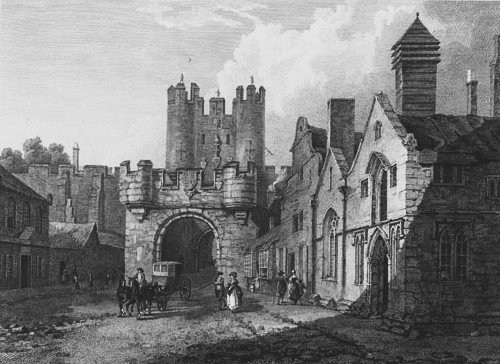
Micklegate Bar, York

Some hours later, Bartendale became aware of being encased in dark and clammy earth. He began to struggle with such violence that the earth on top of his grave undulated, attracting the attention of a passing eminent gentleman, Mr Vavasour of Hazlewood Castle.

Vavasour and his servant got a spade and began digging into the strangely moving dirt and soon uncovered a naked man. John Bartendale opened his eyes, sat up and asked where he was and how he’d got there. He was helped from the grave and Vavasour covered his nakedness with his cloak. Soon word spread and crowds gathered to witness the seeming miracle of a dead man sitting on the side of his grave back from his journey to the other side.

Bartendale was taken back to York Castle and was soon in front of the judge who had already executed him once before. There was a great deal of public sympathy for the piper who came back from the dead, and Mr Vavasour appealed on his behalf. The judge, unwilling to go against providence, gave Bartendale a full reprieve to great celebration.

Of course, he was asked what he had seen as the hangman had sent him hurtling into the next world, though the flashes of fire in his eyes were all he could recall.

We’re told he became an honest man.

For more weird tales of premature burials, see here:

Terror in Todmorden: Who was the Tod Shaker?

Over Christmas 1903 Todmorden was under a reign of terror, according to local and national press. For over two weeks at the end of December, a series of bizarre attacks by a strange new ‘bogey man’ created a sense of panic and alarm on the Yorkshire-Lancashire border. Just who was this bogey man, asked the Yorkshire Evening Post, and why couldn’t he be caught?[i]

I believe I may have the answer.

The Tod Shaker

In mid-December 1903 an unnamed young woman from Eastwood was going on an evening visit to her sister in Todmorden when she had her first, but not her last, encounter with the Tod Shaker.

As the woman walked along Byrom Street, a man sprang out from a dark corner, grasped her by the waist and shook her violently. The woman was unable to cry out, and the attacker vanished into the darkness just as suddenly as he had appeared.

The woman had barely recovered from her ordeal when sometime later the same evening she was attacked again in the same odd manner, and sought safety by hammering on the door of a nearby house.

She was able to give police a good description of the man who had accosted her, though unfortunately the press reports do not share this with us.[ii]

This woman was by no means the first victim of the Tod Shaker, and the attacks all followed the same pattern. The man would lurk motionless in a dark corner of the town waiting for a lone woman to pass. He would then leap out and grab her by the waist or by the arms and shake her, sometimes until she fell down.[iii]

The assaults were happening with great frequency. Some of the victims were even children on their way home from night school. Even women on their way to work in the morning were unsafe, with one woman grabbed and shaken on Woodlands Avenue before six in the morning.[iv]

The Reign of Terror

The creepy and seemingly senseless nature of the bizarre assaults sent Todmorden into a paroxysm of panic. The town was described as being under a ‘reign of terror’ by the press, with the locals suffering ‘great alarm’. Women were afraid to go out unaccompanied after dark, despite heightened police vigilance.

As well as the extra police patrols, gangs of young men roamed the streets hoping to catch the phantom shaker and no doubt dispense some rough justice should they do so. Despite an ‘exciting chase’, the Tod Shaker was too fast for them and would always disappear into one of the dark lanes or corners that he had sprung from.[v]

Who was he and why couldn’t he be caught?

The story of the Tod Shaker (as I have dubbed him) bears a certain similarity to the Halifax Slasher episode. In November 1938, it was thought that a razor blade wielding maniac was roaming the streets of Halifax before leaping out on his mostly female victims and viciously slashing them with a razor. Gangs of vigilantes roamed the street and innocent men had lucky escapes from enraged lynch mobs.

The razor attacks multiplied to such an extent that police speculated there may have been two or even more slashers at large in Halifax. Soon mad slashers began attacking women all round the country. However, it turned out that the victims had in fact inflicted their wounds on themselves and invented the stories of the maniac slasher. The Halifax Slasher was a remarkable episode of what might once have been called mass hysteria, though modern students of these bizarre episodes prefer to call them social panics.[vi] The term I prefer for the phenomenon is a Phantom Attacker.

Vigilantes hunt the Halifax Slasher (Leeds Mercury 30 November 1938)

And I suspect the Todmorden Shaker is an undiscovered phantom attacker panic. It has all the signs. As with the Halifax Slasher, the Tod Shaker’s attacks are seemingly random and don’t make sense as a sexual assault or a robbery. Phantom attackers always have an almost supernatural ability to appear as if from nowhere out of the shadows and then vanish into the night eluding all attempts to capture them.

The Tod Shaker attacks escalated and spread as rumours circulated, and people were afraid to go out at night, unless it was part of a vigilante patrol – another common feature of phantom attacker panics.

Despite the many supposed victims who got a good look at the Shaker, police patrols and vigilante bands, nobody was ever caught, and the attacks petered out and were forgotten as is often the case with imaginary assailant episodes.

The most likely explanation seems to me that the Tod Shaker did not exist. The stories of attacks were invented by the victims, perhaps to gain attention, or perhaps some were hearsay – none of the newspaper reports give specifics about the names of any of the victims, which also rings alarm bells. The Tod Shaker was frequently described by the press as a bogey man, and that is what he was.

But it certainly left Todmorden all shook up.

For more of phantom attacker panics, see here:


[i] The “man” at Todmorden’, Yorkshire Evening Post, 23 December 1903, p.5

[ii] ‘Strange conduct at Todmorden’, Leeds Mercury, 24 December 1903, p.8

[iii] ‘The “man” at Todmorden’, Yorkshire Evening Post, 23 December 1903, p.5

[iv]  ‘Strange conduct at Todmorden’, Leeds Mercury, 24 December 1903, p.8

[v]  ‘The “man” at Todmorden’, Yorkshire Evening Post, 23 December 1903, p.5; Another bogey man’, Liverpool Daily Post, 25 December 1903, p.8;

[vi] Paul Weatherhead, Weird Calderdale: Strange and Horrible Local History, (Tom Bell Publishing: Hebden Bridge, 2023)

Buried Alive!

Imagine being woken by the soft thud of loose soil falling on wood. Lying in the darkness you wonder where you are or how you got there, but as you try to move you realise you’re confined in a narrow box. Then the full horror of the situation hits you, but your screams are muffled as the earth continues to pile onto your coffin and you desperately scratch at the lid…

Vivisepulture – or being buried alive – is a pretty universal fear, and so I’ve unearthed two tales of premature burial with surprise twists…

Lived Once, Buried Twice: Helena Fritsch (Hungary, 1906)

Helena Fritsch was the beautiful daughter of a rich farmer in Egerozeg in Hungary. When she died, her burial was a lavish ceremony and Helena’s body was dressed in her finest clothes and with her collection of precious rings on her fingers.

Later that evening long after the mourners had gone, the gravedigger heard a gentle tapping on the window of his cottage. There he saw the face of the girl he had buried earlier that day. Blood dripping from her hand left a dark trail behind her, all the way back to her grave…

Helena later revealed what had happened to her. She had suddenly become aware of an intense pain in her hand, and then realised that she was lying in a coffin, the lid of which had been smashed. She saw two men – grave robbers – climbing a ladder out of the grave. Three fingers on her right hand – and the rings on them – were gone.

It was then that the girl climbed out of the grave and went in search of help, finding the gravedigger who had not long since buried her. The story was depicted in the Illustrated Police News as seen at the top of this post.

The grave robbers cutting her fingers off to steal her ring had saved her life by waking her from a death-like trance it was supposed. Helena was returned to her family home.[i]

However, although widely reported in the press in 1906, this story seems to be a version of the urban legend sometimes called ‘The Lady Returned to Life’ or ‘The Lady and the Ring’.[ii] The legend generally features a rich woman buried prematurely with her jewellery who is roused in her coffin by gravediggers trying to cut off her finger to steal her ring. In some versions, the grave robber gets his just deserts and dies of fright when the woman’s eyes open.

An Irish version of the legend gives the woman the name Margorie McCall, though this telling has a dark twist. After coming round in the grave to find a graverobber trying to cut off her finger, Margorie leaves the churchyard and makes her way home. When her husband opens the door to see the wife he had just buried standing there in her grave clothes with blood dripping from her hand, he drops dead from the shock. He is buried in the grave Margorie has left vacant.

Or so the dubious story goes. There’s no evidence that Margorie’s tale is true, though there is a gravestone in Shankill Cemetery in Lurgan that says ‘Margorie McCall, Lived Once, Buried Twice’. However, the stone was created in 1860, over a century after the events were supposed to have happened.[iii]

Versions of the legend are found all over Europe as well as in the USA, Turkey and beyond. Although this story may be a legend, the following is all too true…

A Grave Error of Judgement: Clement Passal (Paris, 1929)

Clement Passal, a former criminal who went by the assumed name of the Marquis de Chamaubert, was a haunted man. Passal was being persecuted by a mysterious secret society that had sent threatening letters to both him and his mother.

In September 1929, the secret society finally exacted a terrible vengeance on Passal. After abducting and torturing him, they buried him alive.

This was revealed in a letter to Passal’s friend M. Gryvallet which described his awful fate and gave directions to where the coffin was buried. The letter said that Passal would have starved to death by this time.

Gryvallet accompanied the police to a forest near St Germain and they soon found the grave. After removing the earth they came across a wooden coffin that was nailed shut. Curiously it had a pipe attached to it, as if to allow air through.

Inside the coffin, dressed in only his shirt was the dead body of Passal.

Illustrated Police News 1929

But all was not as it seems. Police investigations revealed that the anonymous letters from the secret society had been typed on Passal’s own typewriter. Police interrogated three of Passal’s friends, including Gryvallet, and they made a remarkable confession.

Passal had invented the story of the secret society persecuting him. He asked his friends to bury him alive with a breathing tube in the coffin so that he could be dramatically rescued, and forged the letter about his abduction, torture and burial to his friends. It did not go to plan. It seems he died from asphyxiation, though some reports say he died in an agony of starvation.

Passal (inset) and his coffin (Sunday Mirror, 6 October 1929)

Why would anyone carry out such a crazy stunt? Well, Passal had a book to sell. Or he would if he could get a publisher, and the sensational story of being buried alive by a nefarious secret society and melodramatically saved in the nick of time would be perfect publicity.

Near the coffin were some notes that Passal had written for the contents of his criminal memoir. He had been the lover of a countess at 13 years old. He had committed a number of sensational robberies and made a fortune. He had duelled with American police. He had a fiendish plan to topple the Eiffel Tower. And he had discovered an invisible death ray.[iv]

Or so he claimed…


[i] ‘A Young Girl’s Resurrection’, Illustrated Police News, 7 May 1904, p.2

[ii] K. M. Briggs, (1964) ‘Historical Traditions in English Folk-Tales’, Folklore, 75(4), pp.225-242, https://doi.org/10.1080/0015587X.1964.9716971

[iii]  https://strangeremains.com/2016/10/02/halloween-horror-post-2-the-woman-who-lived-once-but-was-buried-twice/

[iv] ‘Buried Marquis’s Memoirs’, Liverpool Echo, 9 October 1929, p.6; ‘Criminal Buried Alive’, Illustrated Police News, 10 October 1929, pp.2-3

A Halifax Christmas Ghost Mystery

Christmas Eve with a Ghost – or Murdered Thirty Years Ago…

Here’s a strange Christmas ghost story that was supposed to have occurred in Halifax in 1875. Unfortunately, it’s not at all clear which Halifax is meant. It was reported in the notorious true crime tabloid the Illustrated Police News on 1 January 1876.

On Christmas Eve 1875, Mr Bristow, a farmer living near Halifax, was walking past his barn with his two labourers when they were greeted by a bizarre sight. A grey headed old man in frock coat and breeches fell to his knees outside the barn and began to wail piteously.

On being asked what was wrong with him, the crazed old man said that he could see the ghost of his dead master urging him implacably toward the barn to reveal a dreadful secret.

Inside the barn, the old man pointed to a spot on the ground and asked the labourers to dig down a few feet. Within quarter of an hour they discovered a human skeleton.

The old man then confessed that the remains belonged to his former master whom he had murdered and buried there over thirty years ago. After confessing, the old man sank into a stupor from which he never recovered.

He died in the early hours of Christmas Day.

The Mystery

I can’t find any other references to this story in the local or national press of the time. The Illustrated Police News account – which comes with the gloomy illustration at the top of this article – says the report originates from Langstown’s New Letter, though I can find no reference to this either.

Although Mr Bristow is named in the report, the murderer and his victim are not. I can’t find any reference to the disappearance of a Halifax (Yorkshire) farmer from 30 years or so prior to 1876. Nor can I find any reference to the story elsewhere, such as in Halifax, Canada. The newspaper report said that the story ‘reaches’ us from Halifax, perhaps suggesting it’s come from a distant Halifax. If so, why wouldn’t the report specify Halifax, Canada? On the other hand, it would be fair to assume that in a British newspaper, ‘Halifax’ would refer to the Yorkshire town.

This festive tale of a murderer tormented by his guilty conscience, the melodramatic confession, the skeletal reveal and convenient death on Christmas day, not to mention the supernatural trimmings, all seems a bit too good to be true.

The tone of the article in the Illustrated Police News is fairly sceptical, noting that the events could form the basis of an ‘admirable  little story’ and hedges the report by introducing it with ‘it appears that…’

So here’s the Christmas mystery. Did the events take place as described, and if so who was the murderer and who was the victim? And did it take place in our Halifax (the Yorkshire one) or elsewhere?

Answers on a Christmas card, please!