I’ve always had a soft spot for that disreputable underbelly to the enlightenment, the gothic tale of terror. This literary form reigned supreme from the last half of the seventeenth to the first half of the eighteenth centuries and were the video nasties of their day generating similar pearl clutching moral panics and righteous outrage from the prudish, the censorious and the perpetually outraged.
Gothic horror was frowned upon by the literary establishment for its supposed tendency to deprave yet consumed with relish by the hoi polloi. The gothic novel brought us ruined castles, dastardly villains, groaning ghosts, black magic, demons, bandits, damsels in distress, torture, dungeons and stories within stories within stories.
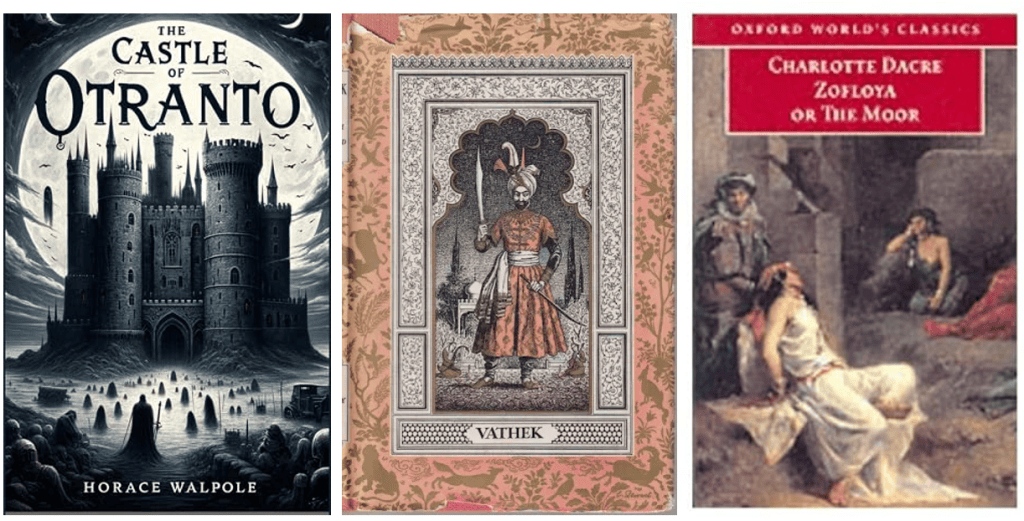
Selecting just five works from the golden age of Gothic horror inevitably means leaving a few mouldering masterpieces in the crypt. Honourable mention must go to Horace Walpole’s The Castle of Otranto (1764), which started the whole business with a giant falling helmet and a peripatetic skeleton. Also bubbling under my top of the horror pops are William Beckford’s gloriously decadent Vathek (1786) and Charlotte Dacre’s deliciously depraved Zofloya (1806).
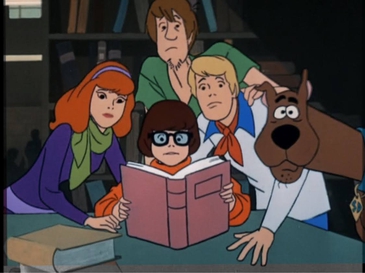
And before you say it, yes, I’ve deliberately omitted Frankenstein (too famous), Dracula (too late) and Mrs Radcliffe’s novels (too Scooby-Doo…the ghost always turns out to be the caretaker in a white sheet or some such).
So here are my top five gothic horror novels of the British Isles from the golden age of terror with appropriate trigger warnings for any big girls’ blouses out there…
5. Melmoth the Wanderer by Charles Maturin (1820)
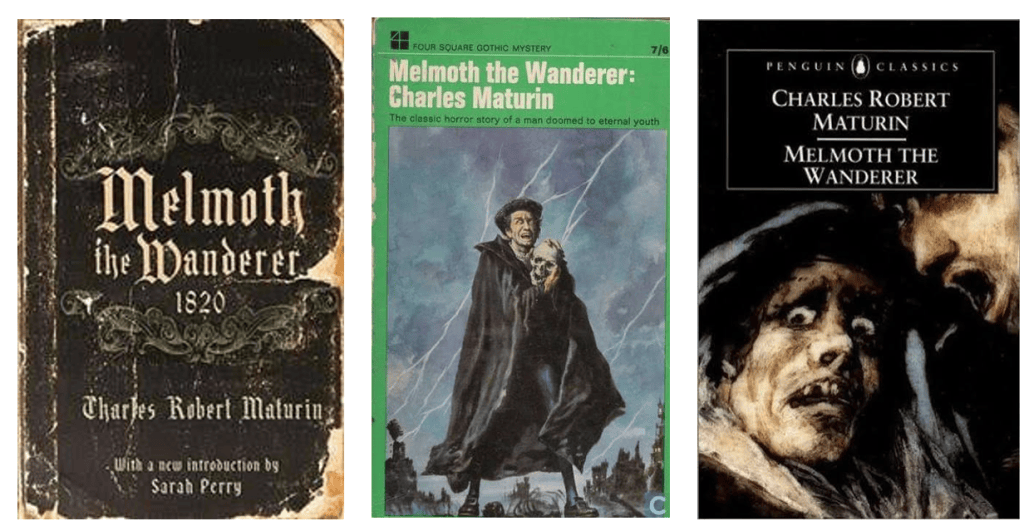
Charles Maturin was an Irish clergyman whose baggy monster Melmoth the Wanderer was admired by Oscar Wilde, Edgar Alan Poe and H. P. Lovecraft. The novel follows the mysterious Melmoth, a man who has made a pact with the Devil in exchange for an unnaturally extended life. Condemned to wander the earth, he seeks out people driven to the depths of despair, offering them an escape from their suffering but at a terrible price. The novel takes the reader from gloomy Irish mansions to Spanish monasteries, madhouses and the dungeons of the Inquisition and is told through a labyrinth of interlocking stories and tales within tales…
TRIGGER WARNING: Contains strong supernatural horror, satanic pacts, demonic visitations, torture, religious persecution, incarceration in madhouses, shipwrecks, parricide, starvation, cannibalism, marriage ceremonies conducted by animated corpses, and scenes of extreme psychological distress.
Also contains prolonged theological discussions, stories within stories within stories within stories.
NOT SUITABLE FOR: nervous readers, prospective monks, or anyone who has difficulty remembering what happened three narrators ago.
CLASSIC QUOTE: “I heard the shriek of the wretched female;—her lover, in the agony of hunger, had fastened his teeth in her shoulder; —that bosom, on which he had so often luxuriated, became a meal to him now…”
4. The Adventures of Caleb Williams by William Godwin (1794)
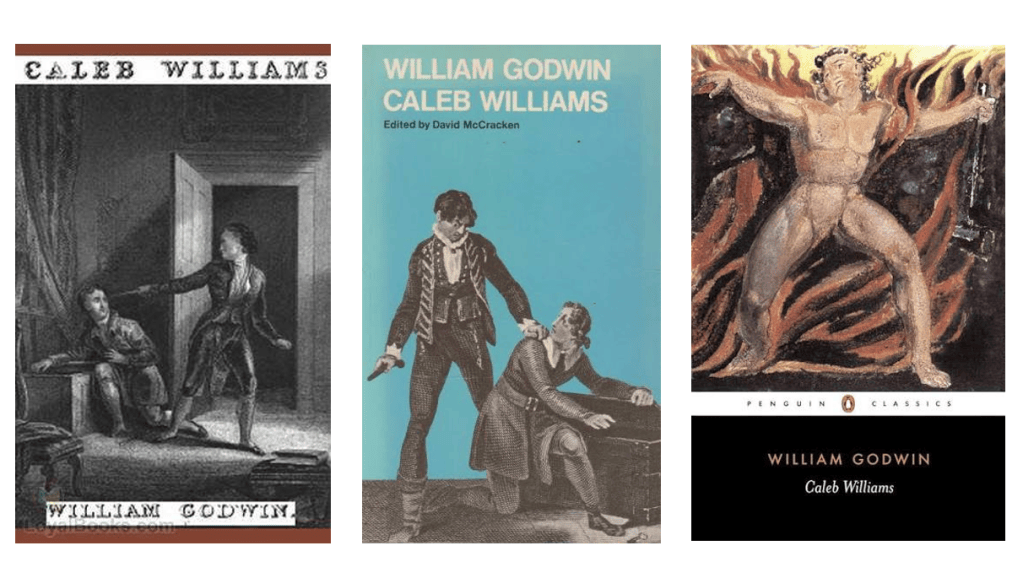
William Godwin was husband to feminist Mary Wolstonecraft, father to author of Frankenstein Mary Shelley and known as the father of philosophical anarchism.
His novel Caleb Williams (1794) eschews ghosts and demons. The real monster in the story is the English social and legal system and how it can pursue and crush whoever it feels to be a threat to the establishment. In the novel, young Caleb Williams is employed by wealthy Ferdinando Falkland but discovers a dark secret about his master’s past that leads to the boy being pursued to the ends of the earth by the all-powerful and omniscient aristocrat.
The ambiguous ending is bleak enough, but the original (unpublished) conclusion was even bleaker.
TRIGGER WARNING: Contains murder, false imprisonment, violence, stalking, psychological torment, obsessive persecution, abuse of power, judicial corruption, class prejudice and sustained scenes of paranoia and mental anguish.
Also contains prolonged attacks on the British legal system, dangerously radical political opinions and disturbing suggestions that the elite may not always have our best interests at heart.
NOT SUITABLE FOR: nervous servants, inquisitive secretaries, members of the landed gentry or elite globalists everywhere.
CLASSIC QUOTE: “Turn me a prey to the wild beasts of the desert, so I be never again the victim of man, dressed in the gore-dripping robes of authority! Suffer me at least to call life, the pursuits of life, my own! Let me hold it at the mercy of the elements, of the hunger of the beasts, or the revenge of barbarians, but not of the cold-blooded prudence of monopolists and kings!”
3. The Private Memoirs and Confessions of a Justified Sinner by James Hogg (1824)
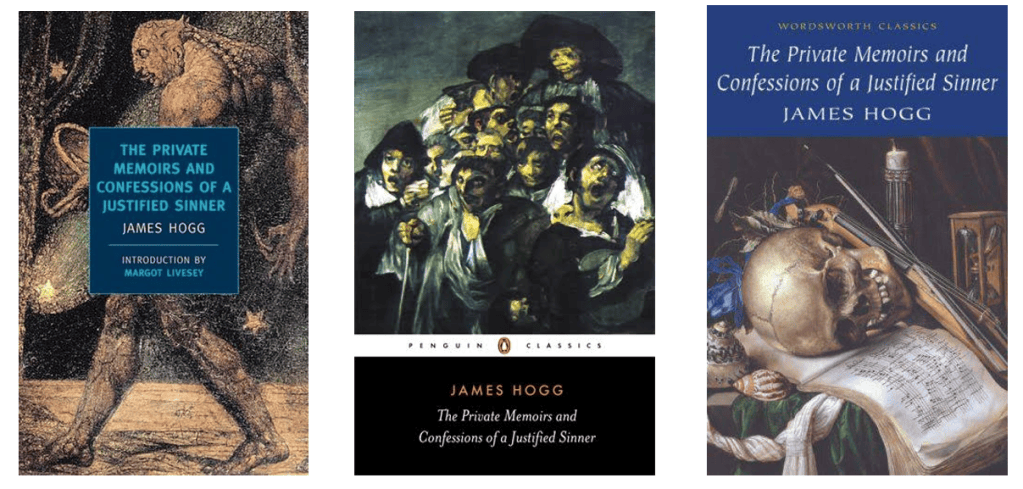
Scottish poet and novelist James Hogg’s The Private Memoirs and Confessions of a Justified Sinner (1824) explores the dark side of religious fanaticism, blurring the boundaries between supernatural horror and psychological mystery.
The novel is set in early eighteenth-century Scotland, and follows Robert Wringhim, a young man raised in the Calvinist belief that he is one of God’s chosen few, predestined for salvation regardless of his actions. When he encounters the strange Gil-Martin, who appears to possess extraordinary powers, Robert is drawn into a nightmare world of murder, paranoia and religious obsession. But is Gil-Martin really the Devil himself, or a product of Robert’s increasingly disturbed mind?
TRIGGER WARNING: Contains strong psychological and supernatural horror, religious fanaticism, fmurder, stalking, demonic temptation, sinister doppelgängers, grave-robbing, suicide, extreme paranoia, diabolical possession and scenes of sustained mental deterioration.
Also contains religious extremism, unreliable narration and a mysterious stranger who is almost certainly not the sort of chap you should be taking spiritual advice from.
NOT SUITABLE FOR: persons of a nervous disposition, Calvinists lacking a sense of humour, or anyone who believes that being one of God’s elect entitles them to murder their neighbours.
CLASSIC QUOTE: “His breath is like the airs from a charnel house, and his flesh seems fading from his bones, as if the worm that never dies were gnawing it away already…”
2. The Monk by Matthew Lewis (1796)
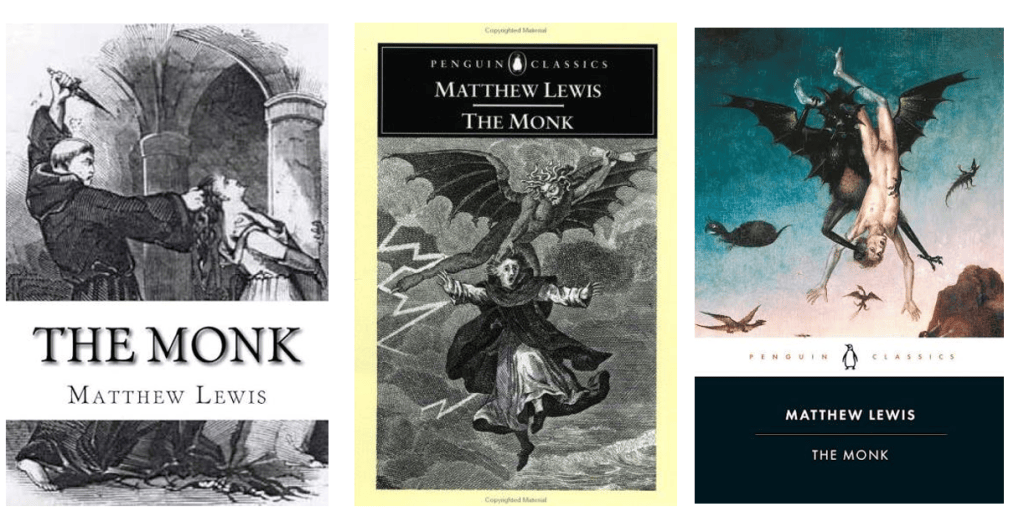
The ultimate in gothic horror, this depraved classic scandalised late eighteenth century society and seemed determined to violate every moral and religious taboo of its age.
The novel follows Ambrosio, a Spanish monk whose reputation for holiness conceals a dangerous mixture of pride, repression and forbidden desires. When a mysterious young novice enters his monastery, Ambrosio is drawn into an increasingly horrific world of lustful temptation, black magic, murder and diabolical intrigue.
The novel was so scandalous that when Matthew ‘Monk’ Lewis became an MP, he edited it to produce a ‘PG’ version. Naturally, it’s the unexpurgated version we are concerned with here.
TRIGGER WARNING: Contains strong supernatural horror, sexual violence, incest, infanticide, matricide, satanic rituals, ghosts of bleeding nuns, decomposing bodies, premature burial, torture, murderous monks, rampaging mobs, and scenes of extreme depravity
Also contains a particularly unpleasant encounter with the Devil.
NOT SUITABLE FOR: the squeamish, monks, nuns, members of parliament.
CLASSIC QUOTE: “Myriads of insects were called forth by the warmth; they drank the blood which trickled from Ambrosio’s wounds; he had no power to drive them from him, and they fastened upon his sores, darted their stings into his body, covered him with their multitudes, and inflicted on him tortures the most exquisite and insupportable.
“The eagles of the rock tore his flesh piecemeal, and dug out his eye-balls with their crooked beaks.
“Blind, maimed, helpless, and despairing, venting his rage in blasphemy and curses, execrating his existence, yet dreading the arrival of death destined to yield him up to greater torments…”
1. Great British Tales of Terror by Peter Haining (1972)
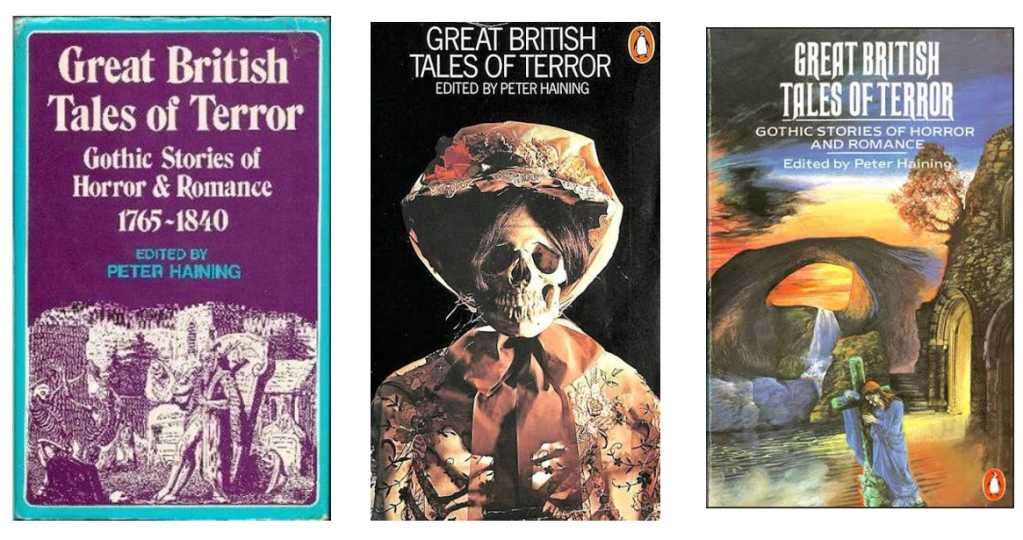
OK, so I’m cheating and this is a not a novel but a 1972 book of short stories from the gothic golden era of 1760-1840. But it’s my list, and short stories were just as important for the genre as the full-length novel.
Peter Haining was a prolific anthologist whose collections of horror and supernatural fiction introduced generations of readers to some wonderfully obscure literary horrors. His reputation as a historian is a bit more questionable, however. His books on Spring-heeled Jack and Sweeney Todd include numerous unsubstantiated claims and apparently fictional “historical” incidents. Nevertheless, as an editor of horror anthologies, Haining was hard to beat.
This collection of short stories includes entries from all the authors above, plus some beautifully lurid anonymous pieces, many of them rip offs of The Monk, but all enjoyable nonetheless. If you’re new to gothic horror from the grisly golden age, this compendium is a great place to start.
TRIGGER WARNING: Contains strong supernatural horror, vampires, animated corpses, spectral brides, murderous monks, demonic apparitions, black magic, satanic bargains, premature burial, torture, inquisitorial cruelty, sinister castles, haunted chambers, ghostly visitations, big snakes, spider demons, infernal machinery and assorted outrages against nature.
Also contains excessive swooning, inexplicable disappearances, suspicious foreigners, distressed maidens, aristocratic villains, mysterious manuscripts, and prolonged scenes of wandering through subterranean passages by candlelight…
NOT SUITABLE FOR: nervous readers, unchaperoned young ladies, persons of a delicate disposition, or anyone foolish enough to investigate strange noises coming from the family crypt.
CLASSIC QUOTE: “The fiend, with malignant yell, pursued Erilda—the trident entered her bosom—and crimson torrents of her virgin blood gushed from the yawning wound—in agony she fell—the demon, twining his hand in her fair locks, hurled her to the deep, and, sated with triumph vanished…” (The Unknown by Anne of Swansea)
So find yourself a comfortable spot in your favourite subterranean crumbling crypt, light a candle, pour a large glass of the red stuff and abandon all hope of salvation as you turn the musty pages of the mouldering manuscript you found there.
It won’t end well, but happy Halloween anyway…
For another splattery horror countdown, see my top five cannibal zombie movies from the golden age of gut-munching!

