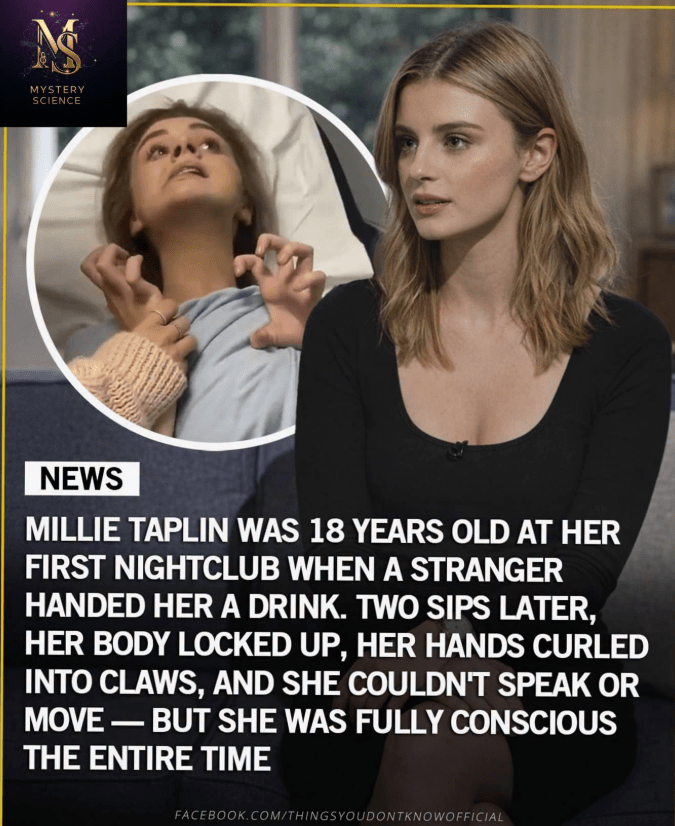
O, take heed girls! One sip is all it takes…Look what happened to Millie Taplin. She accepted a drink from a strange man and was rendered paralysed, trapped in her own body and squirming and gurning as if possessed by a demon.
Millie’s mother released a shocking video of her daughter taken while she was in hospital after the alleged spiking incident. The story of Millie Taplin has been all over the international media this week along with lurid headlines about demonic possession, paralysis, malevolent strangers and drug-induced horrors so you’d be forgiven for thinking this was news. In fact, it happened in 2021.[i]
Millie’s story is often presented as a warning in social media posts and news accounts. A kind of fable for young women. You could be next!
We’ll get to what I think is going on shortly but first let’s look at the myth.
Are you ready for a fairy story?
One sip is all it took…
Once upon a time a young woman called Millie went for a night out with friends. She had just turned eighteen, she’d never been to a nightclub before and at last the lockdowns that failed to stop the pandemic had just been lifted. Finally, young people were free to enjoy a night out.
Millie’s mum sent her daughter an ominously prophetic text warning her not to leave her drink unattended, because….well, you know what might happen to an innocent young woman – and everyone’s heard the stories.
At Moo Moo’s nightclub in Southend, Essex, a stranger chatted with young Millie and offered her a drink of vodka and lemonade. Her mother’s wise words seemingly forgotten, Millie took a sip…
Soon she began to feel hot and sick and went outside. Her vision went blurry. She was taken to hospital where her condition deteriorated. She could no longer walk, her hands were clenched into claws, her body went stiff and her face underwent grotesque contortions as if she’d been possessed by a demon.
Later Millie said she’d been fully conscious in the hospital but unable to control her spasms. It was as if she had been trapped inside her own body.
Medical staff concluded that Millie had been spiked with two drugs. One to knock her unconscious and one to paralyse her.
Fortunately, Millie recovered from this dose of a dangerous cocktail of narcotics after a few hours and went home.
But YOU might not be so lucky…
Drink! Drugs! Sex!
This is the story roughly as it’s been told in hundreds of social media posts and news articles around the world, and the release of the video of Millie contorted and writhing like little Regan in the Exorcist has brought it back to lurid public attention.
For all their ostentatious concern, the media LOVES it when young girls on a night out get spiked. Drink, drugs and sex – who could want more for a news headline?
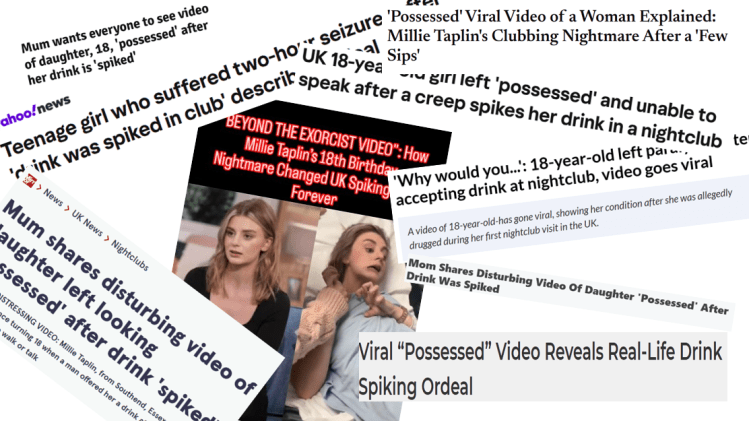
But we have some good reasons to be sceptical about Millie’s story. Firstly, there doesn’t appear to be any drug or combination of drugs that would lead to the symptoms Millie exhibited, especially after only one sip, and when the worst symptoms appeared hours later in a medical setting. Some accounts make it two sips or a few sips, but the point still stands.
There appears to have been no blood tests carried out. Or if there were, the results were negative and not released. The medical staff who supposedly suggested Millie had been dosed with a combination of narcotic and paralytic are not named. This may have been nurses’ speculation passed on to the media by Millie’s family.
Furthermore, CCTV cameras are everywhere. Surely the sinister stranger who gave Millie the drink would have been arrested and charged if he had indeed been responsible.
Could it be that Millie, unused to public drinking, and filled with government induced anxiety about Covid-19, simply drank too much and, primed by the text she received from her mum and other media accounts of women being drink or needle spiked, misinterpreted her own intoxication? When she first started feeling unwell, Millie thought she had just drunk too much, as did her friends. The effects of too much alcohol, excitement at her first night out in a club and anxiety induced by government fear propaganda could all have led to a panic attack that made her seek medical aid.
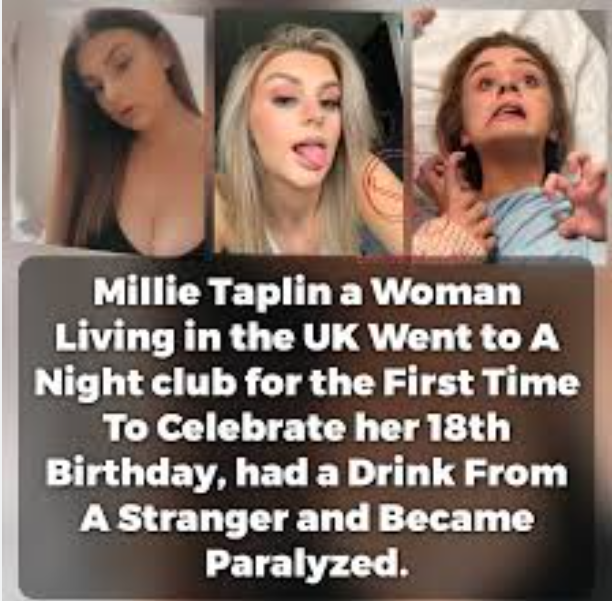
Of course, seeking medical aid is the right thing to do if you think you’ve been spiked. But drinking too much and throwing a wobbler is embarrassing to admit, so it’s easy to see how the assumption – or invention – of a spiking attack could be useful to the alleged victim. Instead of blame and criticism, the ‘victim’ becomes the centre of attention, gains 15 minutes of fame, garners sympathy and enjoys the status boost associated with being a brave victim.
The academic literature suggests that the use of drugs in sexual assaults is rare.[ii] When they are used, it’s more likely that they will be used to facilitate an assault in a private space such as the victim’s or perpetrator’s home. Incapacitating someone with criminal intent in a public space surrounded by staff and CCTV cameras is not a wise move as it would involve carrying or dragging a clearly intoxicated person through crowds of witnesses.
As drink spiking expert Pamela Donovan points out, if someone is going to spike you for malicious purposes, they are likely to do it in a private rather than a public space and they are probably known and trusted by the victim.[iii]
Drink Spiking: the Evidence
A number of studies have carried out medical tests on alleged spiking victims. Results show the vast majority of people who think their drinks have been drugged are wrong. An Australian study examined the blood of 97 people who reported to a hospital saying they had been spiked. Guess how many of that sample actually had any sedative or other drug (aside from narcotics knowingly taken) in their system? That’s right. None of them.[iv]
A similar study in Wales tested 75 mostly female patients who had presented to a hospital A&E department reporting that they had been spiked. The tests showed that while many of the patients had certainly had a lot to drink, and quite a few had ingested various recreational drugs, none of them had actually been spiked.[v]
Other studies have similar results.[vi] People who turn up at casualty departments thinking they have been spiked seem to have no drug in their system (other than ones they had taken voluntarily).
We’re told that drink spiking is common. But if it’s so widespread and blatant, why aren’t our jails bursting with the villains? Nightclubs are full of potential witnesses and CCTV cameras are everywhere. Police have investigated thousands of alleged spiking cases – 6,670 between 2017 and 2021 – and only 130 of these resulted in a charge. This survey, conducted by the Independent, does not actually tell us how many were eventually convicted, though it does say that some of these charges were for other offences to the one initially brought against the defendant.[vii] And we don’t know how many of these cases actually took place in a public place such as a nightclub.
One police force, Avon and Somerset, recorded that from 2016 to 2021, there were 486 cases of drink spiking investigated, resulting in 27 arrests but no convictions.[viii]
Tragic Magic
So what’s going on? How can so many people think they have been spiked when they haven’t?
First, perhaps the victim had not kept track of how much she was drinking, or had a bad reaction to drugs (prescription, illicit or both) she had voluntarily taken. This bad reaction might mistakenly be assumed to be symptoms of spiking – about which everyone has heard the scare stories. And as an excuse for being inebriated, being spiked would certainly gain more sympathy than having knocked back one too many Jagar-bombs. As Pamela Donovan puts it, it’s a kind of redemptive tragic magic.[ix] A drink spiking story instantly conjures up archetypes of damsels in distress and dastardly villains and magically shifts the responsibility.
Being spiked confers on one sympathy, moral status and also suggests that the victim is so irresistible that dastardly villains will do anything to get their hands on them.
Another possibility is that the victim suffered a panic or anxiety attack and then became hypervigilant about the state of their body such that a nocebo effect occurred. The nocebo effect is the powerful evil twin of the placebo effect. When you’re primed to expect negative symptoms, it creates a self-fulfilling prophecy and the mind does the rest. In other words, what psychiatrists of a bygone age might have called a hysterical reaction.
We’ve had plague, wars, inflation, climate doom-mongering and God knows what else relentlessly over the last few years. Constant free-floating anxiety creates the ideal conditions for hysteria. People become hypervigilant about their body and their surroundings, and their mind and the nocebo effect does the rest.
But there is also a third possibility – that the victim made the story of being spiked up to gain attention or sympathy. This may sound unlikely, but it’s certainly something that happens frequently. A famous case is the Halifax Slasher panic of 1938 when dozens of victims in Halifax and then hundreds more around the country claimed to have been attacked by a razor blade wielding maniac. It turned out that the victims had cut themselves and invented the story of the attack.[x] Let that sink in.
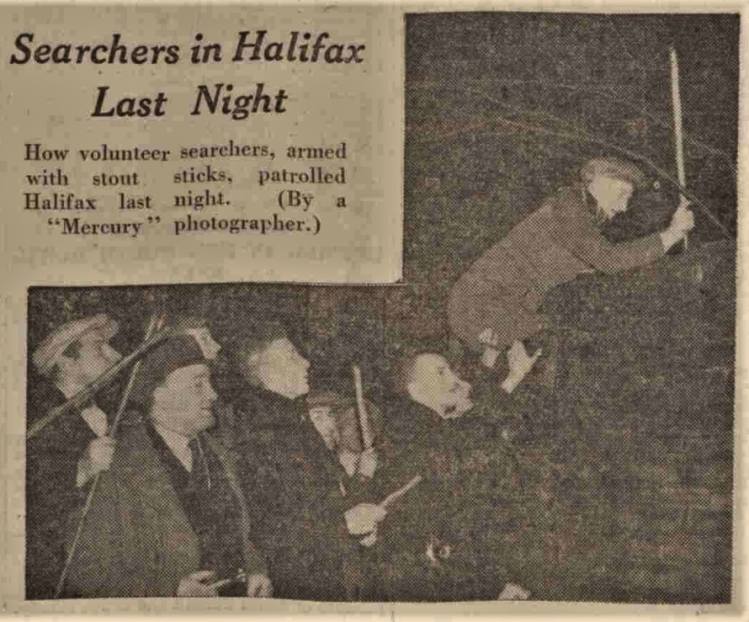
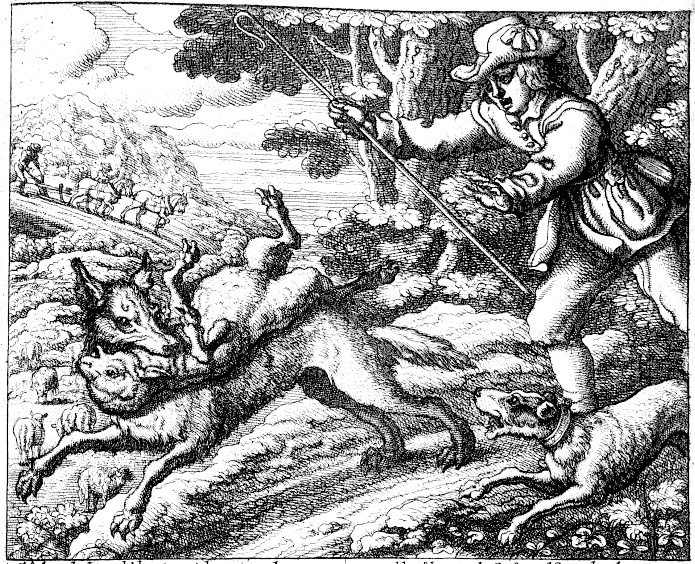
There are a small but significant number of people in every culture who cry wolf…
Epilogue
But what’s the harm, you might ask, in women on a night out taking extra care to make sure their drinks are in their sight at all times? Why not sell anti-spiking glass covers, drug testing kits or run spiking awareness raising campaigns?
The problem is that these precautions and warnings reinforce a false narrative which is unlikely to stop anyone actually being spiked but is likely to lead to more supposed victims imagining or pretending they’ve been spiked.
Over the years I’ve been following spiking episodes we’ve had drink spiking panics, needle spiking panics and vape spiking panics. These panics stretch back through the twentieth century and reflect the cultural fears and folk devils of the age.[xi]
In fairy stories like these, the nightclub takes on the role of the dark spooky forest, the innocent young woman out for a good time takes on the role of the little girl who ignores mother’s sound advice and strays from the path, and the big bad wolf is a nasty man with a phial, vape or syringe full of date rape drugs on the prowl for his next victim…
And therein lies the insipid horror of the spiking myth. It could happen to you anytime. Be constantly vigilant, suspicious, aware. Spend your leisure time haunted by fear and anxiety. Might as well check under your bed every night for a mad axe murderer. You never know…
…Or better still.
Be sceptical.
[i] https://uk.news.yahoo.com/uk-18-old-girl-left-123300419.html; https://x.com/MohiniWealth/status/2044015534925328537
[ii] Anderson, L., Flynn, A. and Pilgrim, J. (2017) ‘A global epidemiological perspective on the toxicology of drug-facilitated sexual assault: A systematic review’, Journal of Forensic and Legal Medicine, 47, pp.46-54
[iii] Donovan, P. (2016) Drink Spiking and Predatory Drugging (Palgrave Macmillan)
[iv] Paul Quigley et al (2009) ‘Prospective study of 101 patients with suspected drink spiking’, Emergency Medicine Australia, 21(3) pp.222-228 https://doi.org/10.1111/j.1742-6723.2009.01185.x
[v] Hughes, H.et al (2007) ‘A Study of Patients Presenting to an Emergency Department having had a Spiked Drink’, Emergency Medicine Journal, 24 (pp.89-91)
[vi] See Bendau, A. et al ‘Spiking Versus Speculation? Perceived Prevalence, Probability, and Fear of Drink and Needle Spiking’, Journal of Drug Issues https://doi.org/10.1177/00220426231197826
[vii] https://www.independent.co.uk/news/uk/crime/drink-injection-spiking-offences-charge-b1978121.html
[viii] House of Commons Home Affairs Committee Spiking: Ninth Report of Sessions 2021-2022, April 26, 2022, p. 35
[ix] Ibid, p.81
[x] See chapter one of my Weird Calderdale for the full story of the Halifax Slasher. For other astonishing phantom panics see Bartholomew and Weatherhead Social Panics and Phantom Attackers (Palgrave Macmillan: 2024)
[xi] Robert E. Bartholomew and Paul Weatherhead, Social Panics and Phantom Attackers: A Study of Imaginary Assailants (Palgrave Macmillan, 2024)

