Todmorden Ghost Busting Wizard Priest Necromancer’s Xmas Advice

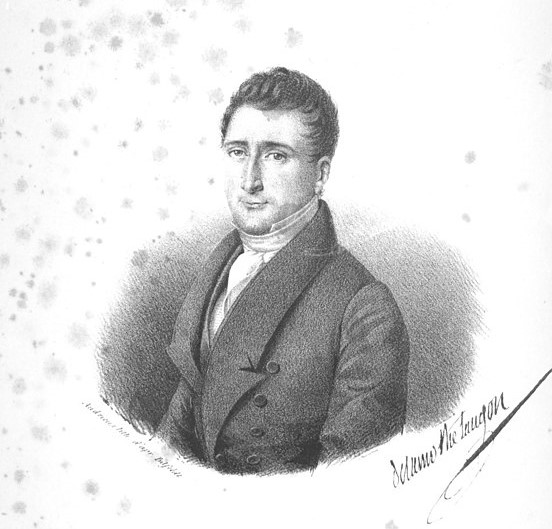
Henry Krabtree, also known as Merlinus Rusticus, was a seventeenth century Todmorden curate – but that’s not all. He had a reputation as a ghost buster, necromancer and healer and did battle with weird demons while at the same time writing arch bitchy comments about his congregation in the parish records.

In 1685 he wrote a strange almanac under the pseudonym of Merlinus Rusticus – the Country Merlin. The book mixed geopolitical prophecy inspired by the Biblical book of Daniel with his sage advice for the different months of the year.

Much of the advice was not pretty and involved purging, vomiting and bleeding. However, his advice for December and the Christmas season is simple and worth trying:

DECEMBER: The best Physick this Month is good meat and the strongest Drink you can get, warm Cloaths and moderate exercise, Hunting or Tracing Hares.

There you have it. Todmorden’s Ghost-busting Wizard Priest Necromancer’s guide to December – eat, drink and be merry![i]


[i] For the full life of Henry Krabtree, see Henry Krabtree: Curate of Todmorden, (Paper Portal Publishing, 2019) which includes a full reproduction of his rare almanac. For just the weird bits of Krabtree’s life, see my own Weird Calderdale.

Image from the Wellcome Collection (Creative Commons).

Some Headless Xmas Ghosts

Hannah Grundy – the Headless Ghost of Staithes

If you take a night walk on the beach near the North Yorkshire fishing village of Staithes at Christmas, you might see an eerie transparent figure floating down from the towering coastal cliffs. As the shape comes closer, it crosses a bridge and comes onto the beach where you can see in the pale winter moonlight that the figure is that of a young woman who appears to be searching in the freezing rockpools, and it’s then that it strikes you what she is looking for – her head!

This is the headless ghost of Hannah Grundy.

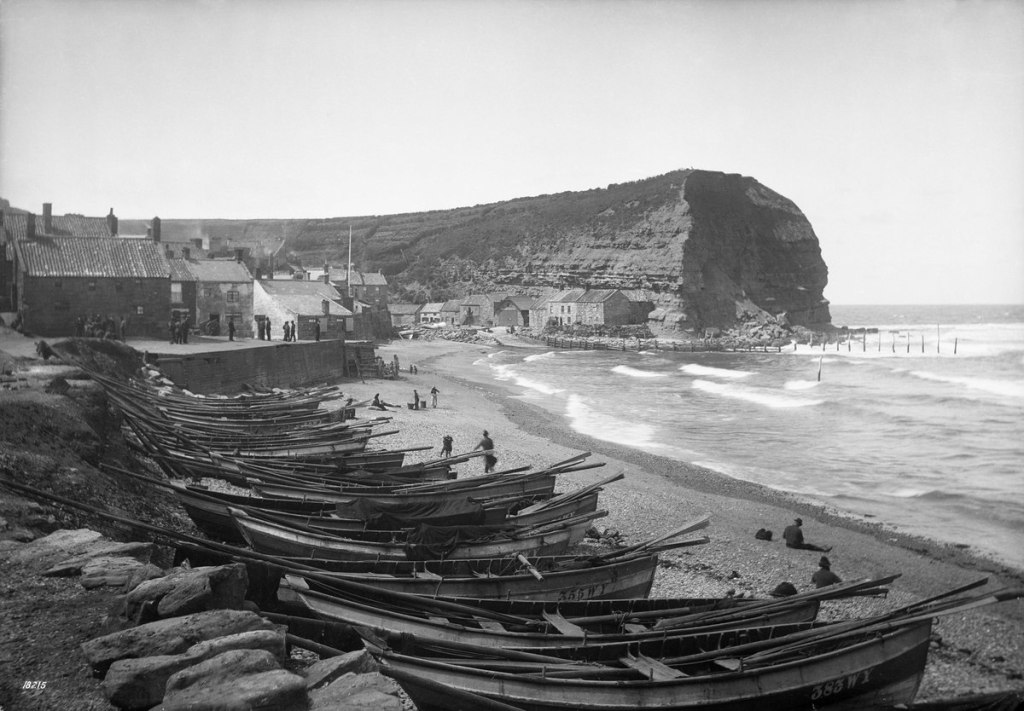
Staithes 1880

Hannah Grundy has slipped into North Yorkshire folklore, but she was a real person. On Tuesday 14 April 1807, she and three other teenage girls went down to the beach at Staithes to hunt for shellfish. As she sat on the beach for a rest, forty yards from the base of a 700 foot high cliff, a dreadful accident occurred. A large flat rock, loosened by stormy weather, came hurtling down onto her neck and ‘severed her head from her body without mangling it, and threw it thirty yards from where she was sitting’.[i]

Ever since her headless ghost has supposedly been seen on the beach, especially at Christmas. It’s assumed she is searching for shellfish, though I think it more likely she’s looking for her own head – not easy without any eyes, which may be why she’s been searching for over two centuries.

A Headless Ghost in Buckingham

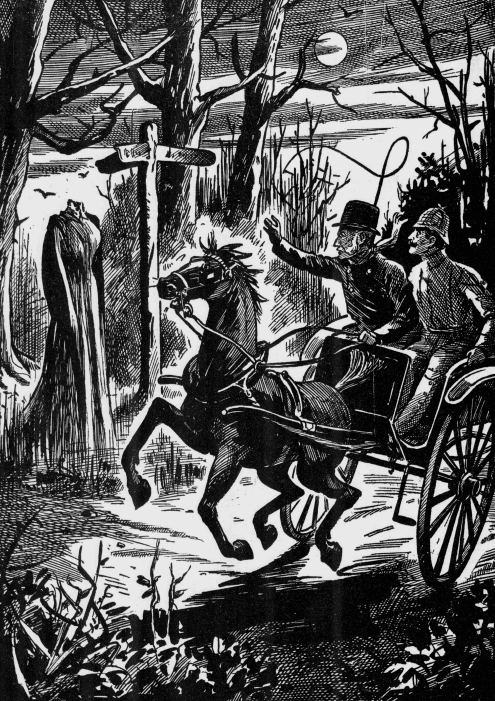
A respected farmer and his friend were driving their horse and trap along a dark country road a few miles from Buckingham one evening between Christmas 1897 and New Year 1898. As they approached the corner of a crossroads they saw a sombre looking dark figure standing in front of them.

The farmer called out, ‘Hullo there! Move on, please!’ However, the strange figure made no answer and did not move. As they drew closer they saw to their horror that the figure, wrapped in a black cloak, was that of a headless woman. At this moment the horse also caught its first glimpse of the phantom and stopped paralysed with fear and trembling violently.

Again the farmer cried out ‘What do you do there? Move on, please!’ but to no avail. The mysterious figure stood silent and immovable in the road. The horse, however, began backing away and was in danger of pulling the pair into a ditch by the side of the road, so the driver’s friend leapt out to prevent this. At this point, it seemed the headless wraith had vanished.

As soon as the horse and trap were ready to proceed, the dark figure appeared again a few yards in front of them. This time the farmer told the spirit to speak in the name of God, at which she slowly glided away through a hedge.

Now the road was clear, the terrified horse took the opportunity to gallop for its life to the nearest village.[ii]

Unfortunately, the farmer and mate are unnamed and the source for the story is the Illustrated Police News, a true crime paper famous for its lurid illustrations and known as Britain’s worst newspaper. See the top of this article for the accompanying illustration.

This story also lacks the punchline that a satisfying ghost tale needs. Usually the punchline is something along the lines of …’and that was the room where the murderer hanged himself….’

So, let’s speculate. The supposed sighting took place at a crossroads – traditionally a place where people who commit suicide were buried as they could not be interred in hallowed ground. Perhaps the headless woman in black took her own life in lovelorn despair. Though suicide by decapitation seems a bit far-fetched. Perhaps she was murdered on the spot by a dastardly lover? But this doesn’t give her much agency.

Crossroads are also associated with black magic, necromancy and the raising of evil spirits. So, I suggest she is the ghost of a necromancer who tried to raise Beelzebub in some ghastly black magic ritual but had her head torn from her shoulders by a demonic force she could not control…

The Ghost of Christmas Post

Here’s a lighter – but no less bizarre – Christmas ghost story to finish with.

In the Postmaster General’s report of 1876, a strange tale emerged set in the West of Ireland. A new post box had been built into a wall, but the post office could not get anyone to collect the letters posted there.

This was because many of the locals were afraid of a strange ghost that haunted that stretch of road – a large, white headless turkey.[iii]

Illustration by Isaac Cruikshank 1876: ‘A white woman without a head! That’s a sure sign of a frost!’

[i] Public Ledger and Daily Advertiser 21 April 1807; Larne Times 26 December 1936

[ii] Illustrated Police News 8 January 1898

[iii] The North Briton, 9 September 1876

The Skoptsy – Russia’s Weird Castration Cult

This may sting a little.

Away from the prying eyes of the orthodox authorities, a group of believers gather secretly in a Saint Petersburg cellar. They chant the name of Jesus Christ as if it were a mantra and enter a state of rapturous exaltation before dancing and spinning like dervishes singing, prophesying and howling in spiritual ecstasy until they collapse in a delirious sweaty heap of bodies.

The Skoptsy find ecstasy in whirling and chanting

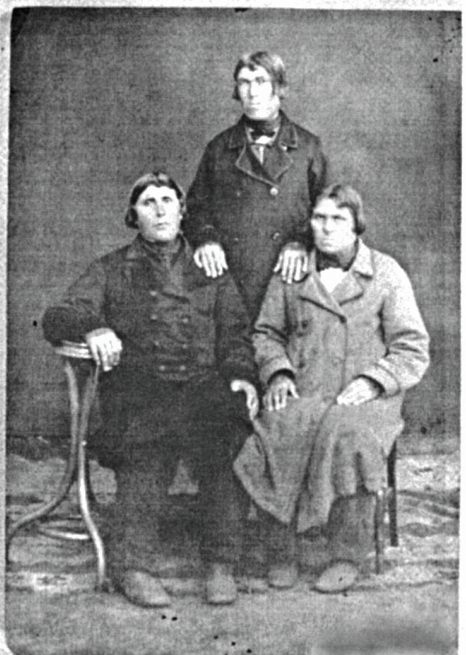
These are the Skoptsy, a strange castration cult that spread throughout Russia in the late eighteenth century and survived until well into the twentieth.

The sect’s origins lay in the 1760s when a wandering peasant (some sources say a runaway soldier) named Kondratii Selivanov joined a movement known as the Christ Faith. This was in itself a breakaway sect from The Old Believers, who were a breakaway from the Russian Orthodox Church…

Kondratii Selivanov

Selivanov was recognised as the son of God in his congregation and soon introduced radical innovations. The Father Redeemer (as his followers called him) declared himself to be Jesus Christ and advocated an extreme form of chastity as the way to salvation – castration.

The Fiery Baptism

The justification for this was a literal interpretation of Jesus’ words in the book of Matthew 19:12:

For there are some eunuchs, which were so born from their mother’s womb: and there are some eunuchs, which were made eunuchs of men: and there be eunuchs, which have made themselves eunuchs for the kingdom of heaven’s sake. He that is able to receive it, let him receive it.

For men this could mean an operation called the Minor Seal – the removal of the testicles. The Major Seal was the removal of the penis.  Originally, the operation was carried out with a red hot iron in a process referred to as the ‘fiery baptism’. Later blades were used, though the hot iron was still used to cauterise the wound.

For women the nipples, breasts or clitoris were removed, scarred or cut.

The operations were carried out by elders of the congregation or perhaps by the believers on themselves. There appears to have been no use of anaesthetic. Some of the adherents claimed the operations were painless while others boasted of the agony they endured for their salvation.

Many adults brought their children into the sect, with all that that entailed…

A young Skopets about to receive his ‘fiery baptism’

Apart from the genital mutilation and ecstatic whirling, the Skoptsy (which is Russian for Eunuch) lived pretty normal lives. Most were textile workers, peasants or merchants and were hard-working and industrious. They were allowed to marry and have a child before their fiery baptism. They were organised into small congregations called ‘ships’ and each was led by a preacher who called himself Christ and a woman chosen from the group who would be called the Mother of God.

Greenish Like a Young Potato

This is how one writer described the Skoptsy after visiting a Rumanian branch of the sect:

Not one drop of blood in the face: it is sallow and deathly pale. This is neither the paleness of an old man nor that of a sick one, nor that of a dead body – something is missing from under their skin. Their skin somehow differently sticks to the muscles, not as tight as ours: it is thinner and looser, as if wanting to slide down. I’m not a physiologist who can explain this anomaly; but at-a-glance and by touch I can differentiate the skin of a Skopets from ours. When you shake a hand of a Skopets, you feel that the skin on it is soft, slack, and cold […]. The colouring of Skoptsy is constantly more or less greenish like a young potato, and certainly dull. They have no sheen, not in their skin, nor in their eyes, even their hair does not have any shine – everything is lifeless (Vasilii Kelsiev).

Two Skoptsy Women

The Skoptsy were seen as both dangerous and blasphemous and faced persecution from the Tsarist authorities and the Orthodox Church. Selivanov himself had to go on the run but was eventually caught and exiled to Siberia. In 1795 he turned up in Moscow calling himself Tsar Peter III and was promptly arrested and taken to Saint Petersburg where he met the real Tsar, Paul I. Selivanov recommended that the Tsar castrate himself, though the Emperor of Russia decided instead to send him to an asylum.

When Selivanov was released after pressure from well-off Skoptsy merchants, he returned to Saint Petersburg where he began gathering more followers, including some of high status, and many from the aristocracy attended his ecstatic rituals. Sometimes two or three hundred filled these meetings. Selivanov was eventually confined to a monastery in 1820 where he died twelve years later at the (supposed) age of 112.

His followers believed that the Second Coming would involve Selivanov returning in glory to Moscow to usher in the Last Judgement as a Tsar-Redeemer.

The Skoptsy became a mass religious movement in the late eighteenth and early nineteenth centuries, with adherents numbering in the hundreds of thousands, though it’s thought that less than half actually mutilated themselves. They spread throughout Russia and beyond, despite persecution and exile.

The sect survived well into the 1920s and 1930s when they were finally persecuted out of existence in Russia, though there are reports of exiled communities surviving until much later.

It’s easy to scoff at the Skoptsy. They’re weird, ignorant, backward. We would never do anything like that in our enlightened age. Or would we?

With the Skoptsy we can see what happens when religious sexual conservatism goes too far, and it’s pretty disturbing. In our secular, socially and sexually liberal age, strange enthusiasms express themselves differently, and may wear the cloak of science, medicine or health – but express themselves they do. They blow through our consciousnesses as hysterias, zealous enthusiasms and psychologically contagious fads, fashions and fears.

So what would it look like for our secular sexual liberalism to go too far? Surely, we wouldn’t take our contemporary metaphysical beliefs to such horrible extremes as the Skoptsy did? Metaphysical beliefs such as the possibility of being born in the wrong body, or there being 112 genders or that people can change the biological fact of their sex simply by an act of self-declaration, for example?

These are modern secular creeds and we do indeed take them to the same drastic and irreversible conclusions as the Skoptsy did with their fiery baptisms…

References

Emeliantseva, Ekaterina ‘Icons, portraits, or types? Photographic images of the Skoptsy in late Imperial Russia (1880-1917)’, Religion and Photography: The Sacred before the Camera (2009), pp.189-20

Engelstein, Laura, From Heresy to Harm: Self-castrators in the Civic Discourse of late Tsarist Russia. Ithaca: Cornell University Press (1999) available at: https://srch.slav.hokudai.ac.jp/sympo/94summer/chapter1.pdf

Tulpe, Irina and Torchinov, Evgeny, ‘The Castrati (Skoptsy) sect in Russia: History, teaching and religious practice’, The International Journal for Transpersonal Studies vol 19 pp.77-87(2000) Available at: https://archive.ph/20120709063405/http://etor.h1.ru/castrati.html#selection-805.0-805.77

The Vodka Vampire

The Vampires That Time Forgot Part 1

This events described below were widely reported in 1892 as having taken place in a remote area of what is now Ukraine, but was then part of Moldavia. It had also previously been Russian, part of the Ottoman Empire as well as Rumanian for a short period of time.

Be warned – it’s not for the squeamish.[i]

One night in the October 1892, a giant of a woman arrived in the isolated hamlet of Sariera, in the district of Izmail.

The stranger told the first person she met that she was a ‘footsore wayfarer’ and asked for shelter for the night. The host was Mrs Yooreskaya, whose husband was away from home at the time. Hospitality is taken seriously in Slavic lands and so Mrs Yooreskaya invited the strange woman into her cottage where her 18 month old baby boy was sleeping in his cradle and her three year old daughter lay in bed.

As soon as she had crossed the threshold, the stranger pulled out a bottle of vodka which the two women drank.

When it was empty, the stranger gave her host some money to go and buy another bottle. She was left alone with the children.

When the mother returned with the vodka she found that her cottage was in utter darkness. As she opened the door, she heard her daughter Elizabeth screaming in terror: ‘Mamma, help me; oh, do help me!’ Her mother called for her neighbours who came running with some lights and revealed a horrific scene.

In the middle of the room was the stranger with Elizabeth face up on her lap. With one hand the woman had grasped the girl’s throat and with the other she held a kitchen knife above her about to strike.

The neighbours dashed the knife out of the woman’s hand and the girl was rescued. As the stranger muttered incoherently, the mother ran to the cradle in which her baby boy Pantelimon had been sleeping, but found to her horror that it was empty.

After a quick search the boy was found under the bench. His skull had been smashed. The floor and wall were stained with his blood and brain. The boy’s cheeks had been bitten out and blood had been sucked from all the soft parts of his body.

His mother, wild with grief, grasped the discarded breadknife and tried to put an end to her life, but after a struggle was prevented from doing so.

The murderer’s name was Anna Yaroshevskaya, the wife of a trader from the city of Akkerman. It was said that this giantess had the strength of three men when she had a belly full of vodka.

Yaroshevskaya was so strong that it took five men to handcuff her and get her to prison. Yaroshevskaya reportedly looked at these men with scorn and said, ‘Oh, if I could only get a drop of vodka to rouse me a bit I’d pound the whole lot of you to a pulp’.

The guards had great difficulty getting this giantess through the crowd of furious locals that had gathered. The women of the village believed that  Yaroshevskaya was a witch and that was why she had sucked the boy’s blood. The killer narrowly escaped being lynched.

Even when she was locked up, the police had to take ‘extraordinary measures’ to stop the villagers from breaking in to the prison to execute Yaroshevskaya.

We don’t know what happened to Yaroshevskaya, but we are told that she was unrepentant. Her husband, who no longer lived with her, commented dryly ‘She was always doing strange things when under the influence of vodka.’

This story was first reported in the Odessa News and picked up by a Saint Petersburg newspaper before being widely reported in an almost word for word translation across the UK and USA, often with the headline ‘A Female Vampyre’. This headline isn’t used in the Russian version, and it shows the extent to which vampires had permeated western culture five years before Bram Stoker’s seminal novel Dracula was published.

The English language papers certainly seemed to relish the exotic horror of the story, but is it true? The structure is reminiscent of urban legends, with its moral message about the dangers of drink, strangers and leaving children alone.

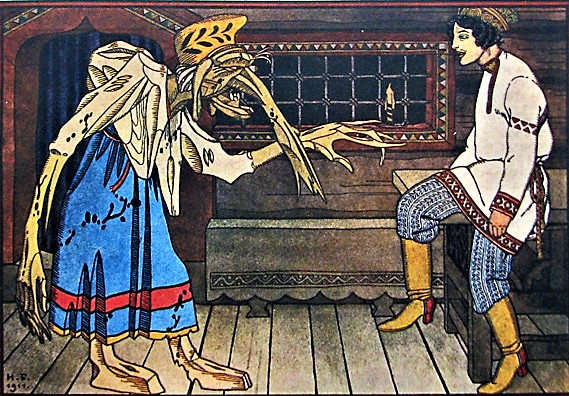
The dramatic conclusion and horrible twist also seem to suggest an urban legend, or dark fairy tale. Anna Yaroshevskaya also puts one in mind of Baba Yaga, the evil witch of Russian and Eastern European folklore who lived in the forest in a house with chicken legs. Baba Yaga would eat children and babies, like many a folkloric witch.

Baba Yaga and a bagpipe player

The quote from Yaroshevskaya’s husband about her always doing strange things when she was drunk on vodka almost reads like a dark punchline to the story, and only appears in the English versions.

Could the report be a late nineteenth century kind of creepy pasta?

On the other hand, the news reports about Anna Yaroshevskaya contain names and the places referred to are real. Unfortunately, I can’t find any other reference to the vodka vampire.

Stay tuned for more vampires that time forgot…


[i] ‘A female vampyre’, Framlingham Weekly News, 19 November 1892, p.3; Peterburgskiĭ listok (Петербургский листок), 20 October 1892, p.4

Monster Bats Attack!

Here are some gobbets of strange and horrible vampire history from the late nineteenth century…

Monster Bat Attacks Baby

In Hampshire in November 1880, a woman put her baby to sleep in its cradle one afternoon. The room had an old fireplace but no fire, so the woman put a paraffin lamp on the hob to create a little warmth for the sleeping infant.

A few hours later as dusk fell, the woman looked into the room and saw to her horror a black winged creature flapping madly around the room and making a moaning sound. Suddenly the creature landed on the cradle near the baby’s face.

The woman screamed, flung the door open and ran towards her child. The creature squealed and rose from the cradle, flying round the room madly before knocking the paraffin lamp onto the floor and smashing it, then eventually disappearing up the chimney.

The terrified woman grasped her baby from the cradle and dashed to her neighbour’s house. There they saw that the child had a small puncture wound on its throat that was oozing blood. All present agreed that there was only one explanation – a vampire.

When the father returned home, he went into the room to investigate and found that the creature was a harmless long-eared bat. Furthermore, the child’s nightgown had been fastened with a pin which had come loose and pricked the baby’s neck causing a small wound when the panicking woman had grasped the infant in her arms….[i]

No names are given in this widely reported news story. It shows how much vampires (and vampire bats) were in the public consciousness even at this time, several years before the publication of Bram Stoker’s Dracula.

Monster Bat Attacks Teenage Girl

This story concerns the 17 year old daughter of James Uhl,  a coffee merchant in Calaboza, Venezuela. The young woman was prone to sleepwalking ever since a child, and no cure could be found.

One night in 1890, it seems Miss Uhl left the house while in a trance and wandered into the countryside. When her parents realised she was gone, they organised a search party and eventually found the girl lying by the side of the road, with a huge bat clinging to her throat.

As the party approached, the bat attempted to fly away but was too engorged with blood to escape and was shot dead. It was over three feet long from wing tip to wing tip.

Miss Uhl had a placid expression on her pallid face, which was taken to suggest that she had fallen in her sleep and then been attacked by the creature when unconscious and had not felt any pain. There was a puncture mark on the girl’s neck over her jugular, and a pool of blood under her head.

It was believed that the bat had settled on her while she slept by the roadside and then sent her into a deeper sleep by gently fanning her face with its wings.[ii]

This story was widely reported in the USA and Britain, and does have some names and other details. However, vampire bats are a few centimetres in size and not a few feet, which really would have been a monster. While a vampire bat may occasionally bite humans, it’s implausible that it would drain the victim of enough blood to cause death. It was a commonly held myth that vampire bats would gently waft air onto the faces of their victims with their wings to send them into deeper sleep to allow them to feed.

The Vampire Cat Beast

Like the previous story, this next implausible tale is a report of a letter. Mr W.D. Newman of Greenorke was visiting some relatives in Elba, Alabama. With some friends Newman had gone hunting for wild cats in dense forest near the Pea River.

As they made their way through the woods something dropped from a branch and wrapped itself around Newman’s head, completely enveloping it. The creature lacerated his cheek, bit off one of his ears and almost severed his jugular in the bloody attack.

As the man fell to the ground with the creature gnawing at his face, his friends stunned it with the butts of their rifles and eventually beat the furious creature until it relinquished its grasp, when the dogs set upon it and killed it.

The animal was described as being like a cross between a vampire (presumably meaning a vampire bat) and a wild cat:

[It] had a web from front to hind quarters, like a flying squirrel; had a face almost flat, a little conclave, and teeth three inches long; very large protruding eyes, short stiff hair, a web foot like a duck, but long sharp claws and very short legs.[iii]

The reports in the British and American press are pretty much identical, almost word for word, but some British papers make a bizarre addition: ‘Three years ago a vampire escaped from a circus in that section.’[iv] Again, we might presume this means a vampire bat (these bats were often referred to as vampires in the press at the time), but a bat is an unusual animal to have in a circus… The reports seem to be suggesting that the vampire bat escaped, bit a cougar and turned it into a vampire big cat!

In any case, Mr Newman was taken to hospital in Elba, although disfigured for life, was expected to make a full recovery.

Stay tuned for some even more strange and horrible slices of lost vampire history…


[i] ‘Bats and Vampires’, The Graphic 20 November 1880, p.15

[ii] ‘A Deadly Vampire’, Mid Sussex Times, 30 December, 1890, p.8

[iii] ‘A Hideous Animal’, Greensburg Standard, 12 October, 1888, p.3

[iv] ‘Attacked by a Vampire’, Aberdeen Evening Express, 29 November 1888, p.4

How I Built a Portal to Another Dimension in my Teenage Bedroom

If you want to build one for yourself, then read on.

In my early teens I devoured books on the occult, UFOs, ESP and especially astral projection. Astral projection is where your astral body, a kind of spooky facsimile of your physical body, floats free of your corporeal self. This means you can fly around the world in an instant to anywhere you like and yet be invisible to all around you. Imagine what a teenage boy could do with such a superpower…

But to access another dimension or a higher plane of existence, you needed a magic mirror. So, in 1980, or thereabouts, I took my paper round money to The Book Case in Hebden Bridge in search of enlightenment.

What I got was How to Make and Use Magic Mirrors by Nigel R. Watson.[i] I can’t remember how much it was, but I can recall thinking that it was expensive for such a slim volume. Therefore, I reasoned, it must be true.

Blood and Gold

So I set about building my magic mirror, my portal to another realm. The book gives several methods, but I went for the easiest and cheapest – a seven inch circle of blotting paper stuck to a twelve inch square piece of yellow card. This was my no frills gateway to another dimension.

Next, I needed to add a universal fluid accumulator. You need a universal fluid accumulator, you see, to lock astral fluid in the mirror to enable it to work. To make my mirror effective, in other words, I needed blood and gold. The gold I got by filing a few teeny tiny flakes off the strap of my dad’s gold watch with the serrated bit of a butter knife. I’m not sure if the watch actually was gold, but the book said only a few atoms were needed. For the blood, I squeezed a spot. The blood and atoms of gold were placed in the centre of the mirror on the blotting paper circle which was the lens.

Now I had to charge the mirror. To do this, in my darkened bedroom, I had to imagine the top half of the room was full of some dark purple energy. Then I had to use my mind to pull this astral fluid down through my hands and zap it into the mirror. As I did this I had to use my mind to impregnate this mysterious purple energy with the desire to enter the astral plane. The universal fluid accumulator the blood and gold – would hold the astral fluid for up to an hour, enabling me to use the mirror as the portal to another plane of reality.

Now I was ready for my sojourn to the astral world. In my darkened bedroom, I sat in front of the mirror and bathed in its magic rays, as the book instructed.

My Astral Adventure

The book had warned me what to expect. It said I may feel as if I’m shrinking, getting smaller and smaller. I would then lose awareness of my physical body and feel as if I were being pulled towards the mirror. Soon I would feel a floating sensation as my astral body left my physical body and entered the astral plane….

You’re probably wondering what’s in store for you once you send your astral body through the magic mirror into a strange new realm.

Time has no meaning on the astral plane so you can stay as long as you like. Hours will feel like minutes. You will meet all kinds of odd inhabitants in this magical dimension, though, sadly, the book goes into no details about them. One scary prospect is that it’s normal not to be able to see anything on the first few visits to the astral plane. This thought rather unnerved me – I’d be in another reality surrounded by weird Lovecraftian creatures and totally blind…

However, one thing I looked forward to in my journey through the astral looking glass was the Akashic Record. According to theosophical types like Russian mystic Madam Blavatsky, the Akashic Record is an infinite library of books containing everything ever, past, present and future – every thought, word, feeling, intention or deed of everyone and everything that ever did and ever will exist. It’s like the internet for early twentieth century mystics.

Anyway, I nervously awaited my astral adventure.

Soon I began to feel a numbness in my body, and felt – or imagined I felt – myself being pulled towards the magic mirror. It felt like I was leaving my body behind and moving towards a hole in the fabric of the everyday world, but just as I was on the brink of success, a wave of terror overwhelmed me… and I was back. Perhaps it was the nagging thought of being blind in an occult world filled with unimaginable creatures that brought me down to earth with a bump, but it felt like I’d almost touched the astral plane, and would have if I hadn’t freaked out.

I tried many more times over the months, but never came as close as that first time.

I reflected on my lack of success and wondered if it might be because my mirror was a bit crap and that I should have tried to build one that looked a bit more Dennis Wheatley and a bit less W.H. Smith. Or it could be that I hadn’t sufficiently charged my mirror with enough universal fluid accumulator, that my dad’s watch wasn’t really gold or even that my astral fluid was leaking from my magic looking glass.

I even considered briefly that the whole thing might just be bollocks…


[i] Nigel R. Watson, How to Make and Use Magic Mirrors (Samuel Weiser: New York, 1977). It’s in the public domain and available here: file:///F:/Blog/Astral%20Projection/Nigel%20R.%20Clough%20-%20How%20To%20Make%20and%20Use%20Magic%20Mirrors.pdf

The Bound and Gagged Girl ~ A Lancashire Mystery

Hilda Sharrock (18), a domestic servant living in Rufford, near Ormskirk in Lancashire had failed to come home at her usual time after meeting a friend. By 11.15pm, her father and stepmother were becoming concerned – Hilda was a home-loving young woman, fond of knitting and engaged to a young haulage driver who was away in Scotland, and it was very unlike her to be so late.

Bound with her own silk stockings

The Sharrocks went outside to see if there was any sign of Hilda coming down the road, but instead heard a moaning noise coming from near their garden gate. They were horrified to find Hilda face down in the gravel, a gag made from her own silk scarf tied around her mouth and her hands bound behind her back with her own silk stockings. Her clothes were torn, her beret, gloves and shoes were missing and the girl was, according to the many newspapers that covered the story, badly bruised about the face and body.[i]

Hilda was taken inside, but she was in a hysterical condition. She was delirious and met any attempt to touch her with screams and bites. She kept crying ‘Go away!’ or ‘What have I done?’ She also cried out ‘You have tried to poison me and threatened to throw me into the canal. Let me go home now’.[ii] The doctor and the police were called and Hilda, still crying for her fiancé, was sedated and taken to the local hospital.

When the young woman had finally recovered enough to make a statement, she told the police what had happened to her that evening. After leaving her friend at around 9.30, she was walking home when a car stopped by her. The driver asked for directions and then offered Hilda a lift, which she declined as she was nearly home. And that’s when her ordeal began. According to her statement to the police:

‘There were two men in the car. The man who was not driving got out of the car and said ‘You are coming with us,’ and I said ‘No, I am not,’ and I slapped his face. He then got hold of my hands and the driver came and they tied my hands behind me, and tied something round my mouth. They tried to lift me into the car, and I struggled.

One of them said ‘Oh, never mind, take her on the cut [canal] bank.’ One of them carried me over the canal bridge. The other man came along and forced a bottle into my mouth and poured something down my throat. It seemed to burn. I was laid on my side with my hands tied behind me. I tried to shout and scream but the gag was too tight. I could hear my coat and skirt tearing. Then I seemed to go all dazed and everything went black. I did not know anything else until I awoke in hospital.’[iii]

The attack reverberated through the local community, and the villagers were terror stricken with many too scared to leave their house at night after this strange and apparently motiveless attack on an innocent young girl. The police set about interviewing thirty or so motorists who were in the area at the time, and although no arrests were made, a few men fell under suspicion.[iv]

Sex and Drugs

The shocking attack was widely reported, and no doubt some of the salacious details added to the nationwide interest – the hints of sex (bound with her stockings) and drugs (‘date rape drug’ scares are nothing new). Indeed, since the middle of the nineteenth century there had been fears about the use of new synthetic wonder drugs such as chloral hydrate, a synthetic opiate synthesised in 1832. These ‘knockout drops’ could easily be dissolved in alcohol and there was great concern about the use of such drugs to incapacitate young women before spiriting them away to a life of addiction and prostitution.[v]

But who were the malignant men that had subjected Hilda to this cruel ordeal? Why had they tried to entice her into their car? Was their object sexual assault? Or was it to sell her into prostitution? And why did they let her go? Perhaps it was because she had put up too much of a struggle for them to get her in the car. In any case, it seems odd that the men would decide to drug her after her fake abduction rather than before it.

It’s unclear from the accounts how far the assault went, or even if it went beyond the ripping of her coat and dress. The police soon located her missing clothes near the canal, but the identity of the attackers remained a mystery.

Confessions of a Maid

Until, that is, the police reinterviewed Hilda on 2 December and she made a startling change to her statement: ‘I tied myself up because I was late. I tore my clothes myself and I threw them on the canal bank.’ She added that she had been with a ‘lad’ that she had met that night and, afraid of coming home late, she had torn her own clothes and the lad had helped her tie herself up. ‘I do not know the lad I went with,’ she said. ‘I just picked him up round Allan’s corner. I am very sorry I have caused everyone this trouble’[vi]

The next day, Hilda changed her statement again, saying this time that she had met a man that evening (his name was mysteriously redacted in the papers) and had been kissing with him in his car. She had then asked him to help tie her up and drop her outside her home. ‘This is the truth this time,’ she said.

In her first ‘confession’, Hilda claimed she was with a young lad. In her second version of her statement, she referred to a man, suggesting an older gentleman. Hilda had owned up to inventing the story of the assault on her, but was still hiding her relationship with this man. She must have had a good reason to want to protect his identity.

Perhaps he was a prominent local dignitary. He had a car in 1938, suggesting he was reasonably wealthy. He was powerful enough for his name to be kept out of the papers and Hilda was reluctant to reveal his identity, even when confessing to her hoax.  Just speculation on my part, but it is an intriguing hole in the story.

In any case, Hilda certainly enjoyed other pursuits to staying home and knitting, including picking up with strange men while her fiancé was out of town, and possibly spending the money for her stepmother’s birthday in the pub. Her histrionic acting talents added to the melodrama and had fooled her parents, the police and various medical staff. She invented an exciting story of her plucky defiance of some dastardly villains spiced with bondage, drugs and knicker-ripping titillation – just what the sensation hungry press wanted.

But she’d also wasted 283 hours of police time and placed several innocent men under suspicion of a heinous crime. Perhaps worst of all, she’d played on her community’s sympathy and good nature. It must surely have been a shameful time for the young woman as she faced trial.

Hilda pleaded guilty to a public mischief offence at Preston Quarter Sessions on 10 January 1939. According to the Liverpool Echo ‘Sharrock, a good-looking girl, wept quietly throughout the hearing and had nothing to say for herself.’ She was bound over for twelve months after being given an excellent character reference by the local vicar.[vii]

The Halifax Connection

However, the West Yorkshire town of Halifax cast its shadow over this story. As Hilda was questioned, she told the court that earlier in the evening of her ‘attack’ she had been talking with her friends about certain events in Halifax. She continued ‘I am sorry this has happened. The ‘Slasher’ put this idea into my head’.[viii]

The Slasher she referred to was, of course, the Halifax Slasher – the razor blade wielding maniac who was terrorising the residents of Halifax in the sodden and murky November of 1938. Thousands of vigilantes patrolled the streets, innocent men were almost lynched and the town was gripped by a febrile mass panic as the Slasher’s attacks became more audacious.

But the Slasher was just a bogey man and the Slasher’s victims were found to have cut themselves and made up their exciting stories of being stalked and slashed by the eerily silent assailant who was always too fast and too cunning to be caught. Hilda’s story is one of many Halifax Slasher inspired hoaxes that spread across the whole country in the anxious winter of 1938. The prospect of another world war loomed large at the time, and this anxiety surely fed into this strange episode.[ix]

It’s easy to forget that the Halifax Slasher panic and the self-inflicted wounds and false claims of a maniac attacker was not just a matter of hysteria in Calderdale. Although it started in Halifax, it spread across the country with ‘Slashers’ springing up in Manchester, Glasgow, Blackburn, Wigan and beyond in a nationwide panic.

There were no slashers. All the victims – and there had been many – had inflicted the wounds themselves and lied about the attacks.

The moral of the tale for me is this – people make stuff up. They always have and they always will. And this phenomenon is much more common than we might like to think.

Stay tuned for more exciting historical abduction hoaxes…


[i] ‘Girl gagged and bound in garden’, Lancashire Daily Post, 30 November, p.12

[ii] ‘Gagged girl mystery at Rufford’, Liverpool Echo, 30 November, 1938, p.6

[iii] ‘Slasher put idea into my head: Bound girl story’, Lancashire Daily Post, 13 December, 1938, p.7

[iv] Ibid

[v] Pamela Donovan, Drink Spiking and Predatory Drugging, (Palgrave Macmillan: New York, 2016) p.37

[vi] Ibid

[vii] ‘A made up story’, Liverpool Echo, 10 January 1939, p.4

[viii] Ibid

[ix] For the amazing full story of the Halifax Slasher, see my Weird Calderdale

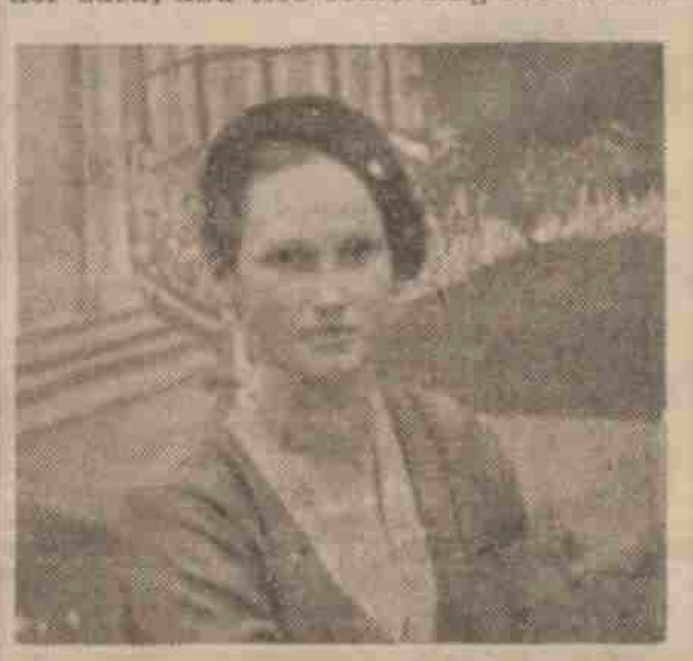
Image: Hilda Sharrock Liverpool Echo, 10 January 1939

Splatter Platters – Top Ten Teen Tragedy Death Discs

Weird Musical History #6

One of the strangest sub-genres of pop music and one that I have a macabre affection for is the death disc – songs of teenage tragedy – that rode high in the charts of the early 1960s. These splatter platters told tragic stories of teenagers and their loved ones meeting sticky ends and wallowed in morbid sentimentality. They were often considered in poor taste and frequently banned, which made them all the more alluring.

The golden age of death discs ran from 1960 until 1965 when they were killed off by Beatlemania, the beat boom and the British Invasion. The songs invariably told a story with a tragic ending, often involving car and motorbike crashes, suicide, star crossed lovers and the morbid survivor haunted by the traumatic tragedy.

The music was varied, but was mostly early 60s style teen pop ballads, though some had elements of beat, country and surf music. Many had a spoken word element, which only adds to their morbid charm, as does the frequent addition of catastrophic sound effects like screeching tyres, revving motorbike engines and explosions.

Here are my top 10 death discs of the early 1960s.

Top 10 Death Discs

10: ‘Ebony Eyes’ – The Everly Brothers (1961)

The sweet harmonies of Don and Phil grace this story of a young man waiting for his fiancée’s mysteriously delayed flight to arrive so that they can be married. In the song’s spoken interlude, Don informs us of an ominous announcement asking those with friends and relatives on flight 1203 to report to the chapel at once…

The song ends in typically schmaltzy manner:

If I ever get, to heaven I’ll bet
The first angel I’ll recognize
She’ll smile at me and I know she will be
My beautiful Ebony Eyes

In the UK this was a double A side with ‘Walk Right Back’ and made it to number one in the charts, despite a short-lived BBC ban due to the upsetting nature of the song.

Supposedly, the Everly Brothers were reluctant to play ‘Ebony Eyes’ live as they were frequent fliers and felt it might be tempting fate…

The Everly Brothers – avoiding Flight 1203

9: ‘Patches’ – Dickey Lee (1962)

This US only hit was also banned by some radio stations because of its teen suicide theme. Patches is a girl from the wrong side of the tracks, which is why the singer’s parents forbid him from seeing her. Poor Patches, on being ghosted like this, promptly drowns herself and is found ‘floating face down in that dirty old river’.

In a morbid twist, the song ends with the singer planning his own suicide so he can be with his Patches:

It may not be right but I’ll join you tonight
Patches I’m coming to you

8. ‘Dead Man’s Curve’ – Jan and Dean (1963)

Surf duo Jan and Dean had a top 10 hit with this song about dangerous driving (a common trope in teen death discs), co-written by Brian Wilson of the Beach Boys.

The singer is challenged to a drag race through Hollywood to Dead Man’s Curve (supposedly a real place, though opinions seem to differ about where exactly it is).

In the spoken interlude, the singer tells the doctor how it all went horribly wrong:

Well, the last thing I remember, Doc, I started to swerve
And then I saw the Jag slide into the curve
I know I’ll never forget that horrible sight
I guess I found out for myself that everyone was right
Won’t come back from Dead Man’s Curve!

Beach Boys style harmonies and car crash sound effects complete this death disc classic, but it gains added poignancy due to a horrible real-life irony.

One half of the duo, Jan Berry, crashed his own car near the supposed location of Dead Man’s Curve in 1966, almost losing his life and sustaining serious injuries.

Jan and Dean

7. ‘I Can Never Go Home Anymore’ – The Shangri-Las (1965)

The Shangri-Las were the queens of teen tragedy and their melodramatic widescreen productions and heartfelt delivery make them irresistible. Although the girl group consisted of four members, two of them were twins and were rarely photographed together. Unlike the other coy girl groups of the time, the Shangri-Las exuded a tough girl attitude, with hints of damaged vulnerability as well as experience.

I love them – so they get three entries in my top ten.

The song is mostly spoken word and the narrator, like a teenage Ancient Mariner, grabs the listener with her feverish narration of what happens when a girl runs away from home after her mum bans her from seeing a boy. It’s easy to sneer at the sentimentality and the earnestness, but when the haunting lullaby section kicks in, it sends shivers down the spine.

The poor old bad girl’s mum eventually dies of a broken heart, and the teenage girl is haunted by guilt:

She grew so lonely and in the end
Angels picked her for a friend
And I can never go home anymore

6. ‘Teen Angel’ – Mark Dinning (1959)

This early example of the genre was banned by the BBC and several US radio stations, but eventually hit the American top spot in 1960. The first two lines are one of my favourite opening couplets:

That fateful night the car was stalled upon the railroad track
I pulled you out and we were safe, but you went running back

So why did the singer’s girl rush back to the car that was stalled on the railway lines after just being rescued? Well, the singer tells us that when they pulled her body from the wreck ‘they say they found my high school ring clutched in your fingers tight’.

Returning to a car stuck on a train track just to get a ring suggests the Teen Angel was not the sharpest knife in the drawer, so she wins the prize for the dumbest of the deaths in this list.

The final verse laments:

Just sweet sixteen, and now you’re gone
They’ve taken you away
I’ll never kiss your lips again
They buried you today

5. ‘Tell Laura I Love Her’ – Ricky Valence (1960)

This classic tells the story of how young Tommy enters a stock car race hoping to win the prize money so he can buy a wedding ring for his beloved Laura.

Of course, it all goes horribly wrong:

No one knows what happened that day
How his car overturned in flames
But as they pulled him from the twisted wreck
With his dying breath, they heard him say

Tell Laura I love her

And poor Laura is left crying in the chapel with Tommy’s dying words ringing in her ears.

Ricky Valence became the first Welsh man to hit the top of the UK charts, despite the customary BBC ban. The song is actually a cover of RayPeterson’s original American hit of the same year, though Decca refused to release it in the UK, considering it in bad taste.

4. ‘Johnny Remember Me’ – John Leyton (1961)

This moody slice of haunted pop hit number one in the UK and was produced by the troubled eccentric genius Joe Meek. It’s ghostly backing vocals, eerie echo laden vibe and galloping drums earn it a place in my top ten.

It tells the story of a young man who’s haunted by the ghost of his love, whose voice he hears ‘singing in the sighing of the wind’.

The song’s atmospheric opening lines run:

When the mist’s a-rising and the rain is falling
And the wind is blowing cold across the moor
I hear the voice of my darlin’
The girl I loved and lost a year ago

The last line was originally ‘The girl I loved who died a year ago’, though the change didn’t stop the killjoys at the BBC from banning it.

John Leyton was actually an actor in a medical soap opera called Harper’s West One, and when the song was featured in the show it became a huge hit. It became a hit again when Bronski Beat and Marc Almond covered it in 1985.

The strange story of Joe Meek deserves its own blog article – stay tuned.

3. ‘The Leader of the Pack’ – The Shangri-Las (1964)

The spoken word introduction (‘Is she really going out with him?’), the screeching tyres and violent car crash sound effects and the cinematic production style makes this one of the most iconic of the teen tragedy hits.

Betty and Jimmy are the star-crossed lovers, but when Betty’s folks make her dump him because he comes from the wrong side of town, Jimmy drives off into the rainy night on his motorbike. Betty begs him to go slow and…. Well, you get the picture.

The Shangri-Las take the teen tragedy to new levels. Their backing vocals remind me of the chorus in an ancient Greek tragedy, interjecting, discussing and commenting on the action. It nearly made it to the top of my list, and so have you dear reader…

The Shangri-Las – Queens of Teen Tragedy

2. ‘I Want my Baby Back’ – Jimmy Cross (1965)

If you’re only going to have one minor hit, then THIS is how to do. This pastiche of the genre is in spectacularly bad taste and had to be near the top.

The spoken word verse tells the story of a young man taking his girl home from a Beatles concert on the back of his motorbike when he crashes straight into the Leader of the Pack:

Well when I come to I looked around
And there was the Leader
And there was the Pack
And over there was my baby
And over THERE was my baby
And waaaaay over there was my baby

As the months pass, the singer longs for his baby back one way or another and so heads to the graveyard. Cue digging sound effects and creaking coffin lids….

In 1977, radio DJ Kenny Everett had a public vote and this glorious piece of bad taste was named the Worst Record in the World.

1. ‘Give us Your Blessings’ – The Shangri-Las (1965)

Not as well-known as the ‘Leader of the Pack’ but just as brilliant, the Shangri-Las claim the top spot on my list.

Mary and Jimmy (presumably not the Leader of the Pack Jimmy) are lovers – but elope to get married as their parents refuse to give their blessings. As they drive away, they cry so much that they miss the detour sign and die in a horrific crash:

The next day, when they found them
Mary and Jimmy were dead
And as their folks knelt beside them in the rain
They couldn’t help but hear
The last words that Mary and Jimmy had said

Give us your blessings

Please don’t make us run away…

Earnest spoken interludes, booming thunder effects and the ominous doom laden clanging of church bells and the Shangri-Las’ desperate harmonies – all you could ask from a classic 60s splatter platter. Dead good.

The Blue Hand ~ a Hebden Ghost

A grave danger faced the terrified pupils of Central Street Infants School in Hebden Bridge in the early 1970s: The Blue Hand.

This ghostly hand scuttled around the school’s corridors and was apt to pounce on unsuspecting children, especially if they were alone in the toilet. The spectral hand would gouge out the little one’s eyes, before strangling the unfortunate mite and then dragging the infant to hell through the toilet.

And the proof was there in plain sight – on the high ceiling of the cloakroom was what appeared to be a smudged handprint. There was no way an adult, let alone a child could reach the ceiling to put a handprint there. It had to be the Blue Hand. This is the story that my classmate, a girl who I will call Karen, told anyone who would listen. The fear this ghost spread lead to many a wet classroom seat as a visit to the toilet on your own was to take your young life into your hands.

When pressed on where the hand came from, Karen claimed that many years ago a crazed murderer had escaped from jail, broken into the school and hanged himself in the boys’ toilets. His body was later dug up by a witch who had a spell which would turn a murderer’s severed hand into a familiar to do her bidding. She cut the withered and now blue hand from the corpse and the spell worked. The hand could now scuttle around at her will, stealing, strangling and all kinds of other mischief. Unfortunately, the spell wore off and the hand turned on its mistress, gouging out her eyes before choking her. And then the hand scurried off back to Central Street school…

Of course, the teachers said the whole thing was nonsense and that the ‘handprint’ on the ceiling was actually a couple of muddy stains from a dirty ball being bounced in there. Karen got into big trouble when the teachers found out where the stories of the Blue Hand were coming from. What her punishment was I can’t remember, but she was made to promise never to mention the Blue Hand again. And she didn’t.

Though she did inform anyone who cared to listen that if you put two pencils tip to tip on the floor and lie on top of them on your stomach, the Devil would appear…

Blue Hand artwork by Larisa Moskaleva

Top 5 Cannibal Zombie Movies from the Golden Age of Gut-munching

In recent decades there have been some fine zombie films, but these mainstream offerings tend to suffer from one fatal flaw: respectability. The zombie films from the golden age (which I’ve taken as being from the late 60s to the early 90s) are different. They are gloriously disreputable, so much so that many were banned in Britain or were only available in editions butchered by the censors.

There are no athletic sprinting zombies in the choices below. Real zombies are slow and lumbering and with a brisk walking pace you could stay one step ahead of them. But they are relentless, and it’s this slow relentlessness that makes these cheapo horror monsters scary, as far as I’m concerned. The dead don’t run.

And my zombies and the mayhem they cause are all real. Or at least were created with practical effects, make up, stunt men and animatronics. No wafer thin CGI effects here.

But first, the zombie elephant in the room: why no Dawn of the Dead? Although widely considered the best zombie movie ever made, Romero’s 1978 classic – awesome though it is – didn’t make it to my top five for two reasons. Firstly, it’s too long and I’m sick of overlong films. Secondly, the zombies are a weird shade of blue that just doesn’t look right to me.

So let’s get to the meat

Night of the Living Dead (1968)

There had been other zombie flicks before this one, but director George Romero’s moody black and white masterpiece paved the way for all that followed and created the modern cannibal zombie we know and love today. Before Romero, movie zombies were usually reanimated by supernatural means voodoo – and shuffled around as undead slaves. Even Hammer’s zombie entry, 1966’s The Plague of the Zombies, has the walking dead working in a Cornish tin mine. Romero brought grainy black and white gore and explicit gut-munching to the zombie genre.

One of the most notorious scenes is when the zombies disembowel and devour a young couple killed in a car crash. The crew referred to this scene as ‘the last supper’, and for extra realism, Romero shipped in real animal entrails and pig hearts for the extras in zombie make up to get their teeth into.[i]

Many of the genre conventions for zombies began here: boarding up the doors and windows as the zombies try and get in, destroying the brain as the only way to stop the undead, political undertones, dark unsettling twist ending and of course graphic zombie cannibalism.

Cause of zombie outbreak: Not really clear, though some of the TV news broadcasts shown in the movie refer to a space probe that had returned from Venus.

Classic Line: They’re coming to get you, Barbara!

The Living Dead at the Manchester Morgue (1974)

Despite the title, the living dead in this underrated Spanish and Italian co-production directed by Jorge Grau spend most of their time devouring the good people of the Lake District. It follows in George Romero’s footsteps with bleak social commentary, but now the gore is in full colour and was plentiful enough to earn it a place on Britain’s notorious list of ‘video nasties’.

The story concerns an antiques dealer who heads to the Lake District for a break from the polluted, congested and streaker infested Manchester of the 1970s, only to find himself in the middle of the zombie apocalypse. Incidentally, some of the shots of an unattractive looking Manchester were actually filmed in Sheffield.[ii] There’s a memorable disembowelment of a policeman and plenty more ghastly downbeat delights to recommend this lost classic.

Cause of zombie outbreak: A pest control machine that blasts insects with ultrasonic waves making them attack each other… What could possibly go wrong?

Classic Line: I wish the dead could come back to life, you bastard, because then I could kill you again.

Zombie Flesh Eaters (1979)

This is confusingly known as Zombi 2 in many territories as it purported to be a sequel to Romero’s Dawn of the Dead (which was released under the title Zombi in some countries, and was, of course a sequel to Romero’s own Night of the Living Dead….). Just as the Italians churned out spaghetti westerns in the 60s, 70s and 80s, they also had a reputation for extreme zombie flicks, and what’s worse, the zombie movie’s even more disreputable cousin, the cannibal movie. However, Lucio Fulci’s gore drenched zombie masterpiece is the best of the bunch when it comes to spaghetti splatter.

Most of the film takes place on a Caribbean island where a scientist is investigating why the dead are coming back to life. The scientist’s daughter and a journalist head to the island to investigate.

In one jaw dropping scene a topless lady is having a swim in the ocean only to be attacked by a shark, which is in turn attacked by a zombie. No CGI here, it’s a real shark and a real nutter in zombie make up wrestling with the maneater – which was apparently stuffed with horse meat and tranquilisers for the scene.[iii]

Zombie versus shark!

Perhaps Zombie Flesh Eater’s most notorious moment is the eye pop, something that was a bit of a feature in many of Fulci’s horror films. In this movie, a zombie drags the unfortunate victim by the hair closer and closer to a large jagged wooden splinter until it pierces her eyeball in a scene that was censored in the UK for many years. Scenes like this, and several others, earned Zombie Flesh Eaters its coveted place on Britain’s list of banned video nasties.

This is gonna hurt…

Zombie Flesh Eaters ditches the social commentary, and in true exploitative style, goes straight for the jugular.

Cause of zombie outbreak: Voodoo

Classic Line: Radio announcer: I’ve just been informed that zombies have entered the building…. They’re at the door…. They’re coming in….Aaaaarrrrggggggghhhhhhh!

Day of the Dead (1985)

George Romero, being the godfather of zombie cinema, is allowed two entries in my top five. Day of the Dead is the third in the series of ‘Dead’ films and is set in a world totally over run by zombies in which the remnants of humanity – mostly trigger happy military types and scientists studying the zombie – are confined to a claustrophobic underground bunker. In this world, the living (represented by a mad scientist and psychopathic soldiers) are more dangerous than the dead, which are humanised especially in the form of Bub, a zombie that shows signs of memory and intelligence – a first in zombie cinema.

Gore supremo Tom Savini provides the ultra-nasty special effects which are the real star of the show and beat the hell out of sterile modern CGI gore.

Cause of zombie outbreak: Presumably the same as the Night of the Living Dead, though there are some vague murmurings about God’s vengeance.

Classic Line: As zombies pull out his intestines: Choke on ‘em!

Choke on ’em!

Brain Dead (1992)

Director Peter Jackson went on to direct the Lord of the Rings movies and the Beatles Get Back series, but this unhinged but lovingly crafted Kiwi zombie film is his greatest contribution to western civilisation.

We’re gonna need a bigger mop!

Set in the conservative New Zealand of the 1950s, the film is an outrageously gory comedy that goes way beyond anything in the relatively staid and respectable world of Shaun of the Dead. The hero’s mum is bitten by a rat monkey carrying a zombie virus, and the mayhem – set against a romantic love story – begins as the hero attempts to hide his zombified mum in the cellar, along with a motley gang of other walking dead that she has infected.

Zombie sex, a zombie baby and other experiments in extreme tastelessness follow, and the final party scene bloodbath is surely the ultimate in stylish zombie carnage. One thing I learned from this film is that if you’re caught up in the zombie apocalypse and there is no chainsaw to hand, the ultimate weapon of choice for dispatching the undead is the lawnmower.

Cause of zombie outbreak: A bite from an animatronic Sumatran rat monkey.

Classic Line: Your mother ate my dog!

So there we have it – my top 5 cannibal zombie movies from the golden age of gut-munching. I could have chosen more – Reanimator, Return of the Living Dead 3 and The Beyond were bubbling under and almost made my top 5 and all have their gory charms.

But zombie flicks in recent decades have become mainstream, almost respectable. But vanilla is not a satisfying flavour for a lumbering gut muncher, so dig up these classics for some video nasty Halloween viewing…


[i] Jamie Russell, Book of the Dead, (Godalming: FAB, 2005) p.68

[ii] Jay Slater (ed), Eaten Alive: Italian Cannibal and Zombie Movies, (London: Plexus, 2002) p.58

[iii] Slater p.94